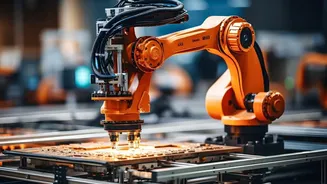








A Looming Demographic Challenge
For decades, many Asian nations rode a wave of growth powered by a 'demographic dividend'—a large and youthful workforce. That era is now drawing to a close for several key economies. According to an IMF report presented at the recent annual meetings
in Bangkok, countries like China, Japan, and South Korea could see their working-age populations shrink by nearly 25% by 2050. This creates a significant headwind for economic growth. With fewer people working, maintaining economic momentum and funding social systems for a growing elderly population becomes a monumental task. The core of the problem is productivity; to keep the economy expanding, each remaining worker must generate more value.
AI as the Unlikely Hero
This is where artificial intelligence enters the picture, not as the job-stealing villain it's often portrayed as, but as a potential productivity saviour. The IMF's analysis suggests that AI could be the critical tool that allows aging economies to do more with less. According to IMF Managing Director Kristalina Georgieva, AI is projected to lift growth in advanced Asian economies by 0.5 to 1 percentage point. She noted that if countries can successfully capture these productivity gains, the growth could more than offset the immense pressure from their changing demographics. This changes the narrative from AI simply replacing human jobs to AI augmenting the capabilities of an existing, but shrinking, workforce.
How AI Boosts Productivity
The productivity gains from AI aren't just theoretical. They come from its ability to automate routine tasks, freeing up human workers to focus on more complex, creative, and strategic responsibilities. But it goes beyond simple automation. AI can act as a powerful assistant, helping professionals from engineers to doctors make faster, more accurate decisions by analysing vast amounts of data. The key question, as pointed out by Krishna Srinivasan, director of the IMF’s Asia and Pacific department, is whether AI primarily 'augments workers or automates jobs'. In a scenario where labor is becoming scarcer, the focus shifts to augmentation—making every worker more effective, innovative, and productive.
A Widening Digital Divide?
However, the IMF warns that the benefits of AI are not guaranteed to be shared equally. There's a significant risk that AI could widen the economic gap between nations in Asia. Advanced economies like Singapore and South Korea are better positioned to adopt and benefit from AI due to their robust digital infrastructure, access to capital, and highly skilled workforces. In contrast, emerging and developing economies may lack the resources and skilled labor to fully capture the upside, potentially falling further behind. The IMF estimates that widespread adoption in some emerging economies could lag by a decade or more, creating a temporary but long-lasting divergence.
The Path Forward: Policy is Key
Harnessing AI's potential while mitigating its risks requires deliberate and strategic government action. The IMF stresses the need for policies that support an inclusive transition. This includes investing in robust social safety nets and extensive reskilling programs to help workers adapt to new roles. Furthermore, governments must focus on education to build a workforce that can leverage AI tools effectively. Creating clear regulations for ethical AI use and data protection is also crucial to build trust and manage potential disruptions. For Asia's aging societies, the message is clear: AI offers a way to defy demographic destiny, but only if the right investments in people and policy are made today.