


The Core Problem with EVs: Expensive Batteries
For years, the dream of owning an electric car in India has been just out of reach for many, primarily due to one expensive component: the lithium-ion battery. These batteries, which can account for 40% or more of an EV's total cost, rely on materials
like lithium and cobalt. The challenge is that India has limited reserves of these minerals, making the country heavily dependent on imports. This reliance not only drives up prices but also exposes the Indian auto market to global supply chain disruptions and geopolitical tensions, as China currently dominates the processing of these critical minerals. This combination of high costs and supply uncertainty has effectively put a cap on how affordable entry-level EVs can truly become.
Enter Sodium-Ion: The Affordable Alternative
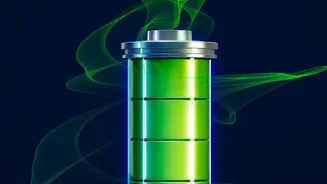
Sodium-ion batteries work on a principle similar to their lithium-ion counterparts but use sodium, an element that is abundant, cheap, and readily available in India. This is the technology's single biggest advantage. By swapping expensive imported lithium for domestically available sodium, manufacturers can significantly cut down on material costs. Estimates suggest that sodium-ion batteries could be 20-40% cheaper to produce than the lithium-iron-phosphate (LFP) batteries commonly used in affordable EVs today. This cost reduction directly translates into a lower final price for the vehicle, making it a powerful catalyst for the entry-level EV market.
More Than Just Cost: Safety and 'Make in India'
The benefits of sodium-ion technology extend beyond its lower price tag. These batteries are known for their superior thermal stability, which means they are less prone to overheating and fire—a significant safety concern with some lithium-ion chemistries. They can also be safely transported and stored at zero charge, unlike lithium-ion batteries which can be damaged by deep discharge. Furthermore, the push for sodium-ion aligns perfectly with the 'Make in India' initiative. Companies like Reliance (through its acquisition of Faradion), KPIT Technologies, and startups such as Indi Energy and Rechargion are actively developing indigenous sodium-ion technology. This focus on local manufacturing not only promises to create jobs but also to build a self-reliant energy storage ecosystem for India.
Are There Any Downsides?
While promising, sodium-ion technology is not without its trade-offs, the most significant being lower energy density. In simple terms, a sodium-ion battery of the same weight stores less energy than a lithium-ion one, which results in a shorter driving range. This makes them less suitable for long-range, high-performance EVs but an excellent fit for entry-level city cars, electric two-wheelers, and three-wheelers, where daily travel distances are shorter. Additionally, while the technology is maturing rapidly, it is still in the early stages of mass commercialization compared to the well-established lithium-ion industry. However, Indian researchers and companies are making rapid progress to close this gap.
When Can We Expect These Cars on Indian Roads?
The transition is already beginning. According to government officials, sodium-ion battery technology in India has reached an advanced stage of maturity, known as Technology Readiness Level 7. This indicates that a system prototype has been successfully demonstrated in an operational environment, and the technology could move to commercial-scale production within the next two to three years. Indian companies like KPIT Technologies have already unveiled market-ready tech, while Reliance plans to set up a giga-scale manufacturing plant. We can expect to see the first wave of affordable EVs powered by sodium-ion batteries, especially in the two- and three-wheeler segments, between 2026 and 2028.