





A Cosmic Mystery in Red
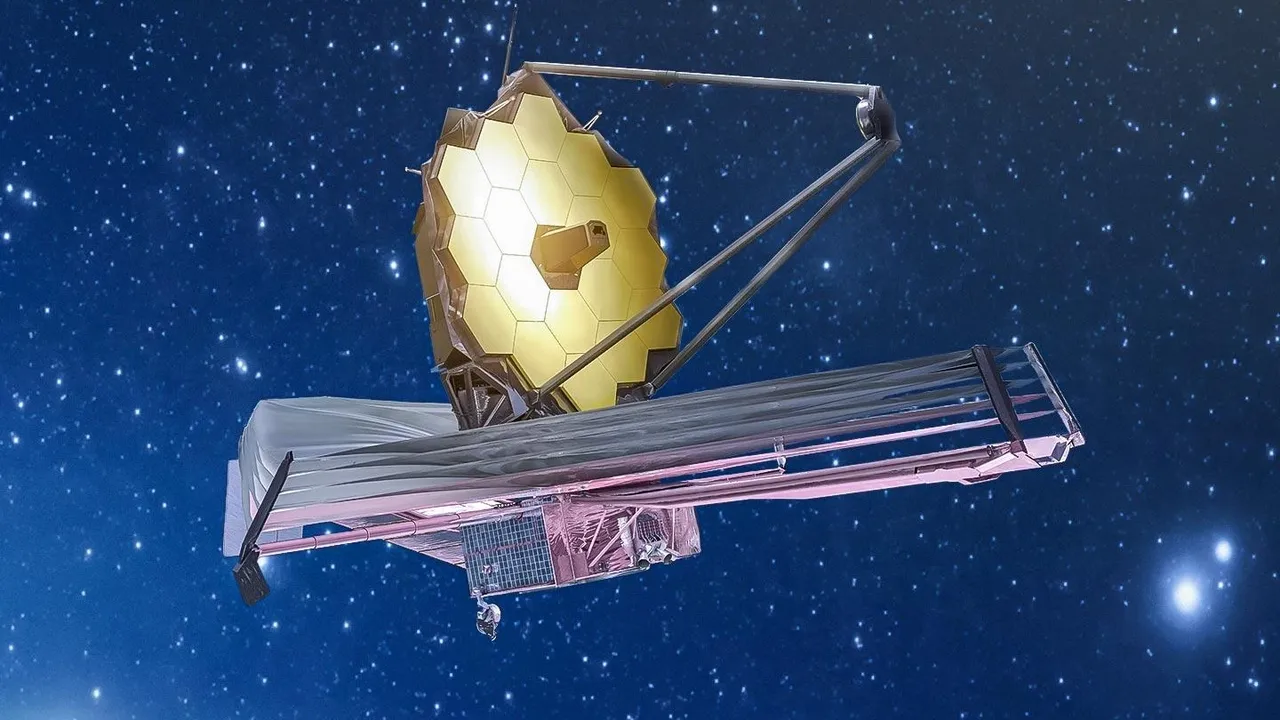
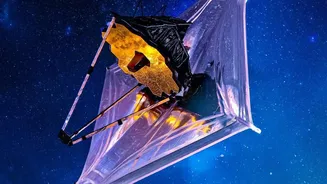
When the James Webb Space Telescope (JWST) began sending back its first images, astronomers found something they couldn't explain: hundreds of tiny, reddish objects scattered across the dawn of time. Nicknamed 'little red dots' (LRDs), these objects appeared
to exist in the very early universe, some just 600 million years after the Big Bang, but then seemed to vanish as the cosmos aged. Their existence challenged fundamental theories about how quickly massive structures could form. Some of these dots seemed so large that they were dubbed 'universe breakers', as their mass appeared too great for their cosmic age, contradicting established models of galaxy formation. For a while, scientists were at a complete loss, facing a new class of celestial objects with no clear explanation.
The Black Hole Hypothesis
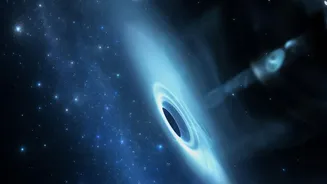
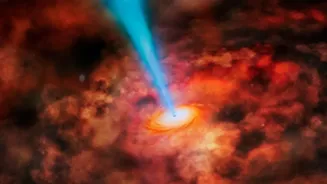
As more data poured in, a leading theory began to emerge: these little red dots were not ordinary galaxies, but were connected to the growth of supermassive black holes (SMBHs). One popular model proposes that LRDs are active galactic nuclei (AGN), which are extremely bright, compact regions at the centers of galaxies powered by a feeding SMBH. Another compelling version of this idea is the 'black hole star' scenario. This theory suggests an LRD is a rapidly growing supermassive black hole enveloped in a vast, dense cocoon of gas. The intense energy released by the black hole heats this gaseous shroud, causing it to glow. This explains why LRDs are so red and also why they are surprisingly faint in X-rays—the dense gas cocoon absorbs the high-energy radiation before it can escape.
A New Way of Seeing
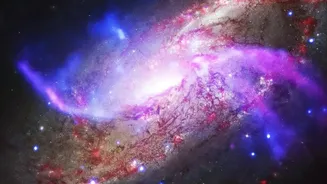
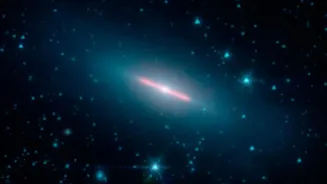
The headline puzzle—how to confirm these theories—is now being addressed by innovative research. A study published in The Astrophysical Journal on July 29, 2026, details a new approach. Instead of only peering at the distant, faint LRDs, scientists studied a more mature, lower-redshift spiral galaxy nicknamed 'Saguaro'. Saguaro hosts a highly active supermassive black hole, much like the ones thought to power LRDs. The researchers then used computer simulations to synthetically 'move' Saguaro to a higher redshift, mimicking how it would appear to the JWST if it existed in the early universe. The result was striking: it looked just like a little red dot. This clever comparison suggests that checking the properties of well-understood active black holes closer to us can provide a blueprint for understanding their ancient, mysterious counterparts.
The Tip of the Iceberg
This new research implies that LRDs may not be a bizarre, unique population of objects after all. Instead, they could represent a temporary, but crucial, phase in the evolution of galaxies. According to this model, when we observe an LRD, we are seeing just the 'tip of the iceberg'—the intensely bright core where a black hole is feasting. The rest of the host galaxy, being much fainter, is simply too difficult to detect across such vast cosmic distances, even for an instrument as powerful as the JWST. This would explain why LRDs appear so compact. It also helps solve the mystery of their disappearance; they don't vanish, they simply evolve. As the black hole's feeding frenzy calms down and its host galaxy grows, its appearance changes into the more familiar galaxies we see in the universe today.