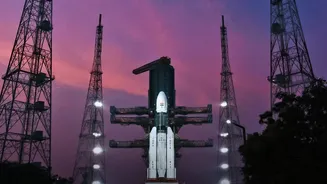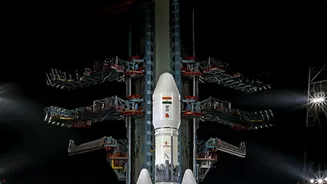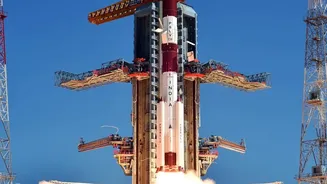








A Galaxy of Opportunity Opens Up
For decades, India's journey into space was charted almost exclusively by the Indian Space Research Organisation (ISRO). But a landmark policy shift in 2020 opened the sector to private enterprise, fundamentally changing the landscape. The government
established the Indian National Space Promotion and Authorisation Centre (IN-SPACe) to act as a single-window agency, helping private companies access ISRO's facilities, share technology, and navigate regulations. This move has been a game-changer, sparking a surge in entrepreneurship. In just a few years, the number of space startups has soared from single digits to over 450, attracting hundreds of millions of dollars in investment and proving that the final frontier is now open for business.
The Rocket Builders and Satellite Visionaries
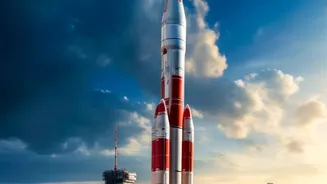
At the forefront of this transformation are companies achieving what was once unthinkable for the private sector. Hyderabad-based Skyroot Aerospace made history by launching Vikram-1, India's first privately developed rocket to successfully reach orbit. Meanwhile, Chennai's Agnikul Cosmos is pushing boundaries with its 3D-printed rocket engines and mobile launch systems. But the innovation isn't limited to launch vehicles. Bengaluru's Pixxel is deploying a constellation of hyperspectral satellites that can 'see' the Earth in unprecedented detail, providing crucial data for agriculture, mining, and climate monitoring. These companies, and others like them, are not just building hardware; they are building a reputation for world-class, cost-effective space technology.
More Than Just Launching Rockets
The true transformation lies in how this new space ecosystem is creating ripple effects across the entire economy. This isn't just about space exploration; it's about space-enabled services that solve problems on Earth. Satellite data and analytics from startups like SatSure and GalaxEye are revolutionizing sectors from finance to disaster management. GalaxEye's innovative satellite, for instance, can see through clouds and darkness, providing all-weather imaging crucial for defence and infrastructure monitoring. This downstream application of space technology is where the bulk of the economic potential lies, creating new markets and driving demand for skilled engineers, data scientists, and AI specialists.
Fueling the Ascent: Investment and Talent
The rapid growth has been fueled by a significant influx of capital. In the last few years alone, Indian space startups have attracted nearly $400 million in funding, with investors recognizing the sector's immense potential. This financial confidence is backed by government support, including a dedicated venture capital fund to nurture emerging companies. This boom is also creating a reverse brain drain, as experienced talent from ISRO and professionals from abroad are drawn to the dynamic, fast-paced environment of these startups. The ecosystem is fostering a culture of deep-tech innovation, encouraging entrepreneurs to tackle complex engineering challenges and build globally competitive companies.