







What Exactly Is FD Laddering?
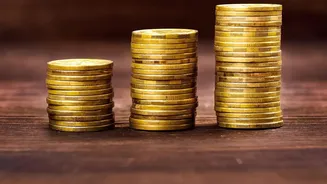
Fixed deposit laddering is an investment strategy where you divide a lump sum of money into multiple FDs with different maturity dates, instead of putting it all in a single basket. Think of it as building a staircase, or a “ladder,” with your investments.
Each FD is a “rung” on that ladder, maturing at a different time. This simple technique helps investors avoid locking up their entire savings at one interest rate and for one fixed period. It’s a method that balances the need for safety, the desire for higher returns, and the practical requirement for regular access to funds.
How It Works: A Simple Example
The concept is easier to grasp with an example. Imagine you have ₹5 lakh to invest. Instead of opening a single 5-year FD, you would split the amount to build a 5-rung ladder. You would invest ₹1 lakh into a 1-year FD, another ₹1 lakh into a 2-year FD, and so on, up to a 5-year FD. At the end of the first year, your 1-year FD matures. You can either use this ₹1 lakh or, to keep the ladder going, reinvest it into a new 5-year FD. The next year, your original 2-year FD matures, and you do the same. Over time, you will have a portfolio of five FDs, all with a 5-year tenure (which typically offers the highest interest rate), but one will mature every single year, giving you a steady stream of accessible cash.
The Core Benefit: Defeating Interest Rate Risk
The biggest fear for any FD investor is locking in their money just before interest rates go up. Laddering is the perfect antidote to this risk. Because you have FDs maturing every year, you get an annual opportunity to reinvest at the newest, potentially higher, interest rates. This creates a natural averaging effect. If rates rise, your next maturing FD gets to take advantage of it. If rates fall, the rest of your ladder is still locked in at the older, higher rates until their respective maturity dates. This strategy prevents you from being stuck with a low rate on your entire corpus for a long time, providing a flexible way to capture better returns over the long run.
Solving the Liquidity Puzzle
One of the main drawbacks of a traditional FD is the penalty charged for premature withdrawal. If an unexpected expense arises, you are forced to break your investment and lose a portion of your interest earnings. FD laddering provides a brilliant solution. Since a part of your investment matures every year, you have predictable, penalty-free access to funds at regular intervals. If you need cash for an emergency or a planned expense like a vacation or a fee payment, you can simply use the funds from the maturing FD without disturbing the rest of your long-term investments that are earning higher interest.
Pro Hacks for Indian Investors
To truly maximise the FD laddering strategy in India, a few extra tips can make a big difference. First, consider spreading your FDs across different banks. The Deposit Insurance and Credit Guarantee Corporation (DICGC) insures up to ₹5 lakh per depositor, per bank. By laddering across multiple banks, you can ensure a larger corpus is fully protected. Second, laddering can help with tax management. By splitting your investment, you can potentially keep the annual interest earned from any single bank below the TDS deduction threshold (₹40,000 for individuals and ₹50,000 for senior citizens). Finally, senior citizens should always incorporate their higher interest rate benefit (usually 0.50% extra) into their ladder to further boost returns.
Getting Started with Your Own Ladder
Building your own FD ladder is straightforward. Start by deciding on the total amount you wish to invest and the number of rungs you want. A 5-rung ladder with 1-to-5-year tenures is a popular and manageable choice. Next, divide your corpus equally among the rungs and open the FDs with their staggered maturity dates. You can do this with one bank or across several. The most crucial step is discipline. As each FD matures, reinvest the principal and interest into a new FD at the longest tenure of your ladder (e.g., 5 years) to keep the cycle rolling. This creates a perpetual system that provides both growth and liquidity.