


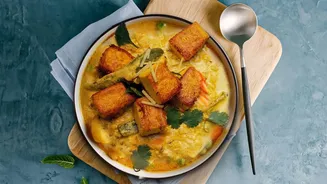

Thor Chorchori (Banana Stem Stir-fry)
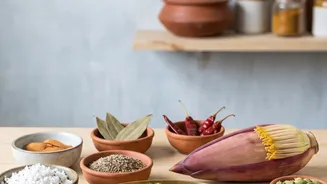
Hailing from Bengal, this dish makes a hero out of something many discard: the banana stem. The fibrous inner core of the banana plant, known as 'thor', has a wonderfully crisp texture, similar to a water chestnut. To prepare it, the outer layers are peeled
away, and the core is chopped and soaked to prevent browning. Typically cooked as a dry stir-fry or 'chorchori', it is tempered with spices like mustard seeds and often includes lentils or potatoes. This dish is a beautiful example of nose-to-tail, or in this case, root-to-flower, cooking, transforming a humble byproduct into a crunchy, nutritious, and delicious sabzi.
Palakottai Kuzhambu (Jackfruit Seed Curry)
Next time you enjoy fresh jackfruit, don't throw away the seeds. In South India, particularly in Tamil Nadu and Kerala, these seeds, called 'palakottai', are treasured. Once boiled and peeled of their outer skin, they reveal a firm, starchy interior with a nutty flavour and a texture akin to boiled potatoes or chestnuts. These seeds are often used to make a hearty curry or 'kuzhambu'. They are typically pressure-cooked and then simmered in a flavourful gravy made with onions, tomatoes, coconut, and a blend of spices. It's a protein-packed dish that proves some of the best ingredients are the ones we might have otherwise overlooked.
Pathrode (Colocasia Leaf Rolls)
A monsoon specialty along the western coast of India, from Maharashtra to Karnataka, Pathrode is a savoury roll made from colocasia (or taro) leaves. Known as 'alu vadi' in Maharashtra and 'patra' in Gujarat, the dish features large, tender leaves smeared with a spiced paste. The paste varies by region but often includes rice flour, gram flour, tamarind for tartness, jaggery for a hint of sweetness, and a mix of spices. The leaves are layered, rolled tightly, steamed, and then sliced into pinwheels. These can be eaten as is or shallow-fried for a crispy texture. It’s a delicious play on flavour and texture, all wrapped in a leafy green.
Gongura Mamsam (Mutton with Sorrel Leaves)
While a staple in Andhra Pradesh and Telangana, Gongura, or sour sorrel leaves, remains an undiscovered gem in many other parts of India. These leaves are prized for their distinctly tangy taste, which can elevate a dish in a way that tamarind or lemon cannot. Gongura Mamsam is a classic Andhra mutton curry where the sharp, sour notes of the leaves perfectly cut through the richness of the meat. The leaves are cooked down into a pulpy sauce with the mutton, creating a robust and fiery curry that is truly unique. It's a must-try for anyone who loves bold, tangy flavours.
Lingri ki Sabzi (Fiddlehead Fern Stir-fry)
Found in the Himalayan regions of Himachal Pradesh and Uttarakhand during the monsoon, Lingri, or fiddlehead ferns, are the coiled fronds of a young fern. Looking like the scroll of a violin, these vegetables have a unique, slightly crunchy texture and a flavour that’s a cross between asparagus and green beans. A simple stir-fry, or 'sabzi', is the most common way to enjoy them. The ferns are typically blanched and then sautéed in mustard oil with basic spices like cumin, turmeric, and perhaps a pinch of dry mango powder ('amchoor') to enhance their earthy taste. It's a true seasonal delicacy of the mountains.
Mahua ki Sabzi (Mahua Flower Curry)
The Mahua tree, found across Central and Eastern India, is famous for its intoxicatingly fragrant flowers. While often associated with the production of a local spirit, these fleshy, sweet flowers are also a prized culinary ingredient, especially among tribal communities. Dried mahua flowers, which have a flavour reminiscent of dates, can be used in a variety of dishes. They can be boiled and made into a simple sabzi, ground into sweets like laddoos, or even fried into fritters. A Mahua curry is a rustic, nutritious dish that offers a glimpse into the forest-to-table food traditions of India.
Suhanjhre jo Matho (Moringa Flower Raita)
Most people are familiar with moringa leaves and drumsticks, but the delicate, creamy-white flowers of the moringa tree are also edible and highly nutritious. They have a mild flavour and a soft texture once cooked. In Sindhi cuisine, these flowers ('suhanjhre') are used to create a delicious raita, or 'matho'. The flowers are first boiled to reduce a slight bitterness, then squeezed of excess water and mixed into beaten yogurt with salt and spices. The result is a cooling, refreshing, and healthful side dish that gives a completely new purpose to this part of the 'miracle tree'.
Ou Tenga Maas (Elephant Apple Fish Curry)
A signature dish from Assam, Masor Tenga is a light and tangy fish curry, and one of its most special versions is made with 'ou tenga', or the elephant apple. This unique fruit, native to the region, has a distinctive sour flavour that defines the curry. The ou tenga is sliced and boiled until it softens and releases its tartness into the broth. Freshwater fish is then gently simmered in this tangy, minimally spiced gravy. The result is a refreshing, palate-cleansing curry that is worlds away from the heavy, creamy gravies found elsewhere, showcasing the unique flavours of Northeast India.