





What is the Bharatiya Antariksha Station?
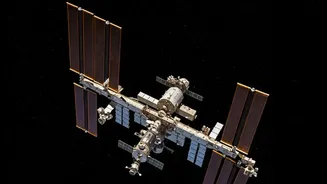
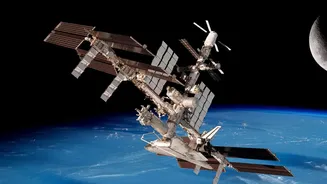
The Bharatiya Antariksha Station (BAS) is India's ambitious project to build and operate a modular space station in Low Earth Orbit, approximately 400-450 kilometres above our planet. Unlike a single satellite, the station will be assembled in space piece
by piece. The plan is to launch the first module by 2028 and have the entire station operational by 2035. Once complete, the 52-tonne outpost will be able to host a crew of three to four astronauts for missions lasting several months, serving as a laboratory, an observatory, and a stepping stone for future exploration. This project marks a pivotal transition for India, moving from short-duration human spaceflight to establishing a sustained human presence in orbit.
The Building Blocks of a Home in Orbit
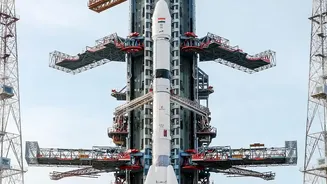
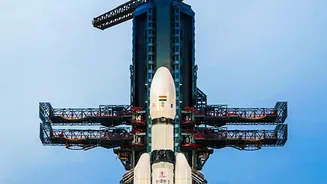
Constructing the BAS is a multi-stage process. The first component, known as BAS-01, is scheduled for launch in 2028. This foundational module will serve as a testbed for critical technologies like life support systems, docking mechanisms, and crew quarters. Following this, four additional modules will be launched over the succeeding years, including science labs and docking ports. These launches will depend on ISRO's powerful new Next Generation Launch Vehicle (NGLV), a partially reusable rocket currently under development. The NGLV is designed to carry heavy payloads into orbit cost-effectively, making it the workhorse for assembling the station and resupplying it with cargo and crew.
A Cutting-Edge Scientific Laboratory
The primary purpose of the BAS is to serve as a hub for scientific discovery. The microgravity environment of space offers conditions that cannot be replicated on Earth, opening up new frontiers for research. Scientists will be able to conduct long-duration experiments in fields like materials science, biotechnology, and medicine, potentially leading to breakthroughs in drug development and the creation of advanced materials. The station will also be a vital platform for studying the long-term effects of space on the human body, providing crucial data for future deep-space missions. Furthermore, equipped with advanced instruments, the BAS will enhance India's Earth observation capabilities, aiding in disaster management and climate monitoring.
India's Strategic Footprint in Space
Beyond its scientific goals, the Bharatiya Antariksha Station holds immense strategic and geopolitical importance. By establishing its own station, India will join an exclusive group of nations capable of maintaining a permanent human presence in space, including the US, Russia, and China. This elevates India's global stature and demonstrates its technological self-reliance. An operational space station provides a platform for international collaboration on India's terms, allowing ISRO to offer training and carry experiments for other nations. It also creates a powerful new engine for the domestic economy, driving innovation and creating opportunities for private industry in everything from rocket manufacturing to robotics and life support systems.
The Challenges on the Road to 2035
The path to an operational space station is filled with immense technical and logistical challenges. Mastering rendezvous and docking—the ability to precisely manoeuvre and connect two spacecraft in orbit—is a critical skill that ISRO is developing through precursor missions like SPADEX. Developing a robust and reliable Environmental Control and Life Support System (ECLSS) to keep astronauts safe and healthy for months at a time is another major hurdle. The entire project, from the development of the NGLV to the construction of the five modules, requires a sustained and significant financial investment. With an already packed schedule that includes the Gaganyaan human spaceflight mission and a planned crewed lunar landing by 2040, ISRO faces a demanding decade of innovation and execution.