



A Landmark Bet on Physical Intelligence
In one of the most significant recent investments in physical AI, Eka Robotics has secured a $150 million Series A funding round co-led by major investors Andreessen Horowitz (a16z) and F-Prime. The fundraise, which reportedly values the company at $1.45
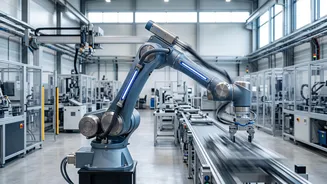
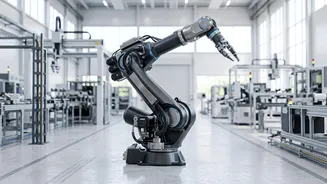
billion, is not just about building another factory robot; it is a targeted effort to solve the single biggest bottleneck holding back widespread automation: dexterity. While industrial robots have excelled at repetitive, predictable tasks for decades, they falter in 'unstructured' environments where objects vary in shape, size, and texture. Eka’s mission is to bridge this gap, creating robots that can handle the complexity of the real world, from packing delicate fruit to assembling complex electronics.
The Challenge of the Robot Hand
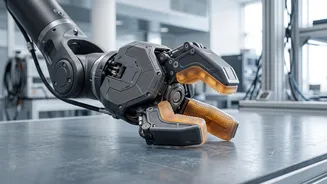
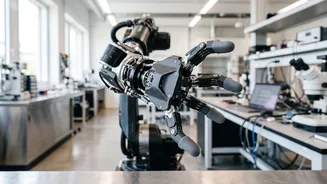
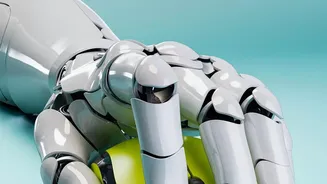
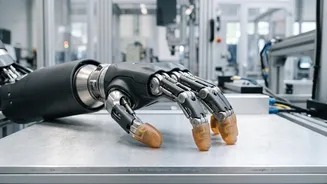
Achieving human-like dexterity is one of the hardest problems in robotics. A person can effortlessly pick up an egg, a brick, or a set of keys, instinctively adjusting their grip and pressure. For a robot, each of these actions is a monumental challenge. It requires a sophisticated blend of vision to see the object, sensors to 'feel' it, and intelligent software to process that information and act. Most current robots either lack advanced tactile sensors or the AI to interpret them effectively, a hurdle often called the 'sim-to-real' gap where skills learned in simulation fail in reality. This is why warehouse and factory jobs that require fine motor skills still largely rely on human hands.
Eka's Approach: Mastering Physics, Not Just Data
Instead of just teaching robots by showing them human examples, Eka is taking a different path. The company is developing what it calls a vision-force-action (VFA) model. This AI framework learns the principles of physics through large-scale reinforcement learning in a simulated environment. By generating thousands of hours of experience in minutes, the robot develops an 'intuition' for how to handle objects, combining visual data with feedback from advanced force sensors in its gripper. This allows it to understand not just where an object is, but how to grasp and manipulate it without crushing it or letting it slip. The goal is to create a foundation model for physical action, similar to how large language models have become the foundation for digital AI.
Superhuman Speed for Real-World Work
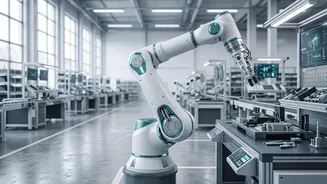
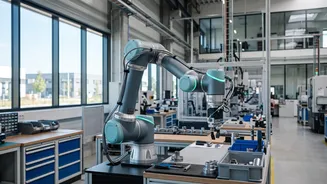
The early results are promising. Eka claims its robots can already pick and place a wide variety of objects at a speed of 1,500 items per hour, more than double the average human rate of around 600 per hour. This leap in performance is critical for commercial viability in sectors like logistics, e-commerce fulfillment, and manufacturing, where speed and reliability are everything. The funding will be used to scale these capabilities, expanding the range of tasks the robots can perform and accelerating customer deployments. Applications range from sorting parcels in a warehouse and handling delicate food items to screwing in lightbulbs and inserting wires on an assembly line—tasks that have traditionally been impossible to automate effectively.