






Udayagiri & Khandagiri Caves: A Journey to 2nd Century BC
Just on the outskirts of Bhubaneswar, the twin hills of Udayagiri and Khandagiri stand as a testament to ancient history. These are not mere caves, but partly natural, partly man-made rock-cut shelters carved for Jain monks around the 2nd century BCE,
under the patronage of King Kharavela. Udayagiri, meaning 'Sunrise Hill', has 18 caves, with the most famous being the two-storied Rani Gumpha (Queen's Cave), which features ornate carvings depicting royal life and festivities. Khandagiri, with its 15 caves, offers a more contemplative atmosphere and a stunning panoramic view of Bhubaneswar from its peak. The Hathigumpha inscription on Udayagiri is a crucial piece of ancient Odishan history, detailing the reign of King Kharavela. Plan for a good two to three hours to explore both hills, which are conveniently located opposite each other.
Dhauli Shanti Stupa: Where War Gave Way to Peace
A short drive of about 8-12 km from Bhubaneswar will take you to Dhauli Hills, a place that profoundly altered the course of Indian history. It was here, on the banks of the river Daya, that the brutal Kalinga War was fought in 261 BCE. The story goes that the river turned red with blood, and the immense loss of life transformed the victorious Emperor Ashoka, who then renounced violence and embraced Buddhism. To commemorate this, the dazzling white Shanti Stupa, or Peace Pagoda, was built on the hill in 1972 by the Japan Buddha Sangha and Kalinga Nippon Buddha Sangha. The serene monument, with its dome structure and panels depicting Buddhist tales, offers a peaceful atmosphere and overlooks the spot where Ashoka's rock edicts preach non-violence. It is a powerful reminder of peace emerging from conflict.
Konark Sun Temple: The Colossal Chariot of the Sun God
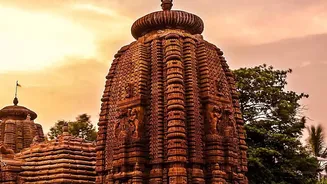
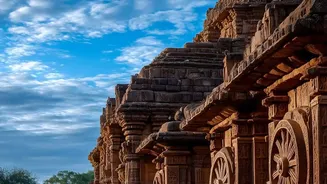
No trip to Odisha is complete without visiting the Konark Sun Temple, a UNESCO World Heritage Site located about 65 km from Bhubaneswar. The drive itself takes about an hour and a half to two hours. Built in the 13th century by King Narasimhadeva I, the temple is an architectural marvel designed as the colossal chariot of the Sun God, Surya. It features 24 intricately carved wheels, representing the hours of the day, and is drawn by seven mighty horses. Though much of the structure is now in ruins, what remains is a breathtaking display of Kalinga architecture, with detailed stone carvings covering every surface. The sheer scale and artistry on display make it one of India's most significant historical monuments. A museum run by the Archaeological Survey of India on-site houses many of the temple's fallen sculptures.
Raghurajpur: The Village of Artists
For a truly immersive cultural experience, head to Raghurajpur, India's first designated heritage crafts village. Located about 14 km from Puri and easily accessible on a day trip from Bhubaneswar, this village is a living museum of Odishan art. It is famous for its master Pattachitra painters, who practice an ancient art form that dates back centuries. The village consists of two main streets with around 120 homes, where almost every resident is an artisan. As you walk through, you'll see house facades decorated with colourful murals and artists engrossed in painting intricate mythological scenes on treated cloth, palm leaves, and tussar silk. Besides Pattachitra, you'll also find artisans practicing stone carving, woodcraft, and the traditional Gotipua dance, a precursor to Odissi. It’s also the birthplace of the legendary Odissi guru Kelucharan Mohapatra.
Pipili: A Splash of Colour and Craft
Situated about 40 km from Puri on the road from Bhubaneswar, the small town of Pipili is a vibrant spectacle of colour and creativity. It is world-famous for its appliqué work, known locally as 'Chandua'. This traditional craft originated in the 12th century, with artisans creating canopies and banners for the annual Rath Yatra at the Jagannath Temple. Today, the main street of Pipili is lined with shops selling an incredible array of appliqué items. You'll find everything from decorative umbrellas and garden canopies to handbags, wall hangings, and lampshades, all adorned with brightly coloured fabric stitched into intricate patterns of flowers, animals, and deities. It’s a perfect stop to pick up unique, handcrafted souvenirs and witness a craft that has been passed down through generations.