





An Ounce of Prevention
An asteroid impact is a unique natural disaster. Unlike earthquakes or volcanic eruptions, it is theoretically 100% preventable. However, this prevention hinges entirely on one factor: advance warning. The 2013 Chelyabinsk event in Russia, where an un-detected
20-meter asteroid exploded in the atmosphere, injuring 1,500 people and damaging thousands of buildings, was a stark reminder of the threat posed by even relatively small objects. Planetary defense experts know that the true danger isn't just the large, dinosaur-ending asteroids, but also the more numerous city-level threats. The fundamental principle of planetary defense is to transform a potential catastrophe into a manageable engineering problem, and that transformation requires knowing what's coming long before it arrives.
The Power of a Gentle Nudge
The core reason early detection is paramount boils down to simple physics. An asteroid hurtling through space has immense momentum. Trying to stop it or blow it up close to Earth would require an unimaginable amount of energy and could create a catastrophic shower of fragments. However, if an object on a collision course is detected years or even decades in advance, only a tiny nudge is needed to alter its trajectory. A minute change in velocity, applied far from Earth, will compound over its long journey through space, causing it to miss our planet by a safe margin. NASA's Double Asteroid Redirection Test (DART) mission in 2022 was the first successful demonstration of this 'kinetic impactor' technique. The spacecraft intentionally crashed into the small asteroid Dimorphos, successfully altering its orbit. This test proved the concept, but it also underscored that such missions need years of planning and travel time, reinforcing the need for early discovery.
Scanning the Skies
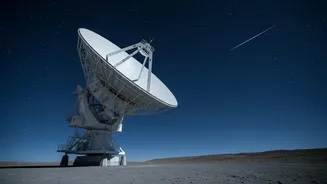
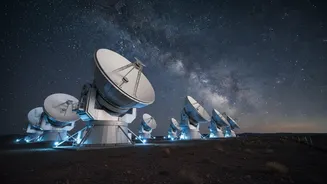
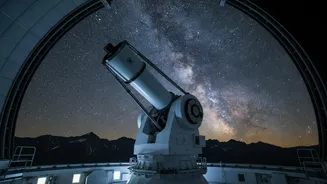
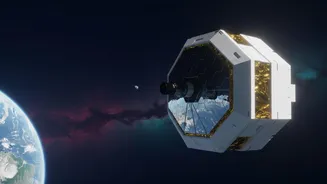
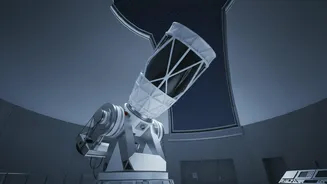
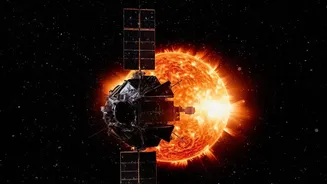
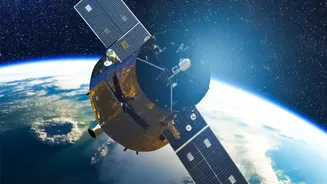
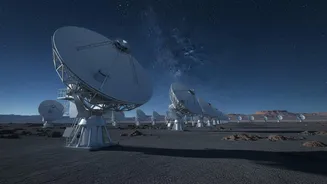
Finding these near-Earth objects (NEOs) is a monumental task. The U.S. Congress mandated NASA to find 90% of NEOs larger than 140 meters in diameter — big enough to destroy a city. While ground-based telescopes have made significant progress, they have limitations, including weather, daylight hours, and a blind spot for asteroids approaching from the direction of the sun. To close this gap, NASA is developing the NEO Surveyor, a space-based infrared telescope scheduled to launch by 2028. By operating in space and detecting the heat signature of asteroids, NEO Surveyor will be able to spot objects that are dark and difficult for optical telescopes on Earth to see. It is designed to significantly accelerate the rate of discovery and help meet the crucial 90% detection goal within a decade of its launch.
A Global Collaborative Effort
Planetary defense is not the responsibility of a single nation; it is a global imperative. Recognizing this, space agencies from around the world collaborate through organizations like the International Asteroid Warning Network (IAWN) and the Space Mission Planning Advisory Group (SMPAG). IAWN, coordinated by NASA, acts as a global clearinghouse for NEO observations, connecting observatories to discover, monitor, and characterize potential threats. SMPAG, chaired by the European Space Agency (ESA), serves as a forum for space agencies to coordinate a potential deflection response. Following NASA's DART mission, ESA's Hera mission, which launched in 2024, is now en route to the Didymos-Dimorphos system to conduct a detailed post-impact survey. This international follow-up will provide critical data on the mass and composition of the asteroid, turning the DART experiment into a well-understood and repeatable deflection technique.