





In the world of Indian cooking, 'saag' is a term often simplified to mean spinach. But this description barely scratches the surface of a dish that is as diverse as India itself. How can one word describe so many different textures and flavours?
More Than Just Spinach
The word
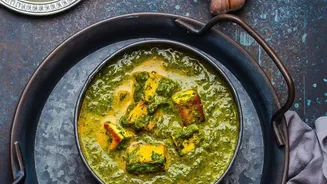
'saag' in many Indian languages simply refers to leafy greens. It is not one single dish, but a whole category of preparations that use a variety of greens like mustard leaves (sarson), fenugreek (methi), goosefoot (bathua), amaranth (cholai), and of course, spinach (palak). The specific greens used often depend on the season and region, from the mustard fields of Punjab to the water spinach found in Bengal. This variety is the first key to understanding saag; the choice of leaves, from peppery mustard to mild spinach, sets the fundamental flavour profile of the final dish. A mix of greens is often used to create a more complex and balanced taste.
The Punjabi Art of Slow Cooking
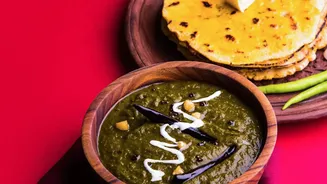
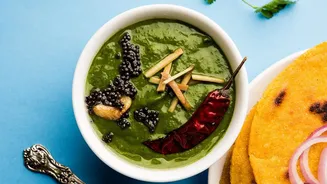
The most famous version, Sarson da Saag, hails from Punjab. Its defining characteristic is the slow-cooking process. Traditionally, a mixture of mustard greens, spinach, and bathua are simmered for hours until they become incredibly soft and tender. This long cooking time mellows the pungent, slightly bitter edge of the mustard leaves. The greens are then mashed, often with a wooden tool called a 'ghotni', to achieve a coarse, rustic texture rather than a perfectly smooth puree. Another crucial step is adding 'makki ka atta' (maize flour), which acts as a binder, preventing the water from separating and giving the saag its signature creamy, thick consistency. The final flourish is a 'tarka' or tempering of ghee, onions, ginger, and garlic, which adds a rich layer of aromatic flavour.
The Quick, Fresh Bengali 'Shaak'
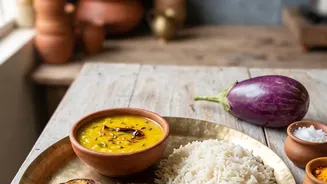
Travel east to Bengal, and you'll find a completely different approach. Here, 'shaak' is often prepared quickly to preserve the fresh, vibrant character of the greens. A common preparation is 'Shaak Bhaja', a simple stir-fry. The greens are tossed in hot mustard oil with minimal spices, often just dried red chillies and a five-spice blend called 'panch phoron'. The goal is to wilt the leaves while retaining some of their texture and bite. Another Bengali style is 'Ghonto', a dry curry where greens are cooked with a mix of vegetables like pumpkin, potatoes, and brinjal until everything is soft and mingled. Unlike the creamy, pureed Punjabi saag, Bengali preparations celebrate the distinct identity and flavour of the leaves themselves, offering a lighter, less rich experience.
Himalayan Hill Variations
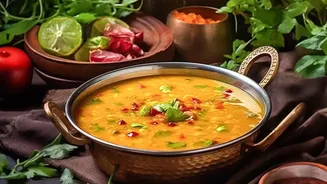
In the mountainous regions of Himachal Pradesh, saag preparations are rustic and make use of unique local flora. Greens like 'cholai' (amaranth) and 'chooch' (a type of water plant) are common. Himachali saag might be cooked with lentils or feature rice added to the greens to create a thick, porridge-like consistency, a dish in itself. The cooking style is often simple, highlighting the earthy flavours of the foraged greens. For instance, 'Chooch ka Saag' is slow-cooked on a low flame to allow the unique flavours to develop, with a simple tempering of garlic and ginger. This method reflects a resourceful cuisine adapted to the local environment.
How Technique Defines the Dish
The final character of any saag comes down to technique. Slow simmering, as seen in Punjab, breaks down the cell walls of the greens completely, creating a creamy, homogenous texture where flavours meld. Quick stir-frying, popular in Bengal, keeps the greens fresher and more distinct. The choice of fat also plays a huge role; ghee adds a nutty richness, while mustard oil provides a pungent kick. Blanching the greens in hot water before cooking can help retain a vibrant green colour and remove some bitterness. Finally, the binder, whether it's maize flour for thickness or vegetables for substance, fundamentally alters the body of the dish. From a creamy puree to a light stir fry, the method is everything.