




Finding a full hour, or even 30 minutes, for exercise can feel impossible. But what if you only needed five? Research shows that short, consistent bursts of activity can have a significant impact on your health, mood, and energy levels.
The Power of the Five-Minute Fix
The idea of a 'movement
snack' is gaining traction for good reason. Studies show that even five-minute bouts of activity can offer surprising benefits. Short bursts of exercise can help reduce blood pressure and blood sugar levels. They also trigger the release of endorphins, which can boost your mood and help alleviate stress. You can think of it as a reset button for your body and mind during a busy day. These short workouts can improve circulation, sharpen your focus, and increase your overall energy without the need for a gym membership or even changing your clothes. The key is consistency; making this a regular habit is more impactful than one long, infrequent workout.
Movement 1: The Bodyweight Squat
The squat is a foundational movement that strengthens your entire lower body, including your quads, hamstrings, and glutes. To perform it correctly, stand with your feet shoulder-width apart, toes pointing slightly outward. Keeping your chest up and your back straight, push your hips back as if you're sitting in a chair. Lower yourself until your thighs are parallel to the floor, or as low as you can comfortably go while maintaining good form. Ensure your knees track in line with your toes and don't collapse inward. Push through your heels to return to the starting position. For a modification, you can perform a squat over a chair, lightly tapping it before standing back up to ensure proper form.
Movement 2: Wall Push-Ups
For a beginner-friendly upper-body exercise, the wall push-up is an excellent choice. It targets your chest, shoulders, and arms without the strain of a traditional push-up. Stand facing a wall, about arm's length away. Place your palms flat on the wall, slightly wider than your shoulders and at chest height. Keeping your body in a straight line from your head to your heels, slowly bend your elbows and lean your chest toward the wall. Pause for a moment, then push back to the starting position. The farther your feet are from the wall, the more challenging the exercise becomes.
Movement 3: Jumping Jacks (and a Low-Impact Option)
Jumping jacks are a classic cardio move that elevates your heart rate and works your entire body. This plyometric exercise engages your legs, glutes, and shoulders all at once. For those who need a lower-impact version to protect their joints, step-jacks are a perfect alternative. Instead of jumping both feet out, simply step one foot out to the side while raising your arms, then return to the center and repeat on the other side. You'll still get your blood pumping without any jarring movements.
Movement 4: The Plank
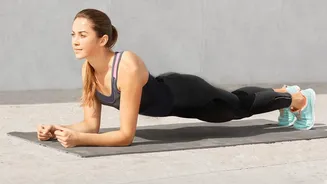
No bodyweight circuit is complete without the plank, a powerhouse for core strength. A strong core is essential for good posture and stability in almost every daily activity. To perform a plank, position yourself as if you're about to do a push-up, but rest your weight on your forearms instead of your hands. Ensure your elbows are directly under your shoulders. Your body should form a straight, rigid line from your head to your heels. Engage your core and glutes to prevent your hips from sagging. For a modification, you can perform the plank with your knees on the ground.
Putting It All Together: Your Five-Minute Routine
Now, let’s combine these movements into a quick and effective circuit. The goal is to keep moving with minimal rest to maximize your five minutes. A great way to structure this is to perform each of the four exercises for 45 seconds, followed by 15 seconds of rest before moving to the next. After you've completed all four, use the final minute to either repeat your favorite exercise or hold a plank for as long as you can. This structure keeps your heart rate up and ensures you're working different muscle groups, giving you a full-body tune-up in the time it takes to brew a cup of tea.