



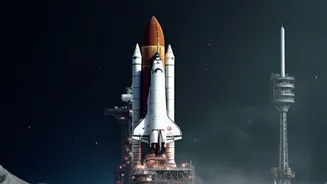
The Grand Return to the Moon
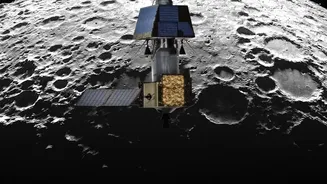
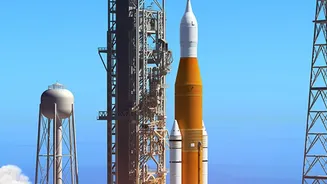
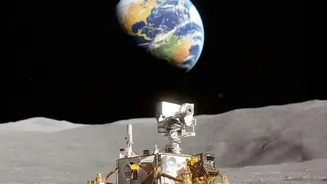
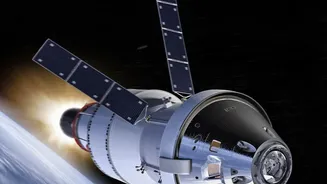
Humanity is officially back in lunar territory. In April 2026, NASA's Artemis II mission successfully sent four astronauts on a flight around the Moon, marking the first time humans have ventured that far into space since the Apollo era. This isn't just
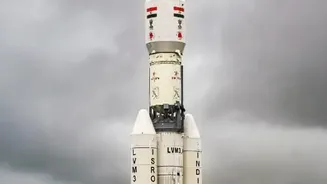
a nostalgic trip; it's the foundation for a permanent human presence on the Moon. NASA is now preparing for Artemis III and IV, missions planned for 2027 and 2028 that will test landing systems and ultimately put astronauts back on the lunar surface. For Indian students, this is especially significant. Following Chandrayaan-3's historic landing, ISRO is a key player in lunar exploration. NASA has officially invited ISRO to participate in its Moon Base program, building on India's signing of the Artemis Accords. This collaboration opens doors for future Indian involvement in everything from robotics and materials science to mission control and space medicine. The skills needed for a lunar economy are being defined right now, creating a massive opportunity for those in STEM fields.
A Direct Link Between NASA and ISRO
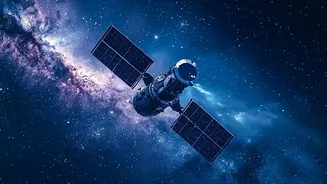
The collaboration between NASA and ISRO is no longer a distant promise; it's a present-day reality. The NASA-ISRO Synthetic Aperture Radar (NISAR) mission is now active, with its data becoming publicly available in July 2026. This state-of-the-art satellite, a joint creation of both agencies, is designed to monitor Earth's most complex processes with unprecedented detail. It tracks changes in ecosystems, ice sheets, and natural hazards like earthquakes and landslides. For young Indians passionate about Earth sciences, environmental engineering, and data analysis, NISAR is a goldmine. The open data sharing policies mean researchers and students can access and work with cutting-edge information to tackle some of our planet's biggest challenges. This successful partnership is paving the way for even deeper collaborations in human spaceflight and future scientific missions, turning a shared vision into tangible projects.
Finding New Worlds with Webb
The James Webb Space Telescope (JWST) continues to be a discovery machine, peering into the atmospheres of distant exoplanets. Recently, astronomers using Webb found a new giant planet, Beta Pictoris d, by detecting its chemical signature, a novel technique for finding worlds hidden by cosmic dust. Beyond this, another Earth-like exoplanet, GJ 3378b, has become a prime target for study because it orbits within its star's habitable zone, where liquid water could exist. For aspiring astrophysicists and planetary scientists in India, these discoveries are transformative. They prove that our galaxy is filled with worlds waiting to be characterized. Webb's data, often made public, allows students anywhere to participate in the search for life's building blocks, like water vapor and methane, on other planets. This field is expanding rapidly, and the demand for brilliant minds who can interpret this data will only grow.
Bringing a Piece of Mars to Earth
While NASA's ambitious Mars Sample Return (MSR) mission has faced a major redesign due to cost and complexity, the goal remains: bring rocks from Mars back to Earth. The Perseverance rover has already collected dozens of scientifically valuable samples from areas that may have once been habitable. NASA is now evaluating new, more streamlined approaches, with a final decision on the mission's design expected in the latter half of 2026. Though the timeline has shifted to the 2030s, the scientific prize is enormous. For students in geology, biology, and chemistry, this represents the ultimate challenge: analyzing pristine material from another planet to search for signs of past life. The engineering problems involved—from landing on Mars to launching a rocket back to Earth—are exactly the kind of challenges that inspire innovation in robotics, autonomous systems, and aerospace engineering.