








The Problem with Application Forms
Let’s be honest: mandatory application forms are a barrier, not a filter. They are a product of an era before digital-native talent. Forcing a software developer, a graphic designer, or a marketing strategist to manually input their work history—a history already
detailed on their LinkedIn and CV—is redundant and disrespectful of their time. Top talent, especially in high-demand fields, will often abandon such applications. These forms are rigid, unable to capture the nuance of project-based work, the flair of a creative mind, or the elegant logic of a coder. They measure a candidate’s patience for bureaucracy, not their potential contribution to your company. In India’s hyper-competitive job market, this friction can mean the difference between attracting the best and settling for who was willing to finish the form.
The Power of a Portfolio Link
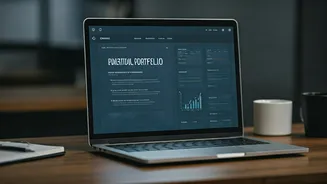
A web portfolio is not just for artists and photographers anymore. It is the single most effective tool for any professional to demonstrate their skills. It’s the difference between saying you’re a great writer and showing a collection of published articles. It’s the difference between listing ‘Python’ as a skill and sharing a link to a GitHub repository with clean, functional code. A portfolio provides proof. It transforms your resume from a list of claims into a gallery of evidence. For job seekers, a simple, clean link to a personal website, Behance profile, or even a well-organised cloud drive folder is a powerful statement. It says, “Don’t just take my word for it; see for yourself.” This is your opportunity to control the narrative, showcase your best work, and provide context that a standard CV never could.
Crafting an Effective Portfolio
A great portfolio is curated, not collected. Don’t just dump everything you’ve ever done. Select 3-5 of your best projects that are relevant to the role you want. For each project, use a simple case study format: state the problem or goal, describe the action you took, and showcase the result. Use metrics where possible. Did your marketing campaign increase leads by 20%? Did your app redesign improve user retention? Show it. Your portfolio website should be clean, fast-loading, and mobile-friendly. The user experience of your portfolio is, in itself, a demonstration of your professionalism. Use platforms that make sense for your field—GitHub for developers, Behance for designers, a personal blog for writers, or a simple, elegant website built on Squarespace or Carrd for everyone else. The goal is clarity and impact.
A Call to Recruiters: Modernise Now
To hiring managers and HR leaders: it’s time for a change. Replace the ‘Upload CV’ button and the endless form fields with a single, optional field: ‘Portfolio or Website Link.’ By doing this, you signal that you value skill and evidence over process and conformity. You will attract a higher calibre of candidate—the proactive, proud, and proficient professionals who have taken the time to document their work. Screening becomes faster and more accurate. Instead of scanning keywords on a CV, you can see a candidate’s actual work in minutes. You get a far richer understanding of their capabilities, their thought process, and their potential fit within your team. In a talent market where speed and quality are paramount, clinging to outdated application forms is a competitive disadvantage. Make the switch and start evaluating talent, not paperwork.