




Falling for the 'Health Halo'
The most common mistake is assuming that a “high-protein” claim automatically makes a food healthy. Many products use this claim as a marketing tool, creating a 'health halo' that distracts from less desirable ingredients. A protein bar or snack might
be packed with protein, but it could also be high in sodium, added sugars, or unhealthy fats. Studies have found that a majority of products with protein claims are actually classified as 'less healthy' due to these other ingredients. The takeaway is to look beyond the flashy claim on the front and scrutinize the entire nutrition panel on the back.
Ignoring the Serving Size
You see “20 grams of protein” in bold, but this number is meaningless without context. The nutrition information on a label is based on the manufacturer's suggested serving size, which may be much smaller than what you actually consume. For example, a packet of microwave rice might list the nutrition for a 125g serving, but the whole packet could be 250g. If you eat the entire package, you need to double all the numbers, including calories, sugar, and sodium. Always check the serving size and the number of servings per container to get an accurate picture of your intake.
Only Looking at 'Per Serving'
While checking the 'per serving' column is crucial for understanding what you eat in one sitting, the 'per 100g' column is your best tool for comparing products. Serving sizes are not standardized and can vary wildly between brands, making direct comparisons misleading. One brand of yoghurt might have a 150g serving size, while another has a 120g serving. By using the 'per 100g' values, you can make a fair, apples-to-apples comparison of which product is genuinely higher in protein or lower in sugar, regardless of the brand's chosen serving size.
Overlooking Hidden Sugars
To make high-protein products taste better, manufacturers often add significant amounts of sugar. This is especially true for protein bars, flavoured yoghurts, and breakfast cereals. These sugars can hide under many different names on the ingredients list, such as brown rice syrup, fructose, agave nectar, or anything ending in '-ose'. An ingredient list is ordered by weight, so if a form of sugar is one of the first few ingredients, the product is likely high in added sugars. A good rule of thumb is to choose products where the grams of protein are higher than the grams of sugar.
Not Considering Protein Quality
Not all protein is created equal. Protein quality refers to how well your body can digest and use it, which depends on its amino acid profile. Animal-based proteins like whey, casein, and eggs are 'complete' proteins, containing all nine essential amino acids. Many plant proteins are 'incomplete', but this is easily solved by eating a variety of plant sources. However, some labels can be misleading by including low-quality sources like collagen, which lacks a key amino acid, to inflate the total protein grams on the front of the pack. If a product makes a protein claim, it is required to list a % Daily Value (%DV), which is adjusted for protein quality. This can give you a better clue about the amount of usable protein you are actually getting.
Forgetting the Ingredients List
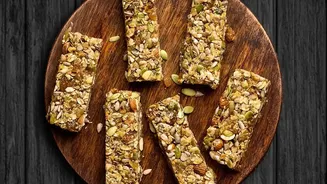
The nutrition facts panel tells you the numbers, but the ingredients list tells you the story. This is where you'll find out what the product is actually made of. Beyond hidden sugars, look out for a long list of additives, thickeners like gums, and artificial flavours. Many processed high-protein snacks use these to improve texture and shelf-life rather than to provide nutrition. A shorter list with recognizable, whole-food ingredients like nuts, seeds, and oats is generally a better sign. If you don't recognize the first few ingredients, you might want to reconsider your choice.