



Pune: The Birthplace of a Tradition
Pune is where the Ganeshotsav we know today began. It was here in 1893 that freedom fighter Lokmanya Tilak transformed the private festival into a grand public event (Sarvajanik Ganeshotsav) to unite people. The city holds its history close, with a special
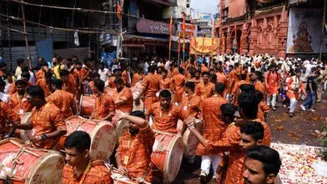
reverence for the ‘Manache Paach’ or the five most honoured Ganpati pandals. These pandals, led by the Kasba Ganpati, are not necessarily the most lavish, but they hold immense historical and cultural prestige. They lead the city's immersion procession on the final day. Visiting Pune during the festival is to witness a celebration deeply rooted in tradition, community, and history, with energetic dhol-tasha processions echoing through its streets.
Hyderabad: Home of the Colossal Idol
Hyderabad’s celebration is defined by one word: scale. The city is famous for the Khairatabad Ganesh, an enormous idol that is installed annually and often towers over 60 feet tall. The tradition began in 1954 with a humble one-foot idol and has since grown into one of India's most significant Ganeshotsav attractions, drawing millions of devotees. The 10-day festival culminates in a massive procession as the giant idol makes its journey to Hussain Sagar Lake for immersion, a spectacle that brings the entire city to a standstill. The event is a symbol of communal harmony and a testament to the city's larger-than-life spirit.
Ganpatipule: A Spiritual Seaside Celebration
For a more spiritual and serene experience, the coastal town of Ganpatipule in Maharashtra offers a unique alternative. The town is a revered pilgrimage site, home to a 400-year-old 'swayambhu' (self-manifested) Ganesh idol housed in a temple right on the beach. During Ganesh Chaturthi, this tranquil town transforms into a hub of devotion. Villagers and pilgrims come together for rituals, aartis, and processions. The celebration here is less about grand pandals and more about the powerful blend of faith and nature, with the Arabian Sea providing a stunning backdrop for the festivities.
Goa: A Festival of Homecoming
In Goa, Ganeshotsav, locally known as 'Chavath', is an intimate, family-focused affair. Unlike the massive public displays elsewhere, the heart of the celebration is in ancestral homes, where families reunite for the festival. A unique feature is the 'matoli,' a wooden canopy decorated with seasonal local fruits, flowers, and vegetables, which is hung above the Ganesh idol. While there are public pandals, the essence of Goan Chavath lies in home worship, traditional hymns sung to the beat of the ghumot (an earthen drum), and a strong sense of community that brings generations together.
Bengaluru: The Eco-Conscious Celebration
Bengaluru has carved a niche for itself with its focus on eco-friendly celebrations. For years, the city has seen a strong movement towards using Ganesha idols made from natural clay, cow dung, and other biodegradable materials to protect its lakes and environment. Many organizations and community groups conduct workshops to teach people how to make their own green idols. This conscious approach doesn't diminish the festive spirit; pandals are still vibrant and processions are lively, but there is an underlying message of sustainability that makes Bengaluru's Ganeshotsav both traditional and progressive.
Chennai: A Southern Cultural Blend
Known as Vinayagar Chaturthi in Tamil Nadu, the festival in Chennai is a vibrant mix of devotion and street-level energy. Neighbourhoods across the city erect colourful pandals, and the celebration culminates in grand immersion processions heading towards the sea at designated spots like Marina Beach and Pattinapakkam. The air fills with the sound of drum beats and devotional songs as trucks carrying idols of all sizes make their way to the coast. The celebration has a distinct local flavour, blending pan-Indian traditions with Tamil cultural practices, making it a unique spectacle to witness.
Kanipakam: The Festival of a Growing Idol
Located in Andhra Pradesh, the village of Kanipakam is home to the Varasiddhi Vinayaka Temple, a famous shrine with a self-manifested idol that is believed to be continuously growing in size. The main festival here is the annual Brahmotsavam, a 21-day event that begins on Ganesh Chaturthi. This extended celebration attracts thousands of devotees from across the country for elaborate rituals, daily processions on various 'vahanams' (celestial mounts), and cultural performances. A visit to Kanipakam during this time is a deeply spiritual pilgrimage, centred on a living miracle and ancient temple traditions.