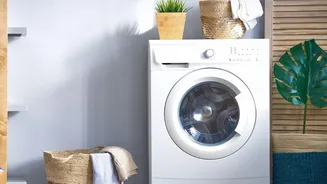







Start with a Smarter Wash
Your strategy for fresh, dry clothes begins in the washing machine. During the rainy season, don't let damp or dirty clothes pile up for days, as this encourages mildew growth before they're even washed. Washing smaller loads more frequently is more effective
than one large, overstuffed load. Overloading the machine prevents clothes from rinsing properly and getting enough airflow. When washing, consider adding about half a cup of white vinegar to the rinse cycle. Vinegar is a natural antibacterial agent that helps neutralize odours and dissolve detergent residue without leaving a scent. Using an antibacterial detergent can also provide an extra line of defence against musty smells.
Maximise Water Removal
The less water your clothes hold after washing, the faster they will dry. Make the most of your washing machine's spin cycle. Setting it to the highest speed suitable for your fabric type can remove a significant amount of excess water, sometimes leaving clothes almost half-dry. For very absorbent items like towels or jeans, running an extra spin cycle can make a huge difference, drastically cutting down indoor drying time. This single step is one of the most effective ways to combat the slow-drying effects of a humid environment.
Mastering Indoor Drying
With limited sunshine, indoor drying becomes the default. The key is to maximize airflow. Instead of draping clothes over doors and furniture, use a dedicated clothes drying rack. Space your garments out, leaving a few inches between each hanger so air can circulate freely. Placing the rack near a window or in a well-ventilated area is ideal. To speed things up, position a fan to blow air across the clothes. This constant movement helps evaporate moisture faster. If you have a dehumidifier, place it in the room where clothes are drying; it works by pulling moisture directly from the air, creating a less humid environment that is perfect for drying laundry.
Banishing Musty Odours
Even with careful drying, that dreaded damp smell can sometimes creep in. If you notice a musty odour on clothes that are supposedly dry, don't just fold them away. The culprit is often tiny pockets of trapped moisture, especially in thicker parts like collars and waistbands. A quick press with a hot iron can eliminate this final bit of dampness and kill any lingering odour-causing bacteria. For persistent smells in the wardrobe, natural moisture absorbers can work wonders. Place a small open box of baking soda, a few pieces of chalk, or some silica gel packets in the corners of your closet to absorb excess humidity and keep the space smelling fresh.
Smart Storage for Humid Weather
How you store your clothes is just as important as how you wash and dry them. Never put away any item that feels even slightly damp. Ensure every piece is bone-dry before it enters the wardrobe, as a single damp garment can create a musty environment for everything else. Avoid over-packing your closet; good airflow is crucial to prevent moisture from getting trapped between fabrics. Regularly air out your wardrobe by leaving the doors open for a while. For items you won't be wearing for the season, store them in breathable bags or containers rather than airtight plastic, which can trap condensation. Placing camphor balls or natural desiccants like silica gel pouches inside can also help protect your clothes from fungus and moisture.