



The Day Everything Changed
In April 2024, Murali Sreeshankar's world came crashing down. During a routine training session in his hometown of Palakkad, a freak accident resulted in a ruptured patellar tendon in his knee. The diagnosis was devastating. The dream of competing at the
Paris 2024 Olympics, for which he had already secured a quota, was instantly shattered. Doctors and surgeons were stark, with some suggesting he might never run again, let alone compete at an elite level. For his father and coach, S. Murali, a former international athlete himself, the priority shifted from medals to basic mobility. He later admitted his only hope was to see his son walk again without crutches. It was the beginning of the longest and darkest period in the young jumper's career.
The Gruelling Road to Recovery
What followed was immediate surgery in Doha, Qatar, and the start of a long, arduous rehabilitation process. For over 650 days, Sreeshankar was absent from competition. The journey back was a series of painful, incremental victories. Supported by the Target Olympic Podium Scheme (TOPS), he underwent extensive rehab, slowly rebuilding strength in a body that had been finely tuned for explosive power. His father recalls the fear he felt watching his son's first tentative jumps a year after the injury, managing a mere three metres. But Sreeshankar’s mental fortitude, a quality his father compares to the focus of Lord Shiva, never wavered. He spent months at facilities like the Inspire Institute of Sport and the National Centre of Excellence in Thiruvananthapuram, focused singularly on one goal: proving the doubters wrong.
A Tense Final in Glasgow
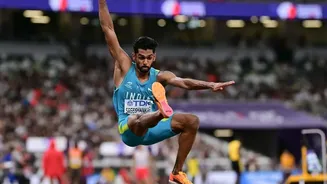
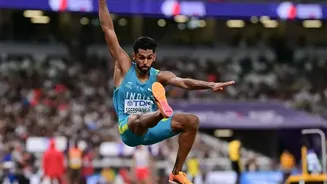
Stepping onto the track at Scotstoun Stadium in Glasgow, Sreeshankar carried the weight of the past two years. He opened his account confidently with an 8.03m jump, before soaring to 8.09m on his second attempt. This put him in the lead and in a strong position for gold. The field was competitive, featuring Jamaica's former world champion Tajay Gayle and Scotland's home favourite Stephen Mackenzie. As the final progressed, the pressure mounted. Gayle, a formidable competitor, unleashed a massive 8.15m jump in the fourth round to snatch the lead. Sreeshankar battled hard, pushing for a decisive response, but a narrow foul on a potentially huge jump and a final attempt of 7.97m meant he couldn't reclaim the top spot. The gold was just out of reach.
A Silver Lining of Pure Gold
Though he narrowly missed the gold, Sreeshankar’s 8.09m leap secured him the silver medal. While expressing a hint of disappointment at not converting his 2022 silver to gold, he acknowledged the profound significance of the moment. This medal was not about the colour; it was a testament to his resilience. He became the first Indian male long jumper to win two consecutive Commonwealth Games medals, a historic achievement in itself. More importantly, it marked the successful completion of a comeback few thought possible. From being told his career was over to standing on a major international podium again, Sreeshankar had defied the odds. The silver from Glasgow was a symbol of an unbreakable spirit, a victory over adversity that shone brighter than any gold.