




Embrace the Power of Natural Light
Before we dive into the how, let’s focus on the why. Natural light is more than just a decorating trend; it’s a wellness tool. Exposure to sunlight helps regulate our circadian rhythms, improving sleep and boosting serotonin levels, which can elevate
our mood. A well-lit room also feels larger, cleaner, and more inviting. By making a conscious effort to maximize daylight, you’re not just beautifying your home—you’re creating a healthier, happier environment. The goal isn't to live in a glass box, but to thoughtfully manage and amplify the light you already have, turning dim corners into bright, usable spaces.
The Sheer Drape Strategy
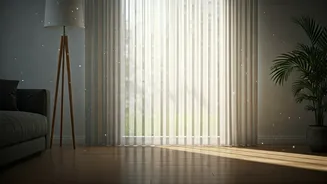
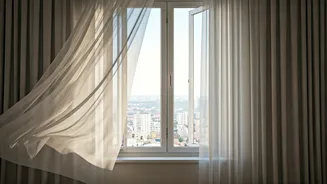
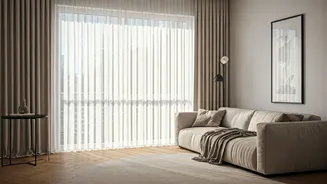
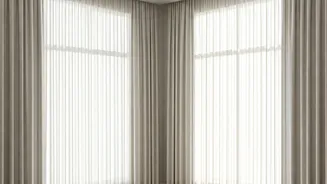
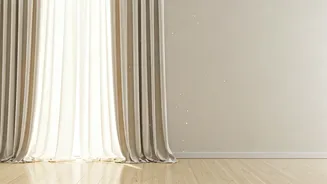
Heavy, opaque curtains have their place, but if maximizing light is your goal, they are the enemy. Sheer drapes are your most valuable ally. Unlike their thicker counterparts that block light completely, sheers filter it. They soften harsh midday glares, diffuse the light evenly throughout the room, and provide a layer of privacy without plunging you into darkness. When choosing sheers, consider the fabric. Linen offers a relaxed, textured look; cotton is crisp and clean; and voile is delicate and ethereal. The key is to find a fabric that is translucent enough to let light pass through but substantial enough to offer the privacy and aesthetic you desire. White and off-white are classic choices as they reflect the most light, but a pale, soft colour can also work beautifully.
Hang Them High and Wide
How you hang your drapes is just as important as the drapes themselves. The most common mistake is mounting the curtain rod directly on the window frame. This practice effectively shrinks your window, as the curtains block the edges of the glass even when fully open. To create the illusion of a larger window and let in maximum light, follow the 'high and wide' rule. Mount the curtain rod at least 10-15 cm above the top of the window frame, and extend it 15-25 cm on either side. This technique tricks the eye into seeing a taller, wider window. When the curtains are open, they will frame the window beautifully, resting on the wall instead of covering the precious glass, allowing every possible sunbeam to stream inside.
The Strategic Mirror Placement
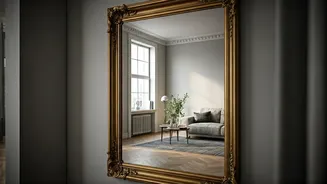
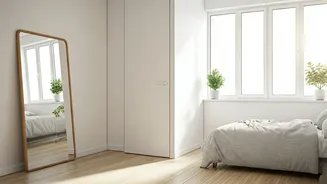
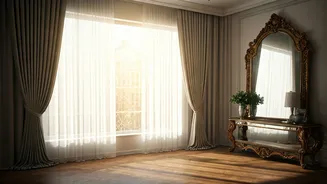
Mirrors are the second part of this light-maximizing duo. Think of them as light bouncers. A mirror doesn’t create light, but it can grab it from one part of a room and throw it into another. The most effective strategy is to place a large mirror on the wall directly opposite your brightest window. This will capture the incoming sunlight and reflect it back into the room, effectively doubling the light source and creating a brilliant sense of depth and openness. Don't be afraid to go big; a larger mirror will have a much more dramatic impact than a small one. The effect is particularly powerful in smaller rooms or long, narrow hallways that tend to feel dark and enclosed.
Thinking Beyond the Obvious
While placing a mirror opposite a window is the gold standard, it's not your only option. Consider placing a mirror adjacent to a window to catch light from a different angle and bounce it sideways into a dark corner. A long floor mirror leaned against a wall in a dimly lit area can create a 'phantom window,' brightening the space significantly. Even smaller, decorative mirrors can be grouped together on a wall to create a reflective gallery that scatters light in interesting ways. Pay attention to the frame—a metallic or light-coloured frame will enhance the reflective quality, while a dark, heavy frame can absorb light. The goal is to position mirrors in the path of any available light, whether it’s direct sun or ambient daylight.