

An Orbital Outpost for India
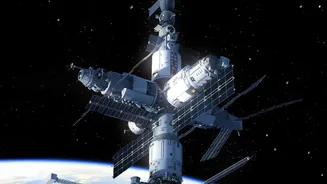
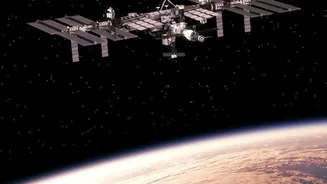
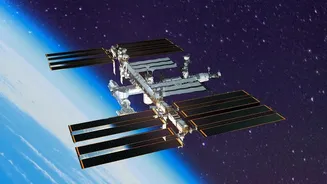
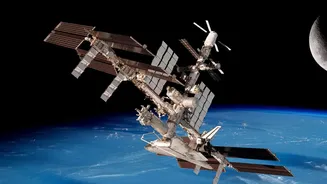
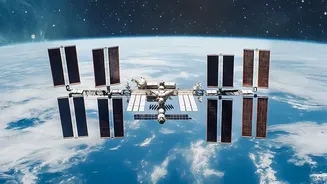
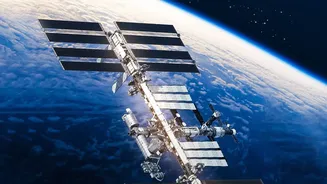
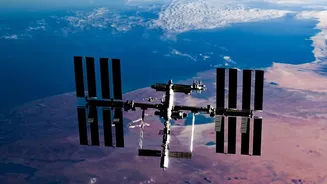
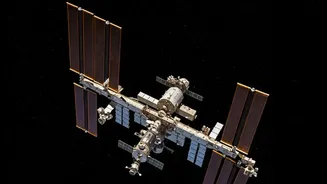
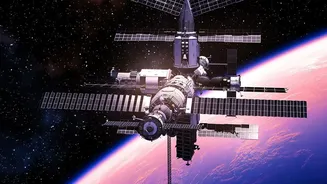
The Bharatiya Antariksha Station is ISRO's ambitious plan to build a modular space station in Low Earth Orbit, approximately 400-450 kilometres above our planet. Unlike past missions, this is not a temporary visit but a long-term commitment, establishing
a permanent Indian presence in space. The station is planned to be assembled in phases, with the first module targeted for a 2028 launch and the entire five-module station expected to be operational by 2035. This orbital laboratory will serve as a home and workplace for astronauts for periods of three to six months, allowing for sustained research and experimentation. It is a crucial stepping stone, building on the capabilities developed through the Gaganyaan human spaceflight programme and paving the way for future crewed missions to the Moon by 2040.
The Unique Laboratory of Microgravity
The single most significant benefit of a space station is access to a sustained microgravity environment. On Earth, gravity's constant pull masks or alters many physical and biological processes. In orbit, scientists can study phenomena in their purest form. This opens up revolutionary possibilities in materials science, allowing for the creation of flawless crystals and novel metal alloys that are impossible to produce on the ground. Understanding fluid dynamics without the influence of gravity could lead to more efficient fuel systems and cooling technologies. For Indian scientists and startups, the BAS will provide a unique platform to conduct world-class research, accelerating innovation with potential industrial and social spin-offs that could ripple through the economy.
Breakthroughs in Health and Medicine
Living in space has profound effects on the human body, accelerating conditions that resemble ageing, such as muscle atrophy and bone density loss. Studying these effects on astronauts aboard the BAS will provide invaluable data for combating age-related ailments and diseases like muscular dystrophy back on Earth. Furthermore, microgravity allows for the growth of larger, more uniform protein crystals, which is a critical step in drug discovery and understanding complex diseases. India has already begun conducting biological experiments on the International Space Station, studying everything from muscle stem cells to the reproductive cycle of resilient organisms called tardigrades. The BAS will allow India to dramatically expand this research, potentially leading to new medicines and a deeper understanding of human biology.
A Catalyst for Technological Innovation
Building and operating a space station is one of the most complex technological challenges a nation can undertake. The project will force the development of cutting-edge indigenous technologies in areas like life support systems, advanced robotics, docking mechanisms, and radiation shielding. These are not just space-specific technologies; they often lead to 'spin-offs' with widespread applications on Earth. Life support systems can lead to better air and water purification technologies, while space robotics can advance manufacturing and remote surgery. This push for self-reliance in critical systems will boost India's high-tech manufacturing sector, create skilled jobs, and strengthen its overall industrial base.
Strategic Autonomy and Global Collaboration
Having its own space station places India in an elite group of nations with an independent, permanent presence in space. This enhances the country's strategic autonomy and elevates its standing in global diplomacy. A functioning space station serves as a powerful instrument of foreign policy, opening doors for international collaboration on India's terms. The BAS can host experiments and astronauts from friendly nations, strengthening partnerships and influencing the rules that will govern the next phase of space exploration. As the era of the International Space Station winds down, the Bharatiya Antariksha Station could become a key hub for global scientific cooperation, cementing India's role as a leader in the final frontier.