




What Am I Looking For?
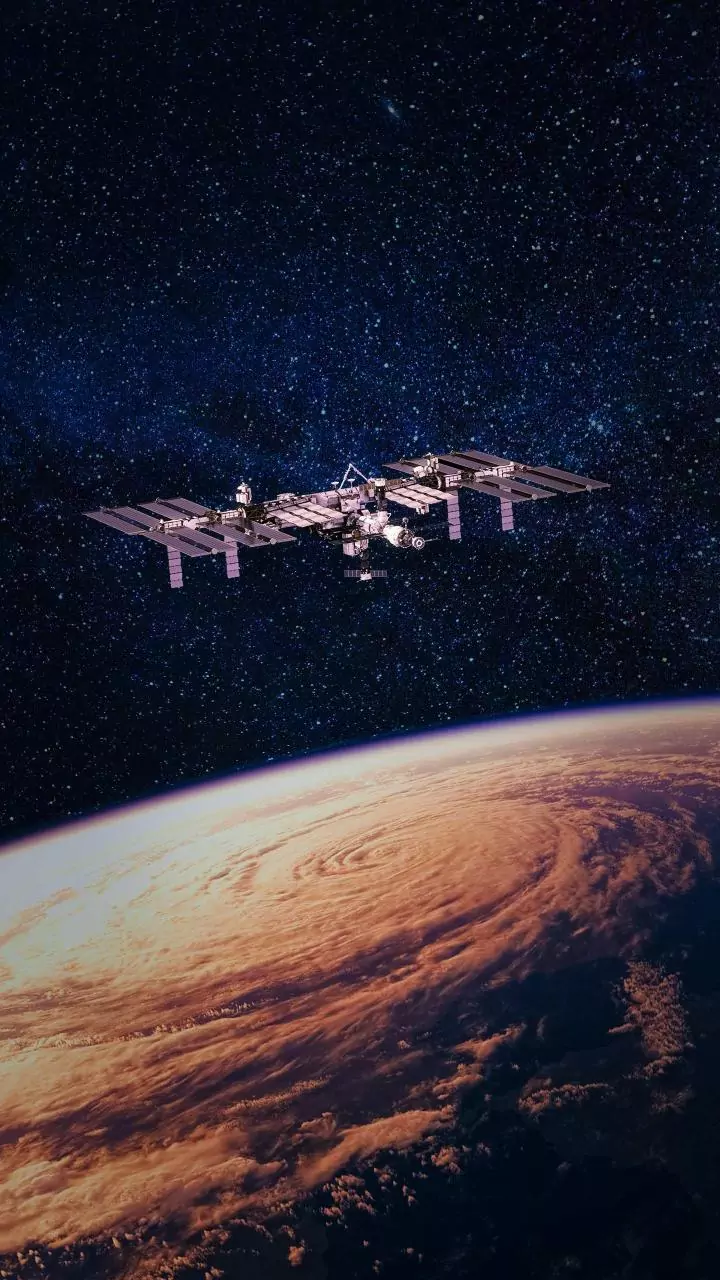
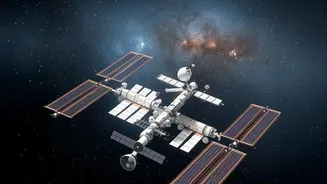
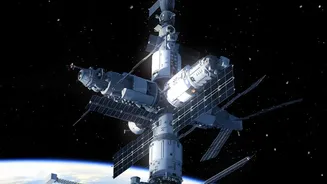
The International Space Station is a massive spacecraft, about the size of a football field, orbiting roughly 400 kilometres above Earth. To the naked eye, it appears as a very bright, steady point of light moving swiftly across the night sky. Unlike
an aeroplane, it doesn't have blinking or coloured lights. It moves faster than a typical plane and will cross the sky in just a few minutes. Because it's so large and reflective, the ISS is often the brightest object in the night sky after the Moon, making it visible even from light-polluted cities.
The Science of a Sighting
The ISS doesn't produce its own light; what you see is sunlight reflecting off its large solar panels. This is why sightings are only possible during a specific window: shortly after sunset or just before sunrise. During these times, it's dark on the ground where you are, but the ISS, at its high altitude, is still bathed in sunlight. In the middle of the day, the sky is too bright to see it, and in the middle of the night, the station is in Earth's shadow and doesn't reflect any light. The station circles the Earth about every 92 minutes, meaning it completes around 16 orbits daily. However, its path changes, so viewing opportunities from a single location can range from several times a week to only once a month.
Top Apps for the Task
Dozens of apps can predict ISS passes, but a few stand out for their user-friendliness and accuracy. Most are available for both Android and iOS. NASA's Spot The Station: This is the official NASA app for tracking the ISS. It provides a list of upcoming sighting opportunities for your location, complete with details on duration, maximum height, and where to look. It also features an augmented reality (AR) view to help you pinpoint its path in the sky using your phone's camera. ISS Detector: A highly popular choice, this app provides clear lists of upcoming passes not just for the ISS but also for Starlink satellite trains and other objects (with extensions). Its radar screen shows the satellite's trajectory, and it has a compass mode to help you find it in the real sky. Heavens-Above: A long-time favourite for satellite spotters, the Heavens-Above app provides detailed predictions and sky charts. It uses your phone's GPS for precise, personalised charts showing the station's track across the constellations. The app is known for its accuracy and comprehensive data. SkyView Lite: This is a general stargazing app that also tracks satellites, including the ISS. Its strength is its augmented reality interface, which lets you point your phone at the sky to identify stars, planets, and satellites in real-time.
Your Step-by-Step Viewing Guide
Once you've downloaded an app, the process is straightforward. First, ensure your location services are enabled or manually enter your city, so the app can provide accurate pass times. Check the app for a list of upcoming visible passes. These will typically tell you the start time, the duration of the pass, the maximum height it will reach in the sky (90 degrees is directly overhead), and the direction it will appear and disappear. Many apps, like Spot The Station and ISS Detector, can send you a notification a few minutes before a pass is about to begin. This gives you just enough time to head outside. For the best view, find a spot with a clear view of the sky, away from tall buildings or trees. Let your eyes adjust to the darkness for a few minutes before the scheduled time. When the moment arrives, look in the direction indicated by the app and watch for a bright light to appear and glide silently across the firmament.