





The Blueprint: An Outpost at the Lunar South Pole
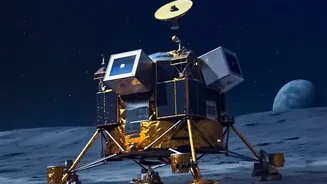
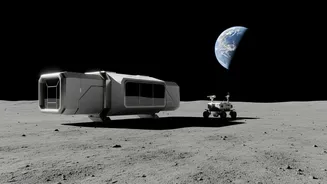
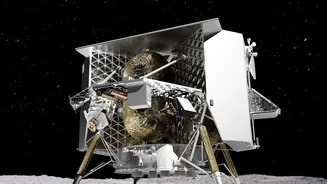
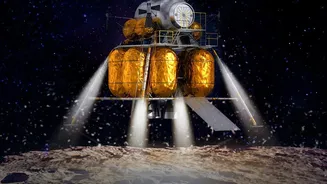
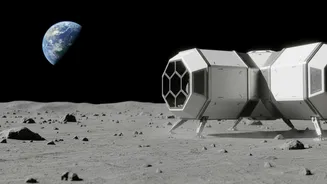
NASA's grand vision is called the Artemis program, and its long-term goal is to establish a permanent human presence on the Moon. This future 'Moon Base' is slated for the lunar South Pole, a region of intense scientific interest due to its unique lighting
conditions and the potential for water ice hidden in permanently shadowed craters. The base isn't just a flag-planting exercise; it's designed to be a hub where astronauts will live, work, and conduct research. Think of it as the Antarctic research station of the solar system—a challenging, remote outpost built for science and discovery. This lunar settlement will also serve as a crucial proving ground for the technologies and strategies needed for an even bigger leap: sending humans to Mars.
Why Partnership Is the New Space Race
Unlike the solo sprint of the Apollo era, today's space exploration strategy is all about collaboration. Building a sustainable lunar base is an incredibly complex and expensive undertaking, far too large for any single nation to tackle alone. To manage this, the U.S. established the Artemis Accords, a set of non-binding principles for safe and transparent civil space exploration. By signing, nations agree to common standards for everything from sharing scientific data to deconflicting activities. India officially signed the Accords in 2023, signaling its commitment to cooperative space governance and paving the way for deeper collaboration. In early August 2026, NASA formally invited ISRO to participate in the Moon Base program, turning a political agreement into a tangible opportunity.
ISRO’s Calling Card: Frugal Innovation and Proven Expertise
So, why ISRO? India's space agency has built a global reputation for what's often called "frugal engineering"—pulling off complex, high-stakes missions at a fraction of the cost of other major space powers. Its crowning achievement came in 2023, when the Chandrayaan-3 mission made India the first nation to successfully soft-land a spacecraft near the lunar south pole. This wasn't just a technical victory; it demonstrated mastery over the exact challenging terrain where NASA plans to build its base. Furthermore, ISRO has a history of major lunar science contributions, with its Chandrayaan-1 mission in 2008 providing some of the first conclusive evidence of water molecules on the Moon. This track record of low-cost success and specialized lunar knowledge makes ISRO an extremely attractive partner.
From Rovers to Robotics: How India Could Contribute
ISRO’s potential contributions are both specific and significant. With its demonstrated success in lunar mobility, ISRO could develop rovers or other surface vehicles to explore the lunar landscape. Its expertise in remote sensing and data analysis, honed through the Chandrayaan missions, would be invaluable for prospecting resources like water ice, a critical component for long-term habitation. India could also contribute scientific instruments, communication systems, or navigation technologies. As ISRO plans its own ambitious lunar sample-return mission (Chandrayaan-4) and a joint polar exploration mission with Japan, the experience gained would directly benefit the larger Artemis goals. This collaboration allows NASA to leverage ISRO's strengths while enabling ISRO to fast-track its own technological development without having to reinvent every single component.
A Partnership Already in Motion
The idea of a NASA-ISRO lunar partnership isn't just hypothetical; it's built on a foundation of successful collaboration. A prime example is the NISAR (NASA-ISRO Synthetic Aperture Radar) satellite, a sophisticated Earth-observation mission launched in 2025. This joint project, where NASA provided the L-band radar and ISRO provided the S-band radar, spacecraft, and launch vehicle, demonstrates a mature and effective working relationship. The two agencies have shared instruments on past missions, including NASA payloads on India's Chandrayaan-1. This history of trust and technical integration proves that the two agencies can work together on highly complex projects, making the leap to a joint lunar base effort a natural and logical next step.