




A Brain in Orbit
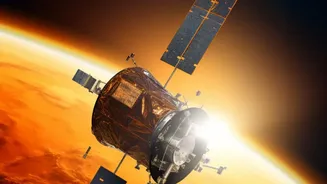
On October 1, 2026, a SpaceX Falcon 9 rocket is scheduled to carry a unique payload into space: a satellite named MOI-1A, developed by Indian startup TakeMe2Space. This isn't just another satellite; it's described as India's first orbital computing satellite,
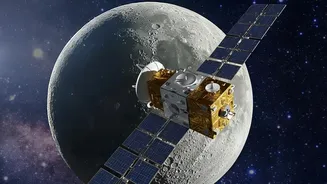
designed to act as a small but powerful AI lab in low-Earth orbit. Weighing less than 50 kilograms, MOI-1A is equipped with advanced Nvidia Orin NX processors, the same kind of chips used for edge computing on Earth. Its mission is to prove that complex data analysis, which has historically been done on the ground, can be performed directly in space.
Why Process Data in Space?
Traditionally, Earth-observation satellites are like giant cameras in the sky. They capture enormous amounts of raw data—thousands of images of forests, cities, farmland, and oceans—and beam it all back to massive data centers on the ground. This process creates a significant bottleneck. It consumes vast amounts of time and expensive bandwidth to downlink the data before a single insight can be extracted. Orbital computing, or edge computing in space, flips this model on its head. Instead of sending everything, the satellite uses its onboard AI to think for itself. It can sift through the images in real-time, identify what’s important—like spotting the early signs of a wildfire, tracking a ship, or detecting changes in crop health—and send back only the valuable, processed results. This makes data delivery dramatically faster and more efficient.
India's High-Tech Eye in the Sky
For TakeMe2Space, MOI-1A is a crucial step toward commercial operations. An earlier technology demonstrator, launched in late 2024, successfully proved that applications could be uploaded and AI tasks could be run in orbit. However, a subsequent satellite was lost due to a launch vehicle failure, making MOI-1A's mission critical for validating the company's vision. The platform is designed to be flexible. Customers can upload their own AI models to the satellite for specific tasks. As MOI-1A passes over a customer's area of interest, the onboard AI gets to work, processing data and delivering targeted analysis. According to the company, 23 customers have already signed on, spanning industries from agriculture and mining to insurance and supply chain management.
From Smarter Farms to National Security
The potential applications for this technology in an Indian context are immense. In agriculture, on-demand AI analysis could provide farmers with real-time alerts about crop stress or pest infestations, enabling more precise interventions. For disaster management, a satellite that can instantly identify flooded areas or damage after an earthquake and send alerts directly to response teams on the ground could save lives. This capability aligns with the broader goals of organisations like ISRO, which have long envisioned using space-based assets for rapid disaster assessment. Furthermore, the ability to securely process sensitive information in orbit has significant implications for national security, offering a way to gain immediate intelligence without the risk of intercepting large raw data transmissions.
The Next Frontier: Data Centers in Orbit
While MOI-1A is a compact edge computing platform, it represents the first step toward a much grander vision: creating entire data centers in space. TakeMe2Space plans to build a constellation of six networked satellites by 2027, creating a persistent orbital computing infrastructure. This vision is shared by major global players and even ISRO, which is studying the feasibility of establishing its own orbital data centers. The idea is to transform space into the next frontier for data processing, leveraging unlimited solar energy and proximity to data sources. This mission is more than just a test; it's a foundational move that positions India at the forefront of the emerging space-based computing economy.