





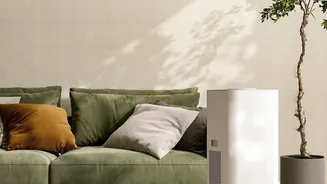
For years, we've been told that a few houseplants can purify our indoor air. But when it comes to truly clean air, the answer is more complex, involving a choice between plants, purifiers, and the air circulating from outside your window.
The Great Plant Purification Myth
The idea that
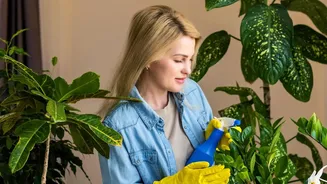
houseplants are nature's air purifiers stems from a famous 1989 NASA study. It showed plants could remove volatile organic compounds (VOCs) like benzene and formaldehyde from the air. However, there's a huge catch: these experiments were conducted in small, sealed laboratory chambers, an environment nothing like a real home or office. Subsequent research has revealed that to match the air-cleaning power of simple ventilation in a typical home, you would need an impractically vast number of plants — anywhere from 10 to 1,000 plants per square meter of floor space. In reality, the air exchange from open windows or HVAC systems dilutes pollutants far faster than a few potted plants ever could. While plants offer immense aesthetic and psychological benefits, their effect on cleaning indoor air is negligible in a normal living space.
The Mechanical Power of Air Purifiers
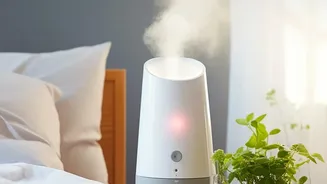
Unlike plants, air purifiers are machines engineered specifically for one job: to remove pollutants from the air. High-quality purifiers equipped with High-Efficiency Particulate Air (HEPA) filters are the gold standard. A HEPA filter is a dense mechanical mesh that physically traps airborne particles. Through a combination of processes called impaction, interception, and diffusion, these filters are certified to capture 99.97% of particles that are 0.3 microns in size — a size considered the most difficult to trap. This includes common irritants like dust, pet dander, pollen, mould spores, and even some bacteria and viruses. For residents of polluted cities, this is particularly important for capturing PM2.5 particles, which are fine enough to enter the lungs and bloodstream. Many units also include activated carbon filters to absorb odours and VOCs.
Ventilation is the Unsung Hero
Before you buy anything, however, it is critical to consider ventilation. This is the exchange of indoor air for outdoor air, and it's the most effective way to reduce the concentration of indoor pollutants. Simply opening windows and doors can dramatically improve air quality by diluting everything from cooking fumes to chemicals off-gassing from furniture. In fact, a building's natural air exchange rate is often already doing more to clean your air than a room full of plants could. However, ventilation is a double-edged sword. Its effectiveness is entirely dependent on the quality of the air outside your window. Good ventilation is key, but what you do with it depends entirely on your local environment.
Making the Right Choice for Your Home
So, what's the correct strategy? It depends on where you live and what you're trying to achieve. If you live in a high-pollution city like Delhi or Mumbai: Keeping windows closed during high AQI days is crucial to prevent outdoor pollutants from coming inside. In this scenario, a high-quality HEPA air purifier is not a luxury; it is an essential tool for creating a safe indoor environment. Plants can be added for their mood-boosting effects, but they should not be relied upon for air purification. If you live in an area with clean outdoor air: Congratulations, natural ventilation is your best friend. Opening your windows regularly is the most effective and cost-free way to ensure fresh, clean indoor air. An air purifier is likely unnecessary unless you suffer from specific allergies. Here, plants can be enjoyed for their beauty and biophilic benefits. If you suffer from allergies or asthma: Regardless of your location, a HEPA air purifier can be a game changer. By trapping allergens like pollen, dust mites, and pet dander, it directly addresses the source of your symptoms in a way that neither plants nor simple ventilation can guarantee.