

Why This Icy Moon?
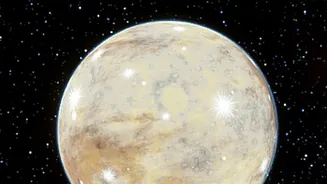
For decades, scientists have considered Europa one of the most promising places in our solar system to search for habitable environments beyond Earth. Evidence gathered by previous missions, most notably the Galileo spacecraft, strongly suggests a global
ocean of liquid saltwater exists beneath its ice shell, which may be up to 100 kilometres deep. This ocean is believed to contain about twice as much water as all of Earth's oceans combined and is thought to be in direct contact with a rocky seafloor. This interaction could create hydrothermal vents, similar to those on Earth's ocean floors, which supply the chemical nutrients necessary to support life. Add in energy from Jupiter's immense gravitational pull, and you have the three key ingredients for life as we know it: water, chemistry, and energy.
A Recon Mission, Not a Landing
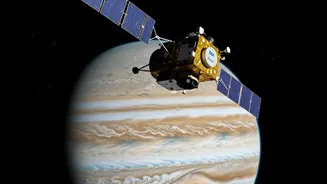
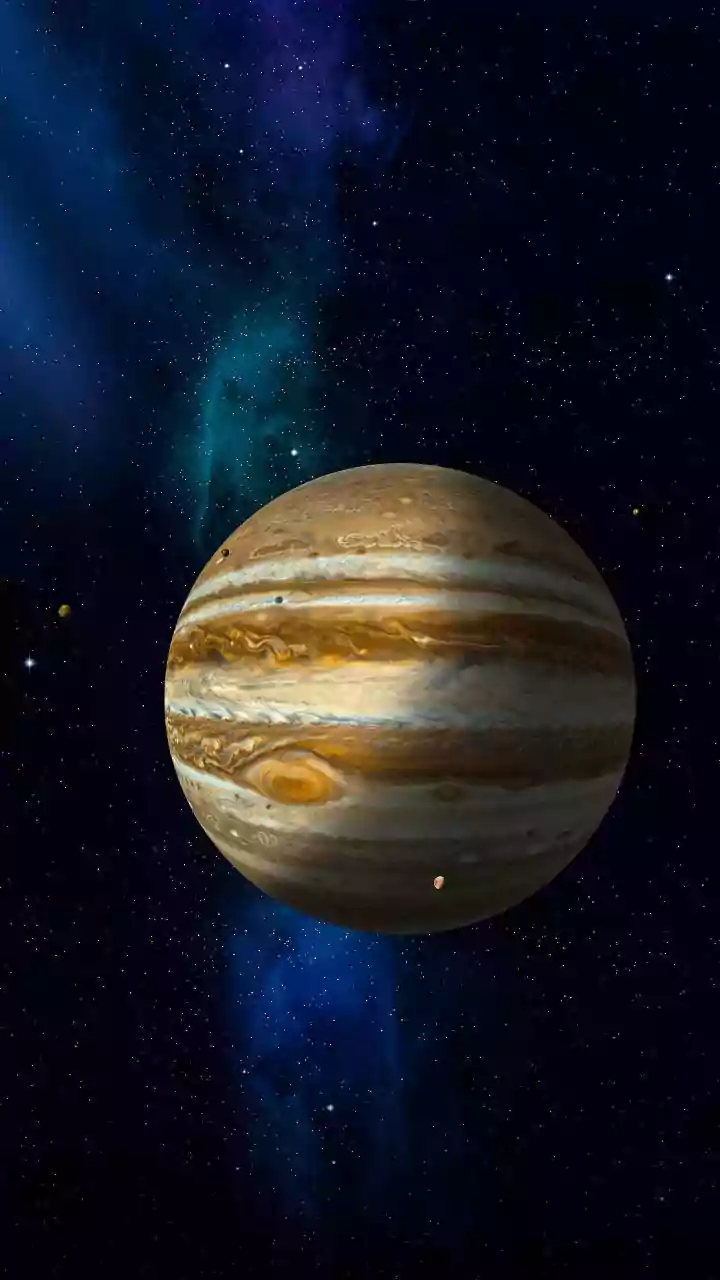
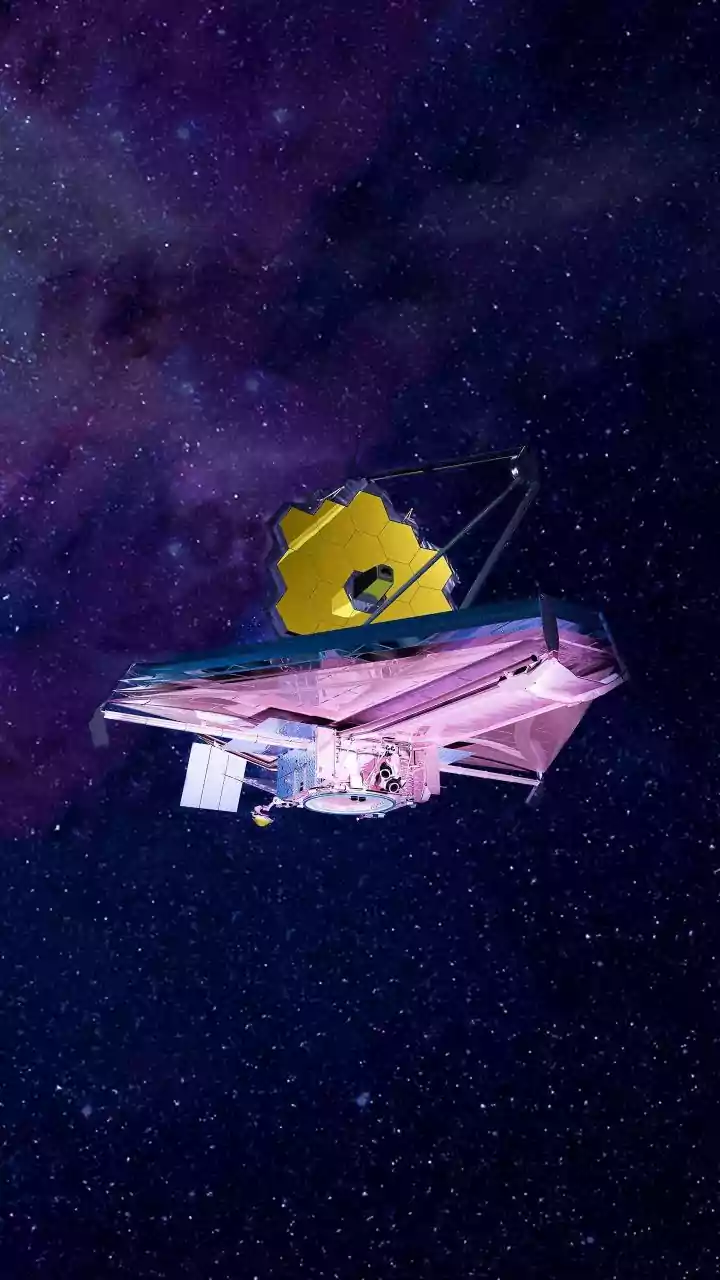
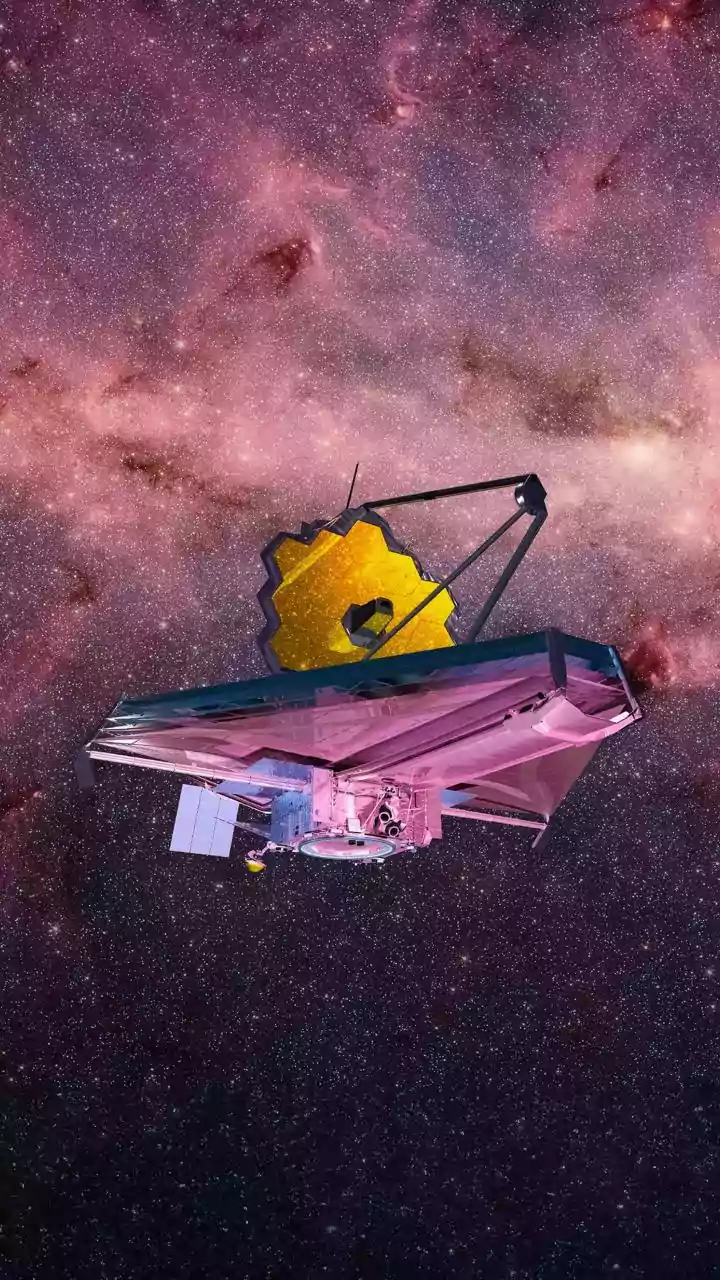
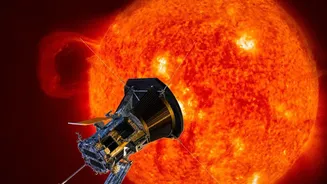
Launched in October 2024, the Europa Clipper spacecraft is currently on a long journey to Jupiter, scheduled to arrive in orbit in April 2030. Rather than landing or orbiting Europa directly—which would expose it to Jupiter’s intense and damaging radiation for too long—Clipper will orbit Jupiter and perform dozens of close flybys of the moon. During these encounters, some as low as 25 kilometres above the surface, its suite of nine science instruments will gather immense amounts of data. This strategy allows the spacecraft to study diverse regions of Europa's surface while minimizing radiation exposure, ensuring the mission can last for its planned 3.5 years of observation. As of late 2026, the spacecraft is well on its way, having already performed a gravity-assist manoeuvre at Mars in March 2025 and heading towards another with Earth in December 2026 to gain speed for its interplanetary voyage.
Searching for Life's Fingerprints
Clipper is not designed to find life itself, but to look for 'biosignatures'—signs that point to biological processes. The mission's main goal is to determine if the ocean is habitable. A key target is to analyse any plumes of water vapour that may be erupting from the moon's surface, as first suggested by observations from the Hubble Space Telescope and data from the Galileo probe. If Clipper can fly through one of these plumes, its mass spectrometers, MASPEX and SUDA, could directly sample the ocean's composition. These instruments will search for specific organic molecules and chemical imbalances, like certain ratios of sulfur isotopes, that are difficult to explain through geology alone. Even without plumes, the instruments will map the composition of the surface, looking for salts and organic materials, like carbon dioxide, that have been brought up from the ocean below.
Peering Beneath the Ice
Understanding the ocean requires knowing more about the ice shell that covers it. Clipper's ice-penetrating radar instrument, REASON, is designed to do just that. It will measure the thickness of the ice and search for pockets of liquid water that may be trapped within the shell. Meanwhile, a powerful magnetometer will measure the strength and direction of the magnetic field around Europa. Because a salty ocean conducts electricity, it creates its own weak magnetic field as it moves through Jupiter's powerful magnetic field. By measuring this induced field, scientists can confirm the ocean’s existence, estimate its depth, and even gauge its salinity. Combined with high-resolution cameras that will map Europa's cracked and chaotic surface, these tools will paint the most detailed picture yet of this mysterious world.