






See and Be Seen: Master Low-Light Running
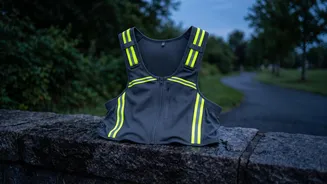
As daylight hours shrink, your biggest safety concern is visibility. You need to see where you're going, and more importantly, others need to see you. Don't assume streetlights are enough. Invest in gear that makes you stand out. Reflective clothing is a great
starting point, with vests, jackets, and even shoes designed to catch and reflect light from headlights. For maximum safety, combine passive reflection with active light. A headlamp helps you spot uneven pavement or puddles, while a flashing LED armband or vest makes you visible from all angles. This is especially crucial on roads where you should run against traffic to see approaching vehicles. Placing reflective elements on moving parts like your ankles and wrists creates a 'biomotion' effect, helping drivers recognise you as a runner much faster.
Dress for Success: Layering is Key
October weather can be deceptive. A pleasant evening can turn chilly once the sun fully sets. The golden rule is to layer your clothing. Start with a moisture-wicking base layer made of synthetic fabric like polyester or a light merino wool. This pulls sweat away from your skin, preventing that cold, damp feeling. Avoid cotton at all costs, as it absorbs moisture and can cause your body temperature to drop. Over your base layer, add a lightweight, wind-resistant or waterproof jacket. You can easily take it off and tie it around your waist if you get too warm. The general guideline is to dress as if it's about 10 degrees warmer than the actual temperature, as your body will heat up quickly once you start moving.
Navigate with Care: Mind Your Footing
Post-monsoon roads can be an obstacle course. Lingering puddles, mud, and uncovered potholes are common hazards, especially in low light. Choose your route wisely. Stick to familiar, well-lit paths where you know the terrain. Slow your pace down, especially in poorly lit areas. Good running shoes with excellent traction are a must to handle slippery surfaces. If you've been running in the rain, remember that your footing might be less secure. Even after a dry day, be cautious of damp patches in shaded areas. A headlamp isn't just for seeing far ahead; it's critical for illuminating the ground directly in front of you, giving you time to react to unexpected hazards.
Plan and Prepare: Your Pre-Run Checklist
A little planning goes a long way. Always let someone know your route and your expected return time. Carry your phone in case of an emergency; modern smartphones have built-in safety features that can alert contacts or emergency services with your location. While music can be a great motivator, consider running without headphones in the dark. Your hearing is a vital sense for detecting approaching traffic, cyclists, or other potential dangers. Check the weather forecast before you head out. In some coastal regions of India, October can still bring the northeast monsoon, so be prepared for unexpected showers. If storms or heavy rain are predicted, it's safer to opt for a treadmill session.
Post-Run Routine: Cool Down and Recover
Your safety routine doesn't end when your run does. Getting out of damp or sweaty clothes quickly is crucial, especially as the evening air cools. Lingering in wet gear can cause your muscles to cool down too rapidly, increasing the risk of stiffness and injury. Change into dry clothes as soon as possible and take a warm shower. This is also a good time to care for your gear. If your shoes are wet, stuff them with crumpled newspaper to help them absorb moisture and maintain their shape; never put them in a dryer. A proper cool-down stretch followed by rehydration will ensure your body recovers effectively, ready for your next run.