

Why Your Recipe Failed: A Comedy of Variables
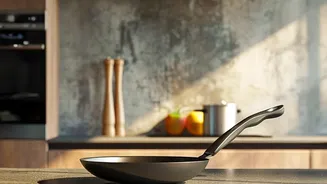
A recipe is a map, but it’s not the territory. The author can't know that your oven runs hot, your kitchen is humid, or that your 'large' eggs are smaller than theirs. Baking, in particular, is a science where small changes have big consequences. Too
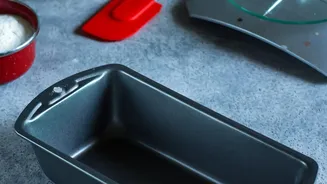
much flour can make a cake dense; a dark metal pan bakes faster than a glass one; reducing sugar isn't just about sweetness—it affects structure. A recipe provides a solid framework, but it can’t account for the unique environment of your kitchen. When a dish fails, it's rarely because the recipe is a lie; it's because an unwritten variable tipped the scales. This is where your notes become the most important ingredient. They turn a one-time failure into a data point for future success.
The Autopsy of a Kitchen Mishap
Let's diagnose a common failure: cookies that spread into a single, greasy sheet. You followed the instructions perfectly. Or did you? Without notes, you're left guessing. With notes, you can be a detective. Did you substitute butter that was too soft? That would cause spreading. Jot it down: "Used butter straight from counter, very soft." Did you eyeball the flour instead of spooning and leveling it? That could mean not enough flour was used to hold the structure. Note: "Scooped flour directly." Did you skip chilling the dough because you were in a hurry? Ah-ha. Note: "Skipped 1-hour chill time." Suddenly, you're not a failed baker; you're a scientist who just ran an experiment. By documenting what actually happened—not just what the recipe said to do—you can identify the most likely culprit and know exactly what to change next time.
What to Actually Write Down
Good notes go beyond 'this was tasty.' To be truly useful for diagnostics, your annotations need specifics. Start by dating every entry. Then, for each recipe you try, consider noting the following: Source: Where did the recipe come from? (e.g., Grandma's card, a specific website, page 42 of a cookbook). Ingredient Changes: Any and all substitutions. Did you use a different brand of chocolate chips? Whole wheat instead of all-purpose flour? Note it. Environmental Factors: Was it a humid, rainy day or dry and cold? This significantly impacts bread dough and meringues. Timings and Temperatures: Did you preheat the oven for the full recommended time? Did the cake take 10 minutes longer than the recipe stated? Write down the actual time. An oven thermometer is your best friend here. Sensory Cues: Don't just follow time; follow your senses. What did the dough feel like? What did it smell like at the 20-minute mark? The recipe might say 'golden brown,' but your photo and note of 'light tan, looked underdone' is more useful. The Final Verdict: How was the texture, flavor, and appearance? Be specific. Instead of 'good,' write 'Moist crumb, but a little bland. Could use more cinnamon.'
Building Your Personal Cookbook
This practice isn't just for fixing failures; it’s for perfecting successes. When you find a recipe you love, your notes help you replicate it perfectly every single time. Over time, this process transforms a collection of other people's recipes into your own personal, bulletproof cookbook. You'll know that for this specific brownie recipe, your oven needs to be at 170°C, not 180°C. You'll remember to add that extra pinch of salt that makes the flavour pop. This detailed record of your cooking journey empowers you to experiment with confidence. You start to understand the 'why' behind the 'what,' turning you from a recipe follower into an intuitive cook who understands how ingredients work together.
Tools of the Trade
How you keep these notes is less important than the act of keeping them. For some, the classic method of scribbling in the margins of a cookbook or on a printed recipe is best. It's immediate and attached to the source. Others prefer a dedicated spiral notebook left in the kitchen, ready to be filled with flour dust and inspiration. Digital tools like Evernote or other recipe apps offer powerful advantages like searchability, photo embedding, and syncing across devices, protecting your precious notes from kitchen spills. The best system is the one you'll actually use consistently. Whether analog or digital, choose a method that feels natural and makes it easy to capture your thoughts in the moment.