






The Case Against Crunches
For decades, the crunch was the undisputed king of ab workouts. It was simple, required no equipment, and gave you that satisfying burn that felt like progress. However, modern fitness science is questioning its reign. The primary issue with crunches
is that they are an isolation exercise, primarily targeting the rectus abdominis—the superficial 'six-pack' muscles. This single-minded focus neglects the deeper, more crucial muscles of the core. Furthermore, when performed incorrectly, which is common, crunches can put undue strain on the neck and lower back. Repeatedly flexing the spine under pressure can lead to poor posture over time, encouraging a 'hunched' position rather than the strong, upright posture we aspire to. Experts now argue that the main function of the core isn't to create motion (like a crunch), but to resist it and provide stability.
The Power of the Plank
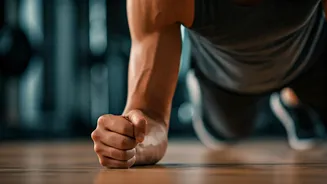
Enter the forearm plank. At first glance, it looks deceptively simple—you just hold a position. But its benefits are profound. Unlike crunches, the plank is an integrated, full-body exercise. It engages the entire core: the deep transverse abdominis (which acts like a natural corset), the obliques on your sides, and the muscles of the lower back, hips, and glutes. A study from Pennsylvania State University even found that 'integration' exercises like planks activate the abdominal muscles far more intensely than isolation exercises like crunches. The beauty of the plank is that it trains your core for its real-world job: stabilizing the spine and maintaining proper alignment. This functional strength is essential for everything from lifting groceries to improving your performance in sports. Planks also improve posture, balance, and even flexibility by stretching the muscles in the lower body.
Why India's Top Trainers Are on Board
This shift isn't just happening globally; it’s being championed by top fitness professionals across India. Elite trainers, from those coaching Bollywood celebrities to those heading boutique fitness studios, are prioritizing functional movements over outdated ones. They recognize that their clients want more than just aesthetic results; they want a body that is strong, resilient, and pain-free. The plank, with its focus on total-body stability and low risk of injury, fits this philosophy perfectly. By teaching clients to properly engage their core through planks, trainers are building a foundation for safer, more effective workouts overall. The plank is no longer just an exercise; it's a diagnostic tool that reveals an individual's core strength and stability, guiding the rest of their training program.
Your Guide to the Perfect Forearm Plank
Ready to join the revolution? Form is everything. An incorrect plank is ineffective and can lead to injury. Here’s how to do it right: 1. Start by lying face down on a mat. Place your forearms on the floor with your elbows stacked directly under your shoulders and arms parallel to your body. You can clasp your hands if it's more comfortable. 2. Lift your hips off the floor, so your body forms a straight, rigid line from your head to your heels. Your weight should be supported by your forearms and the balls of your feet. 3. Engage your core by pulling your belly button towards your spine. Squeeze your glutes and quads to keep your hips from sagging—this is the most common mistake. Imagine a broomstick resting along your back; it should touch your head, upper back, and glutes. 4. Keep your neck in a neutral position by looking at the floor slightly ahead of your hands. Don't hold your breath; breathe steadily throughout the hold. Start by holding for 20-30 seconds with perfect form. Quality is far more important than duration.
Beyond the Basics
Once you've mastered the basic forearm plank, there are numerous variations to keep challenging your core. Try a side plank to target your obliques, which are crucial for rotational stability. You can also increase the difficulty by lifting one leg off the ground, or by performing 'plank pull-throughs' where you drag a small weight from one side of your body to the other while maintaining stability. For beginners, a kneeling plank is a great modification that reduces the load while still allowing you to focus on proper core engagement. The goal is to continuously challenge your body's ability to remain stable under different conditions.