





Redefining the Perfect Home
For as long as we have looked to the stars, the holy grail has been finding 'Earth 2.0'. The logic seems simple: life happened here, so a planet with a similar size, temperature, and sun should be our best bet. But this approach may be limited by our own
experience. Scientists like Dirk Schulze-Makuch of Washington State University have championed the concept of 'superhabitable' worlds, arguing that our planet may be suitable for life, but not necessarily the best it can be. The concept, first detailed in a 2014 paper, suggests that certain conditions could make a planet more capable of hosting a larger, more diverse collection of flora and fauna than Earth. This shifts the focus from an Earth-centric view to a 'biocentric' one, prioritizing the ideal conditions for life in general, not just life as we know it.
The Superhabitable Checklist
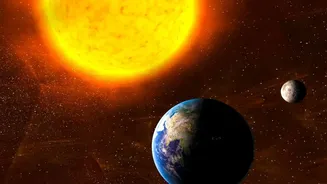
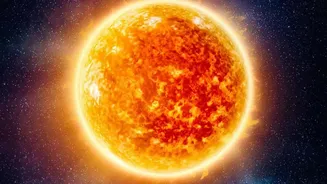
So, what makes a planet better than Earth? Researchers have developed a checklist of desirable traits. It starts with the star. Our sun, a G-type star, has a lifespan of about 10 billion years. Complex life took nearly 4 billion years to appear on Earth, which doesn't leave a huge margin for error. K-type dwarf stars, often called 'orange dwarfs', are slightly cooler and less massive but can live for 20 to 70 billion years. This provides a much longer, more stable window for life to emerge and evolve. An ideal superhabitable planet would also be slightly older, larger, and warmer than Earth. A planet up to 1.5 times Earth's mass could hold onto its atmosphere better and would have a stronger magnetic field to shield it from cosmic radiation. A surface temperature about 5°C warmer than Earth's, combined with more moisture, could foster richer biodiversity.
Why Better Than Earth?
A key advantage of K-dwarf stars is their stability. They are less prone to the violent stellar flares common to smaller red dwarfs, which could strip a planet's atmosphere and sterilize its surface. A larger planet would likely have more retained internal heat, driving robust geological activity like plate tectonics, which is crucial for recycling materials and regulating climate. A thicker atmosphere could provide better protection from meteors and distribute heat more evenly across the planet, potentially eliminating large, barren deserts or ice caps. Even the planet's layout matters. Scientists suggest that a world with shallower oceans and an archipelago-like structure of smaller continents, rather than huge landmasses like Asia or Africa, could lead to greater biodiversity due to the abundance of coastal habitats.
Are There Any Candidates Out There?
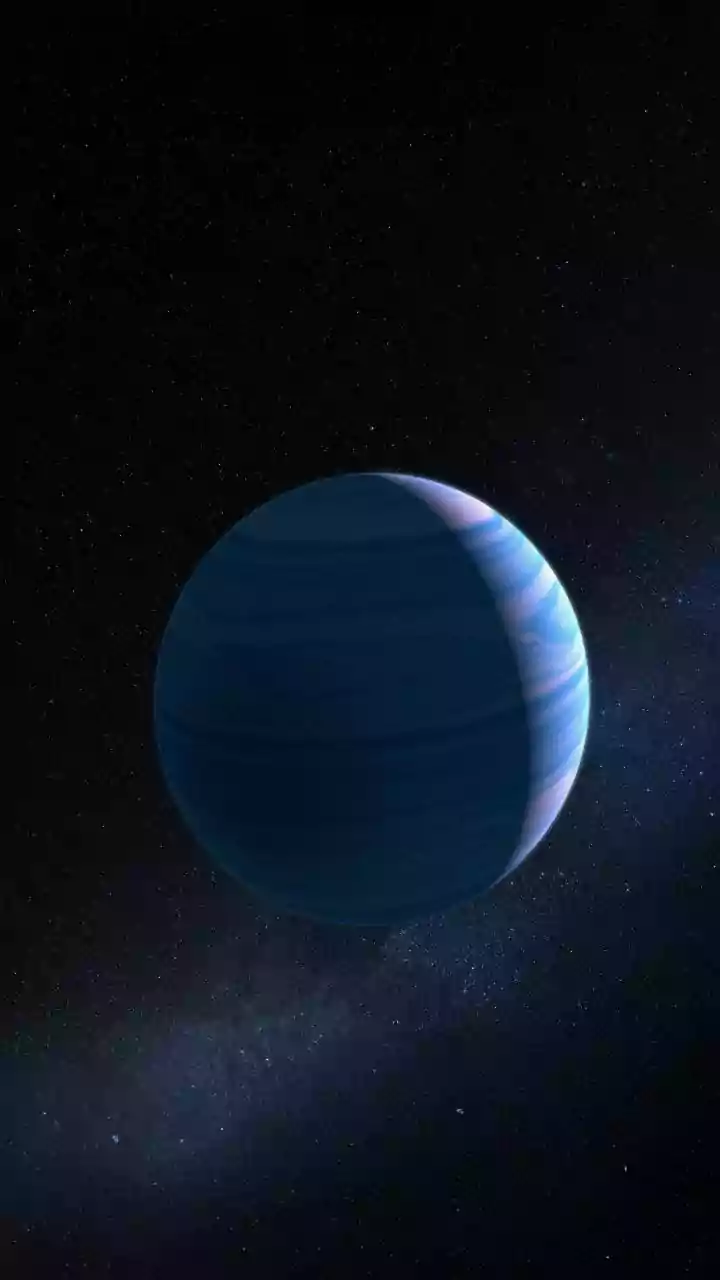
This isn't just a thought experiment. In a 2020 study, Schulze-Makuch and his colleagues sifted through over 4,000 known exoplanets to find potential candidates. They identified 24 top contenders for superhabitability. It's important to note that these planets are not confirmed to have life, or even all the necessary conditions. They are simply promising targets for future observation with powerful instruments like the James Webb Space Telescope. One of the most-cited candidates is KOI-5715.01, a planet estimated to be about 5.5 billion years old and orbiting a stable K-dwarf star. Though it's nearly 3,000 light-years away, it represents the kind of world that scientists are now prioritizing. All of the top 24 candidates are more than 100 light-years away, meaning we won't be visiting anytime soon, but studying them from afar could revolutionize our understanding of life's place in the universe.