





Understanding the Monsoon 'Stall'
First, let's be clear: a 'stall' or 'hiatus' doesn't mean the monsoon has disappeared. It refers to a period where the Northern Limit of Monsoon (NLM) — the imaginary line marking the northernmost boundary of the monsoon's advance — fails to progress
for several consecutive days. After a robust start, covering Kerala and large parts of the northeast ahead of schedule, the system has effectively pressed the pause button. This typically happens when the atmospheric conditions that fuel its journey weaken temporarily. While such pauses are a normal feature of the monsoon's four-month journey, a prolonged one can have significant consequences, turning early optimism into widespread concern.
The Meteorological 'Brick Wall'
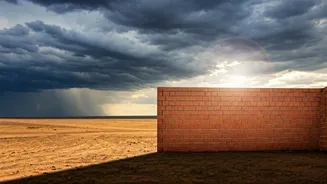
So what is this 'brick wall' the monsoon has run into? The culprit is usually an anticyclonic circulation. Think of it as a large, rotating high-pressure system in the atmosphere. This system pushes air downwards, which suppresses cloud formation and rainfall—the exact opposite of the conditions needed for the monsoon to thrive. Recently, such a system developed over the Arabian Sea, acting like a shield that blocks the flow of moist, rain-bearing winds from the sea onto the land. Instead of pushing north and westwards, the monsoon's energy is being deflected or weakened, preventing its advance into regions like Maharashtra, Gujarat, and parts of central India. For the monsoon to resume its journey, this anticyclonic block needs to weaken or move away.
Mapping the Affected Regions
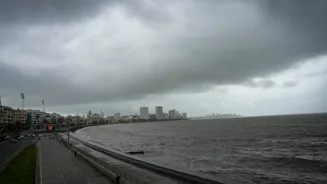
The impact of this pause is not uniform across the country. While southern states and the northeast have received good rainfall, the wait continues for many others. The monsoon's advance has slowed significantly after covering most of Karnataka and Andhra Pradesh. Key regions waiting for onset include large parts of Maharashtra (including Mumbai), Gujarat, Madhya Pradesh, Chhattisgarh, Odisha, and Bihar. The delay is particularly palpable in these areas because it coincides with intense pre-monsoon heatwaves. Cities that would normally be experiencing their first monsoon showers are instead grappling with soaring temperatures, amplifying the public's and farmers' anticipation for relief.
The Real-World Consequences
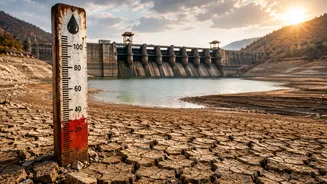
A delayed monsoon is more than just a weather report; it has cascading effects on the economy and daily life. For farmers, this is a critical period. The timing of the monsoon's arrival dictates the sowing of Kharif crops like rice, soybean, and cotton, which are vital for India's food security and agricultural economy. A prolonged delay can shrink the window for sowing, potentially affecting crop yields and farm incomes. Furthermore, a weak monsoon phase puts pressure on water reservoirs, which are crucial for drinking water, irrigation, and power generation. The lack of rain also means no respite from the punishing heat, leading to increased power demand for cooling and potential health risks.
What Happens Next?
Meteorologists at the India Meteorological Department (IMD) and private agencies are closely monitoring the situation. The consensus is that this is a temporary phase. Forecasts suggest that conditions are likely to become favourable for the monsoon's further advance in the coming days. This typically involves the weakening of the anticyclonic circulation and the strengthening of westerly winds over the Arabian Sea. Once these conditions align, the monsoon is expected to regain momentum and start covering the waiting regions. However, the exact timing remains a subject of careful observation. The longer the pause, the greater the rainfall deficit for June, which would then require a stronger-than-normal performance in later months to compensate.