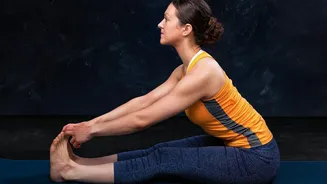







Why Yoga Works for the Teenage Brain
The teenage brain is still developing, particularly the prefrontal cortex, which governs impulse control and focus. Academic and social pressures can increase stress, making concentration even harder. Yoga helps by calming the nervous system and increasing
awareness. Studies suggest that yoga can boost the neurotransmitter GABA, which helps regulate anxiety, leading to a calmer and more focused state of mind. Regular practice not only improves physical posture, which is crucial during long study hours, but also enhances brain connectivity and the ability to manage distractions.
Mountain Pose (Tadasana) for Grounded Focus
This foundational pose may look simple, but it is incredibly powerful for resetting the mind. It teaches stability and awareness, helping to clear mental fog before hitting the books. Stand tall with your feet together, ground through your heels, and lengthen your spine as if a string is pulling the crown of your head upward. Relax your shoulders and breathe deeply for 30 to 60 seconds. This pose improves posture and increases oxygen flow to the brain, making you feel more alert and ready to learn.
Tree Pose (Vrikshasana) to Build Concentration
Balance is focus in physical form. Tree Pose demands your full attention, training the mind to remain steady and present. Start in Mountain Pose, then shift your weight onto one leg. Place the sole of your other foot on your inner ankle, calf, or thigh, avoiding the knee joint. Bring your hands together at your heart. Find a fixed point to gaze at to help maintain your balance. Holding this pose for even 30 seconds on each side builds powerful mental discipline that translates directly to longer periods of study.
Cat-Cow Stretch (Marjaryasana-Bitilasana) to Release Study Tension
Hunching over a desk for hours creates tension in the back and shoulders, which can lead to fatigue and a wandering mind. The Cat-Cow stretch is a gentle, dynamic movement that releases this stress. Start on your hands and knees. As you inhale, drop your belly and look up, arching your back (Cow). As you exhale, round your spine, tuck your chin to your chest, and press the floor away (Cat). Repeating this flow five to ten times increases blood circulation to the spine and brain, revitalizing your energy.
Alternate Nostril Breathing (Nadi Shodhana) to Calm an Anxious Mind
This breathing technique, or pranayama, is one of the most effective ways to quiet mental chatter and reduce anxiety before an exam or a challenging homework assignment. Sit comfortably. Use your right thumb to gently close your right nostril and inhale slowly through your left. Then, close your left nostril with your ring finger, release your thumb, and exhale through the right nostril. Inhale through the right, then switch to exhale through the left. Continue this cycle for two to five minutes. This practice is known to balance the left and right hemispheres of the brain, leading to improved clarity and reduced stress.
Corpse Pose (Savasana) to Integrate and Recharge
Often the most challenging pose for a busy mind, Savasana is essential for deep rest and mental integration. After a short yoga session or a long period of studying, lie flat on your back with your arms by your sides, palms facing up, and feet falling open naturally. Close your eyes and simply focus on the sensation of your breath. Allow your entire body to feel heavy and relaxed. Just five minutes in this pose can significantly reduce stress and fatigue, leaving you feeling refreshed and more prepared for your next task. It’s a mental reset that helps solidify learning and calm the nervous system.