





A Frozen Moment in Time
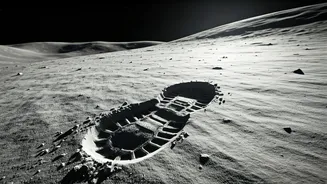
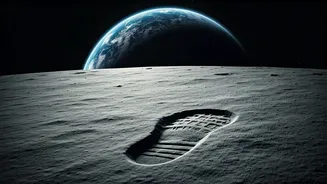
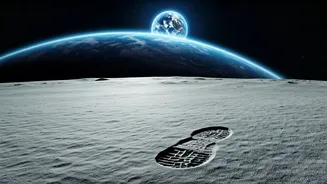
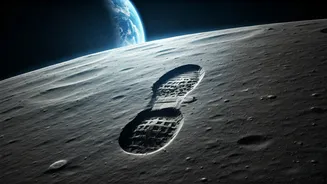
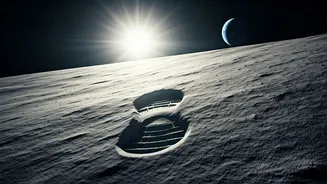
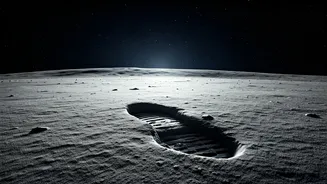
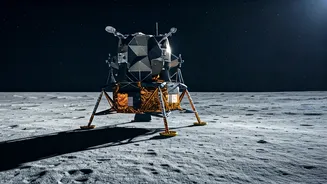
It’s a scene etched into our collective memory: a boot print in fine, grey dust. For over 50 years, the artifacts of the Apollo missions—from the descent stages of the lunar modules to the astronauts' footprints and rover tracks—have rested on the Moon's
surface. High-resolution images from NASA’s Lunar Reconnaissance Orbiter (LRO), which has been circling the Moon since 2009, confirm this incredible reality. From orbit, we can clearly see the dark, disturbed soil where astronauts walked, the glint of scientific equipment left behind, and the long shadows cast by the landers. They look as if they were left there only yesterday, creating a series of remarkable, silent monuments to one of humanity's greatest achievements.
The Key: No Atmosphere
The primary reason for this extraordinary preservation is simple: the Moon has virtually no atmosphere. On Earth, our thick blanket of air is in constant motion, creating wind that erodes rock, rain that washes away soil, and oxygen that causes rust and decay. Our weather is a powerful force of constant change. The Moon, however, is an almost perfect vacuum. There is no air, no wind to blow away that first footprint, and no rain to wash the rover tracks clean. There are no clouds, no blue sky—just the blackness of space. This lack of an atmosphere means that the processes of erosion and decay we take for granted on Earth simply do not exist there. The lunar surface is a static environment where changes happen on a geological timescale, not a human one.
The Real Lunar Threats
While the sites are safe from wind, they aren't entirely immune to change. The lunar surface is constantly bombarded by tiny particles called micrometeorites. These are dust-sized bits of rock and metal travelling at incredible speeds. Over thousands and millions of years, this relentless, gentle “sandblasting” is the Moon’s primary form of erosion. It slowly grinds down rocks and churns the top layer of lunar soil, known as regolith. While the effect is far too slow to erase the Apollo sites anytime soon, it does mean that, over many millennia, the sharp edges of the footprints will soften and the artifacts will be slowly pitted and worn down. It’s a process of erosion so slow and subtle it’s almost imperceptible.
Sunlight and Brutal Temperatures
Another powerful force at play is the Sun. With no atmospheric filter, the lunar surface is exposed to the full, unfiltered blast of solar radiation. This has a significant impact on man-made materials. The American flags planted during the Apollo missions are a prime example. While some theories suggest the flags were knocked over by the landers' ascent engines, any that remain standing are almost certainly not the vibrant symbols we remember. Decades of intense ultraviolet radiation would have completely bleached the red and blue colours, leaving them stark white. The extreme temperature swings—from a scorching 127° C (260° F) in the day to a frigid -173° C (-280° F) at night—would also cause the nylon fabric to become incredibly brittle, likely causing it to disintegrate if touched.
Protecting Our Lunar Heritage
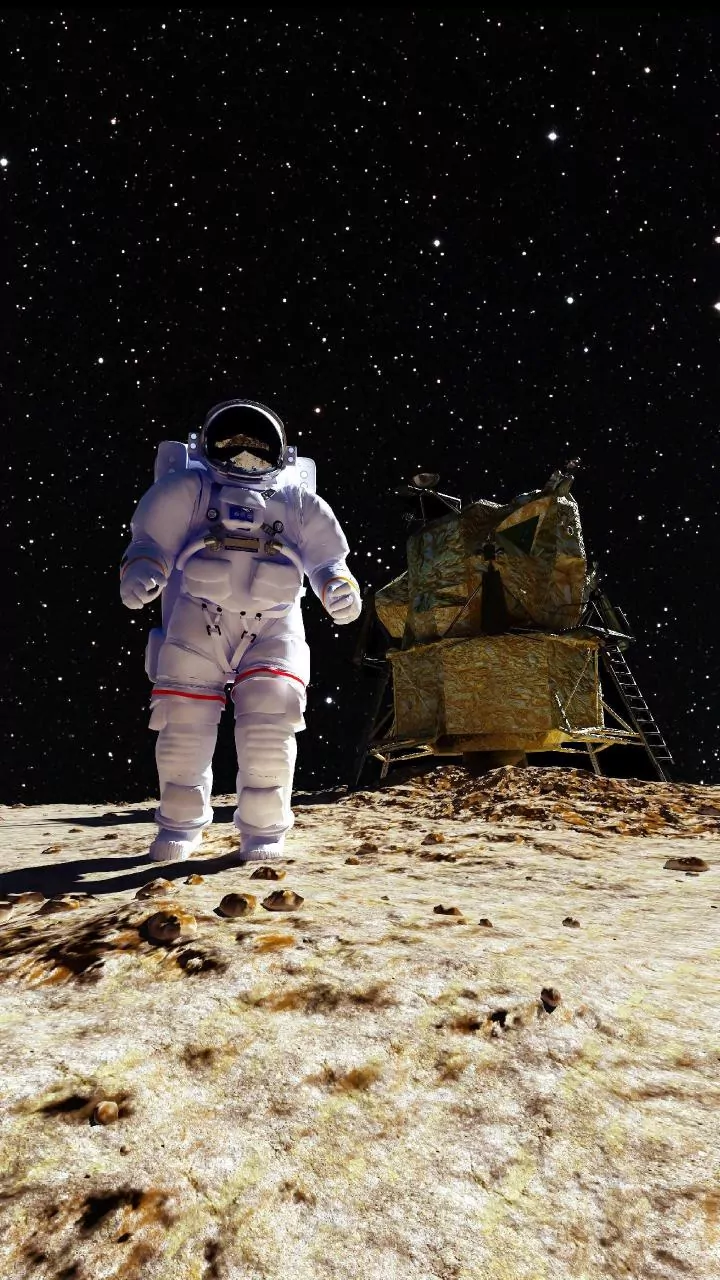
As a new era of lunar exploration dawns, with nations like India, China, and the United States, alongside private companies, planning new missions, a new question arises: how do we protect these historic sites? The tracks and artifacts of the Apollo missions are not just abandoned equipment; they are historical artifacts of immense cultural value. NASA has established guidelines for future missions, recommending that spacecraft maintain a safe distance from the Apollo sites to avoid disturbing them with rocket exhaust. There is a growing global conversation about establishing these locations as protected heritage sites, ensuring that the first human footsteps on another world are preserved for the generations to come. They serve as a tangible link to a pivotal moment in history, resting silently under the stars.