







A New Frontier, Closer Than You Think
When we talk about space, it's easy to imagine distant galaxies and missions to Mars. But the most significant economic action is happening much closer to home. Low-Earth Orbit, or LEO, is an orbital region up to 2,000 kilometres above Earth. For perspective,
the International Space Station resides here. Its proximity offers key advantages: lower launch costs, quicker communication, and easier access. Once the domain of national agencies, LEO is rapidly transforming into a bustling commercial marketplace, poised to become a trillion-dollar economy.
The Great Enabler: The Reusable Rocket
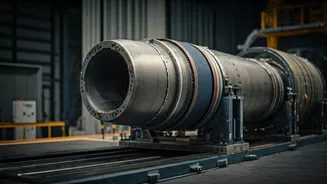
The primary catalyst for this shift has been a dramatic reduction in the cost of getting to space. For decades, rockets were single-use, making every launch a multi-million-dollar undertaking. The advent of reusable rockets, pioneered by companies like SpaceX, has been a game-changer. By recovering and reusing rocket boosters, the cost to launch a kilogram of payload has plummeted from tens of thousands of dollars to just a few thousand. This has shattered the financial barrier to entry, making space accessible to a new generation of entrepreneurs and investors who were previously priced out.
The New Gold Rush: What Are Startups Building?
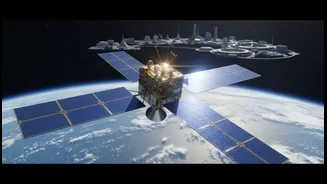
This newfound accessibility has sparked a 'gold rush' in LEO, with startups tackling a diverse range of opportunities. The most visible are the mega-constellations providing global satellite internet, such as SpaceX's Starlink and OneWeb. Another major sector is Earth observation. Companies like Planet Labs and India's own Pixxel are deploying fleets of small satellites to capture high-resolution imagery of the planet. This data has powerful applications in agriculture, climate monitoring, and disaster response. Beyond data and connectivity, startups are exploring in-space manufacturing, satellite servicing, and even space debris removal.
India's Ascent in the LEO Economy
India is rapidly emerging as a key player in this new space race. While ISRO remains a cornerstone of the nation's space ambitions, a vibrant startup ecosystem is blossoming, encouraged by government reforms opening the sector to private enterprise. Hyderabad-based Skyroot Aerospace is on the verge of becoming India's first private company to launch a commercial satellite into orbit with its Vikram-1 rocket. Meanwhile, Chennai's Agnikul Cosmos has made history by test-launching a rocket powered by a single-piece 3D-printed engine. These launch startups are complemented by satellite builders like Pixxel, which is building a constellation of advanced hyperspectral imaging satellites to create a health monitor for the planet. Together, they are creating a vertically integrated private space industry within India.
The Challenges on the Horizon
The rapid commercialization of LEO is not without its challenges. The increasing number of satellites has created a significant problem of space debris. With thousands of objects—from defunct satellites to small fragments—zipping around the planet at high speeds, the risk of collision is a serious concern for all operators. This has led to a growing demand for space situational awareness and debris mitigation solutions. Furthermore, as the orbit becomes more crowded, international regulatory frameworks will need to evolve to manage space traffic and ensure the long-term sustainability of the LEO environment.