
Escape the City's Glow
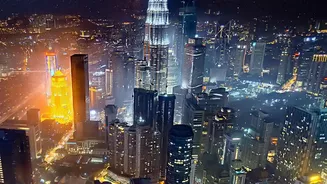
The primary enemy of astrophotography is light pollution. The glow from cities and towns can wash out all but the brightest stars, rendering the Milky Way invisible. To find true darkness, you need to get as far away from urban centres as possible. Start
by using online light pollution maps. These tools use satellite data to show the darkest skies, rated on what is known as the Bortle Scale. Aim for locations in Class 1, 2, or 3 for the best results. High-altitude deserts like those in Ladakh and Spiti Valley are famous for their pristine, dark skies. However, even weekend trips from major cities can yield great results if you travel a few hours to less-developed areas.
Time It Right: Weather and the Moon
Your perfect dark sky location is only useful on a clear night. Always check the weather forecast before you head out, looking for low cloud cover and low humidity. In India, the best time for stargazing is often from October to March when the skies are dry and clear post-monsoon. The phase of the moon is just as important. A full moon is so bright it can mimic the effects of light pollution, washing out fainter stars. The best time for deep-sky photography is during the new moon phase, or the few days immediately before and after it. Apps that track lunar cycles are invaluable for planning your shoots. The galactic core of the Milky Way is most visible in the Northern Hemisphere between April and September, but this often coincides with India's monsoon season, making planning crucial.
Scout During the Day
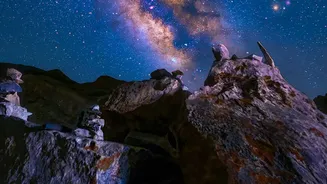
Never arrive at an unfamiliar remote location for the first time in complete darkness. A place that seems perfect on a map could be treacherous at night. Visit your chosen spot during daylight hours to perform a safety check. Look for potential hazards like unstable cliffs, hidden ditches, or dangerous water bodies. This is also the perfect time to compose your shot. An interesting foreground, like a unique rock formation, an old monastery, or a lone tree, can elevate your astrophotography from a simple star picture to a breathtaking composition. Locations like Nubra Valley with its sand dunes or Spiti Valley with its ancient monasteries offer dramatic foregrounds.
Personal and Environmental Safety
When you're out in a remote area at night, personal safety is paramount. Always inform someone of your exact location and your expected return time. It's best to go with a friend or in a small group. Be aware of your surroundings, including local wildlife. In many parts of India, this could mean anything from insects to larger animals. Make noise as you move to avoid surprising any animals. Dress in warm layers, as even in warmer regions, temperatures can drop significantly after dark. Remember to leave no trace. Pack out everything you bring in, be respectful of the environment, and avoid disturbing the natural habitat.
Know Local Rules and Permissions
Not all land is open for public access, especially at night. If you're considering a spot within a national park, tiger reserve, or wildlife sanctuary, check the regulations in advance. Many protected areas have strict rules about night entry and may prohibit flash photography entirely to avoid disturbing wildlife. Some national parks in India, like Pench Tiger Reserve, have designated night safaris in buffer zones, but these are guided tours with specific timings and rules. If your chosen location is on private property, always seek permission from the owner. This simple courtesy can prevent trouble and ensure you are welcome to return.
A Few Stellar Suggestions
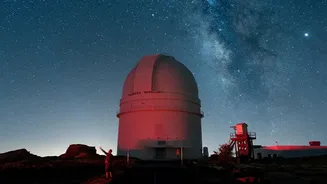
For those looking for world-class skies, Hanle in Ladakh is home to India's first official Dark Sky Reserve and offers some of the best conditions on the planet. Spiti Valley in Himachal Pradesh is another high-altitude favourite, renowned for its clear, dark skies and dramatic landscapes. For something more accessible, the Rann of Kutch in Gujarat provides a surreal salt desert landscape. In the south, hill stations like Coorg in Karnataka can offer surprisingly dark skies away from the main towns. Even the Andaman and Nicobar Islands, far from mainland pollution, provide a unique tropical setting for astrophotography.