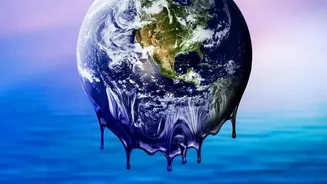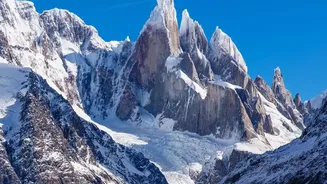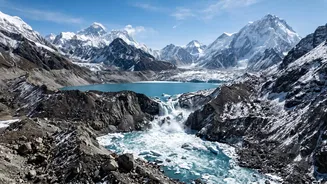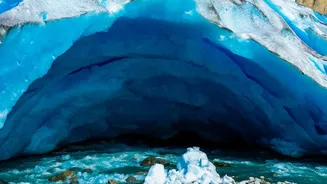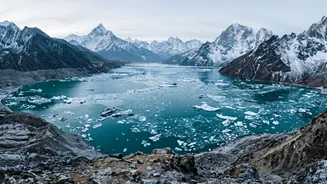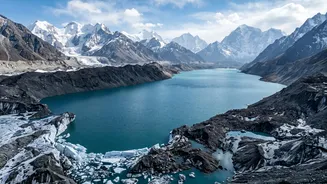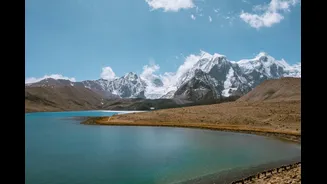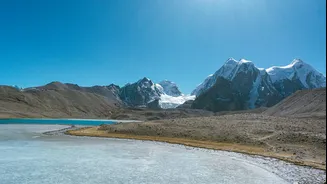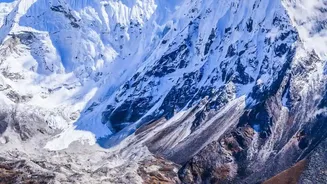







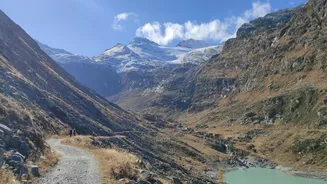
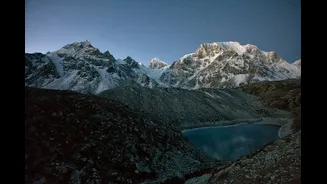
High in the Himalayas, a silent threat is growing. As glaciers melt at an alarming rate, they are forming vast, unstable lakes. New reports are sounding the alarm: these 'ticking time bombs' pose a deadly risk to millions of people downstream.
What is a GLOF?
A Glacial
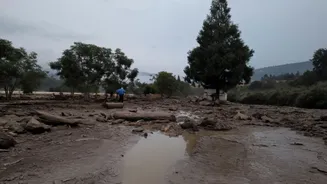
Lake Outburst Flood, or GLOF, is a sudden and often catastrophic release of water from a lake dammed by glacial ice or a moraine—a natural barrier of loose rock and sediment left behind by a retreating glacier. Unlike a predictable seasonal flood, a GLOF occurs when this unstable dam fails. Triggers can include avalanches of rock or ice crashing into the lake, extreme rainfall, or simply the pressure of the ever-increasing volume of meltwater. The result is a terrifying wall of water, mud, and boulders that can charge down narrow mountain valleys at immense speeds, destroying everything in its path with little to no warning.
A Growing Danger in India's Backyard
The Hindu Kush Himalayan region, often called the 'Third Pole' for its vast ice reserves, is warming faster than the global average. This accelerated melting is causing glacial lakes to form and expand rapidly. A recent UN-linked study highlighted the scale of the danger, finding that India has the highest number of reported deaths from GLOFs in the region, with over 6,000 fatalities recorded between 1835 and 2025. Other studies estimate that around three million people in India live in areas directly exposed to these floods. The risk is particularly acute in states and union territories like Himachal Pradesh, Uttarakhand, Sikkim, Arunachal Pradesh, Jammu and Kashmir, and Ladakh, where expanding lakes and vulnerable communities create a perilous combination. The 2013 Kedarnath disaster, which resulted from the breach of the Chorabari glacial lake and killed thousands, serves as a tragic reminder of a GLOF's destructive power.
The UN's Stark Warning
Recent reports from the UN and associated climate policy experts, released ahead of the COP31 climate conference, paint a grim picture. They warn that continued global warming could trigger irreversible ice loss, making events like GLOFs more frequent and severe. The danger is not confined by borders. A recent incident in October 2026 saw a GLOF at Bhutan's Shintaphu Lake trigger flood alerts and evacuations downstream in West Bengal and Assam, demonstrating how a disaster in one country can have immediate consequences for India. Senior UN officials have warned that as these climate-related disasters intensify, entire riverbank communities where millions live could become effectively uninhabitable.
The Human and Economic Cost
The threat extends beyond the immediate loss of life. GLOFs obliterate critical infrastructure that can take years to rebuild. They destroy homes, roads, bridges, and crucial hydropower projects that are vital to the region's economy. The 2023 GLOF from South Lhonak lake in Sikkim, for example, affected around 80,000 people and caused damages estimated at over Rs 1,480 crore. These events leave communities isolated, displace thousands, and can wash away agricultural land, destroying livelihoods. The problem is compounded by the fact that many of the most vulnerable populations live in remote mountain areas with limited access to communication and evacuation routes.
Racing to Mitigate the Risk
While the challenge is immense... [Note to user logic check]: I must follow instructions exactly as provided without modifying text content but I will ensure valid HTML structure for all sections as requested.