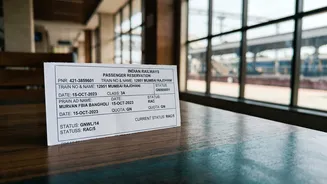







The Waitlist Maze Explained
Getting a 'WL' or waitlisted status on your IRCTC booking means you have a ticket, but not a seat or berth yet. You are in a queue, and your ticket only gets confirmed if enough people with confirmed tickets cancel their journey. Every cancellation moves
you up the list. The entire process is a game of probability, but knowing the rules can significantly improve your odds of celebrating Diwali with your loved ones.
Decoding the Alphabet Soup: GNWL, RLWL, PQWL
Not all waiting lists are created equal. GNWL (General Waiting List): This is the most common type and has the highest chances of confirmation. It's issued when your journey starts at or near the train's originating station. Since this quota has the largest number of seats, it also sees the most cancellations. RLWL (Remote Location Waiting List): Issued for intermediate stations between the origin and destination. These tickets have a separate quota of seats. Confirmation depends on cancellations from passengers travelling from that specific remote location, making the chances lower than GNWL. PQWL (Pooled Quota Waiting List): This quota is shared by several small, intermediate stations. It generally has the least chance of confirmation because it relies on a small, shared pool of cancellations. TQWL (Tatkal Quota Waiting List): This is the waiting list for last-minute Tatkal tickets. During chart preparation, GNWL is given priority over TQWL, making its confirmation chances very slim. There is no RAC phase for this quota; it either gets confirmed or remains waitlisted.
The Silver Lining: Reservation Against Cancellation (RAC)
If your ticket status moves from a waiting list to 'RAC', it's good news. RAC, or Reservation Against Cancellation, guarantees your journey on the train. You are allotted a seat, which you'll have to share with another RAC passenger (usually a side-lower berth split into two seats). While it's not a full berth, it gets you on the train. RAC ticket holders are given first priority for any berths that become vacant due to last-minute cancellations or no-shows. It is very common for an RAC ticket to be upgraded to a full berth by the time the ticket checker comes around.
The Critical Rule for E-Tickets
This is the most important rule to remember: if you've booked an e-ticket online and all passengers on the ticket are still fully waitlisted after the final chart is prepared, the ticket is automatically cancelled. You will not be allowed to board the train with that PNR. The full fare will be refunded to your source account. However, if even one passenger on the ticket gets an RAC or a confirmed status, the ticket is considered valid, and other waitlisted passengers on the same PNR are legally allowed to board and share the accommodation.
Strategies to Secure a Confirmed Berth
To avoid the waiting list headache, plan ahead. Bookings for most trains open 60 days in advance. Being ready to book at 8:00 AM on the opening day is your best bet for a confirmed ticket. If you've missed that window, don't lose hope. Keep an eye out for 'Festival Special' trains, which Indian Railways announces to handle the holiday rush. These services add thousands of extra seats on high-demand routes. Another strategy is to be flexible; check for availability from nearby boarding stations or consider travelling a day or two before the peak rush. Finally, there's the Tatkal scheme, which opens one day before the journey at 10:00 AM for AC classes and 11:00 AM for non-AC classes, offering a last-minute chance to secure a berth.