

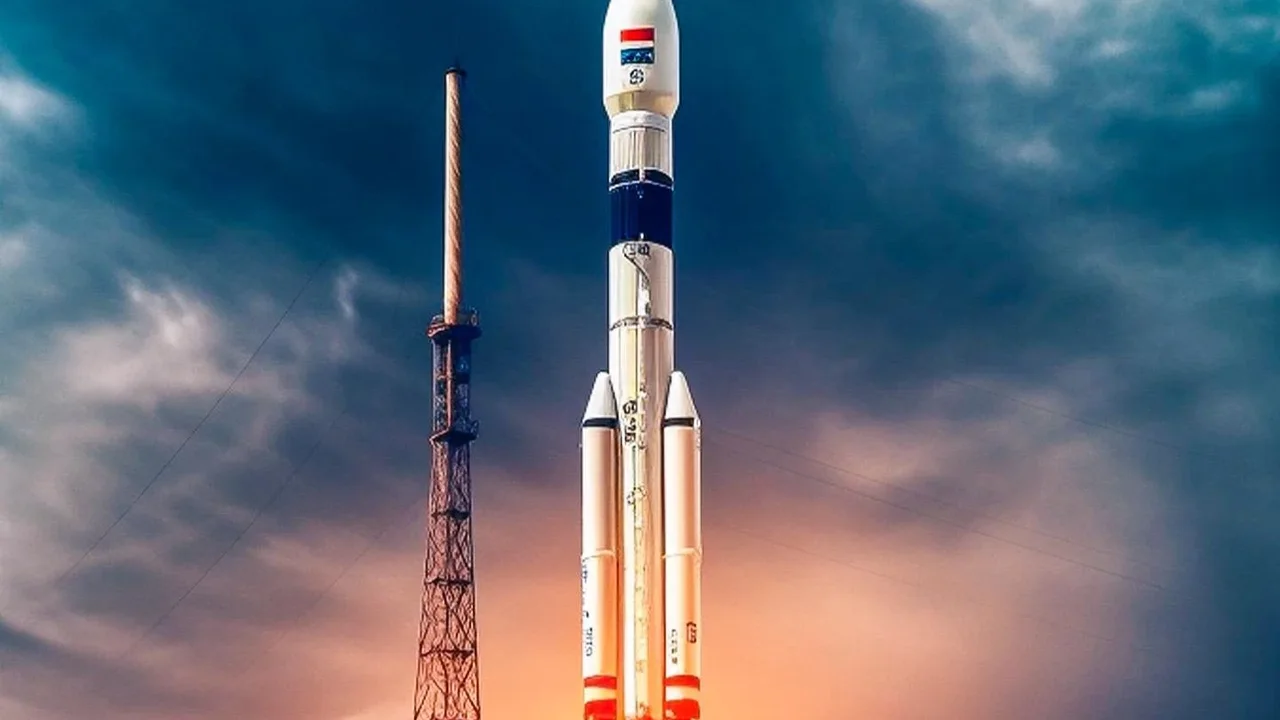

What is Starship?
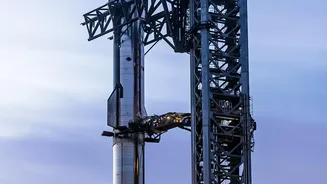
Starship is the colossal, stainless-steel spacecraft at the heart of SpaceX’s ambitions for Mars colonization and a new era of space commerce. Standing taller than any rocket in history, it’s designed to be fully and rapidly reusable. Unlike previous
rockets where expensive upper stages are discarded after one use, SpaceX's goal is to recover and relaunch both the Super Heavy booster and the Starship upper stage. This upcoming mission, designated Starship Flight 15, is a landmark test. It will be the first time the company attempts to catch both stages with the massive mechanical arms of its launch tower in Texas, a maneuver crucial for achieving rapid reusability. The previous flight in September 2026, Flight 14, was the first to successfully reach orbit and deploy Starlink satellites.
An Indian Flyover on Flight 15
The upcoming Starship test flight, targeted for launch on November 13, 2026, from Texas (which corresponds to the early hours of November 14 in India), is planned to be an extended mission. After lifting off, the Starship upper stage is expected to spend over 22 hours in orbit, circling the Earth approximately 14 times before it attempts its historic landing back at the launch site. During these orbits, its path will repeatedly take it over parts of India at an altitude of about 275 kilometres. This provides a rare opportunity for skywatchers across the country to potentially spot the vehicle as it soars overhead. A contingency plan for the mission also involves a potential splashdown in a cleared area of the Indian Ocean if the spacecraft does not meet all criteria for an orbital insertion or a safe return to the launch site.
The Real Mission: Expanding Starlink
While the flyover is an exciting spectacle, the primary objective of this mission is business. Starship is slated to deploy 26 next-generation Starlink V3 satellites into low-Earth orbit. These satellites are the building blocks of SpaceX’s satellite internet constellation, designed to provide high-speed broadband to remote and underserved areas globally. Each Starship launch can deploy a significantly larger batch of these more powerful satellites compared to the company's workhorse Falcon 9 rocket, accelerating the network's expansion and capacity. The orbital path over India is no coincidence; it is directly related to populating the orbital shells required to provide service to the region. As of late 2026, Starlink has secured key licenses in India but is still awaiting final approvals for spectrum allocation and security clearance before it can begin commercial operations. The company is in a competitive race with other satellite internet providers like Bharti-backed OneWeb and Reliance's Jio SpaceFiber, both of which also hold licenses.
What This Means for India
The regular appearance of Starship in Indian skies is more than just a novelty; it’s a visible reminder of a major shift in the global space and telecom industries. The imminent arrival of high-speed satellite internet from multiple global and domestic players promises to revolutionize connectivity, especially in rural and remote parts of India where terrestrial broadband is challenging to deploy. This new competition is expected to drive innovation and competitive pricing for consumers. Furthermore, the audacious engineering of SpaceX serves as both an inspiration and a challenge to India’s own burgeoning private space sector. As ISRO continues its own impressive missions, the commercialization of space, led by giants like SpaceX, is creating a new ecosystem where Indian startups can find opportunities for collaboration and growth. The flyover is a preview of a future where global space infrastructure is directly and visibly integrated with life on the ground.