





The Challenge of Urban Stargazing
For most urban dwellers, the cosmos feels distant and inaccessible. A phenomenon known as light pollution, the excessive artificial light that floods our cities, creates a bright haze or 'skyglow' that drowns out all but the brightest celestial objects.
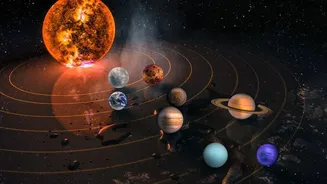
This can make stargazing feel like a hopeless endeavor, seemingly reserved for those in remote, rural areas with pristine dark skies. However, while the faint shimmer of distant galaxies and the Milky Way might be out of reach, the brightest planets in our own solar system are often bright enough to cut through the glare. Jupiter and Saturn, the two largest planets, are frequently visible to the naked eye if you know exactly where and when to look. They appear as exceptionally bright, steady points of light that don't twinkle like stars do.
Your Phone Is a Pocket Planetarium
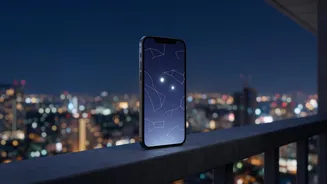
This is where your smartphone transforms from a daily distraction into a powerful tool for astronomical observation. Modern stargazing apps use your phone's built-in GPS and compass to know your exact location and the direction you're pointing it. They then overlay a map of the cosmos onto your screen, creating an augmented reality (AR) view that identifies every star, constellation, and planet in real-time. You don't need to know north from south or be able to identify a single constellation. These apps act as a personal guide, turning what was once a confusing starfield into a labeled, interactive map of the universe. All you have to do is point your phone at the sky.
Top Apps for Finding Planets
Dozens of astronomy apps are available, but for the beginner planet-spotter, a few stand out for their ease of use and powerful free features. Star Walk 2 is often recommended for beginners thanks to its beautiful interface and straightforward AR overlays. SkyView Lite is another popular choice, praised for its simple point-and-identify function that works even without an internet connection. For those seeking a highly realistic and detailed star map, Stellarium Mobile offers a fantastic free version that inherits the accuracy of its renowned desktop software. Most of these apps feature a search function; simply type in "Jupiter" or "Saturn," and an on-screen arrow will guide you to the planet's current position in your sky.
Spotting Jupiter and Saturn in September 2026
September 2026 is an excellent time for urban skywatchers. Yellowish Saturn is visible for much of the night, rising in the eastern sky shortly after sunset. It shines brightly and will be easily identifiable throughout the month. Jupiter, which appears as a brilliant, white, star-like object, is best viewed in the pre-dawn hours. It rises in the east and will be one of the most dominant objects in the morning sky. On the morning of September 8th, a waning crescent Moon will be visible near Jupiter, creating a particularly beautiful sight for early risers. To find them, simply open your chosen app, let it calibrate to your location, and search for either planet. The app will direct you exactly where to look.
What You'll Actually See
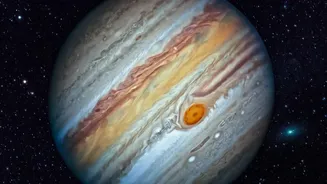
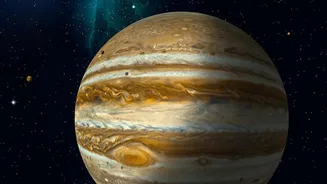
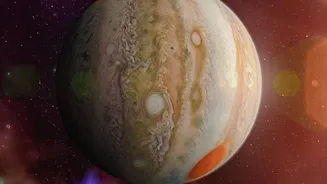
It is crucial to set realistic expectations. To your naked eye, even through the app's guidance, Jupiter and Saturn will appear as bright, star-like dots. You will not see Saturn's rings or the bands of clouds on Jupiter. These features require the magnification of a telescope. However, the true thrill comes from the act of identification—knowing that the steady point of light you are looking at from your window is not just another star, but a massive gas giant hundreds of millions of kilometres away. If you have a pair of binoculars, you can enhance the view. With binoculars, Saturn may appear slightly elongated, and you might even be able to spot Jupiter's four largest moons as tiny pinpricks of light flanking the planet. The goal is not to replicate Hubble images, but to connect with the cosmos in a personal, tangible way.