





The Traditional Winter Favourite: Why We Love Jaggery
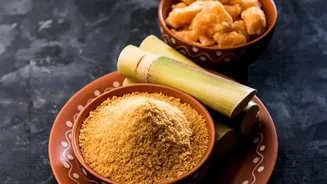
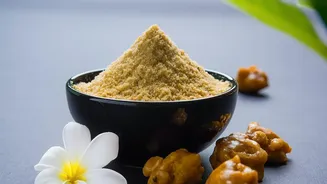
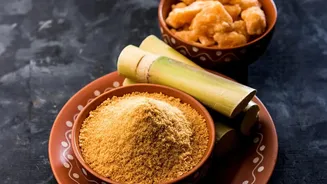
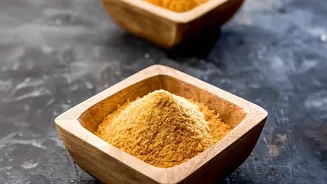
Jaggery, or gur, is an unrefined sweetener made by boiling sugarcane juice until it solidifies. Unlike white sugar, it isn't stripped of its molasses content, which is why it has a rich, brown colour and a distinctive caramel-like flavour. This minimal
processing allows it to retain small amounts of minerals like iron, magnesium, and potassium that are lost when making white sugar. Traditionally, jaggery is a winter staple in India, appearing in everything from chikki and laddoos to a simple after-meal bite. It is believed to have 'warming' properties, though this is primarily due to its high calorific value, which provides the body with a quick burst of energy to stay warm. Many also turn to it for relief from coughs and colds, a practice rooted in its ability to create a soothing layer in the throat.
White Sugar: The Refined Rival
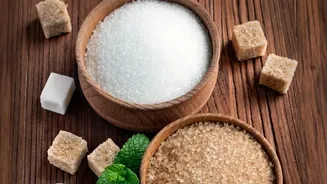
White sugar is the result of a multi-step refining process that extracts pure sucrose from sugarcane or sugar beets. This process removes all the molasses, along with any minerals, vitamins, and other compounds found in the original plant juice. The end product is almost 100% sucrose, which is why it's often referred to as a source of 'empty calories'—it provides energy but virtually no other nutritional value. Its uniform sweetness and crystalline texture make it a versatile ingredient in baking, beverages, and countless processed foods, but its lack of nutrients is its primary drawback in any health comparison.
A Head-to-Head Nutritional Showdown
When placed side-by-side, jaggery appears to be the clear winner on paper. It contains trace amounts of iron, calcium, phosphorus, and magnesium, whereas white sugar contains none. However, the real question is whether these amounts are significant. A typical serving of jaggery is around 10-15 grams. In such a small quantity, the mineral contribution is minimal and not enough to meet your daily requirements. For instance, you would need to consume a very large amount of jaggery—and its associated calories—to get a meaningful dose of iron, far exceeding recommended daily sugar intake. Therefore, while jaggery is more nutrient-dense, it should not be considered a primary source of minerals.
The Calorie and Blood Sugar Question
This is where the 'health halo' around jaggery can be misleading. In terms of calories, there is almost no difference: 100 grams of jaggery contains about 383 calories, while the same amount of white sugar has about 387. Switching from sugar to jaggery will not impact your calorie intake in a meaningful way. More surprisingly for many, sugarcane jaggery has a higher glycemic index (GI) of around 84, compared to white sugar's GI of about 65. This means jaggery can raise blood sugar levels faster than white sugar, making it an equally, if not more, unsuitable choice for people with diabetes. For managing blood sugar, neither is a 'safe' option to be consumed freely.
Beyond the Sweetener: The Bigger Dietary Picture
The debate over jaggery versus sugar often misses the most important point, which is the one highlighted in the headline itself: sweeteners should be viewed within the context of your overall diet. Choosing jaggery over sugar is a marginal improvement, but it cannot compensate for a diet that is otherwise high in processed foods, unhealthy fats, and excessive calories. Health is built on a foundation of balanced meals rich in vegetables, fruits, whole grains, and lean proteins. Fixating on a single ingredient, like the type of sugar in your tea, is less impactful than focusing on the quality of your entire dietary pattern. The key principle is moderation. Both jaggery and white sugar are 'free sugars', and excessive consumption of either can contribute to health issues like weight gain and an increased risk of chronic diseases.