





A Legacy from Halley's Comet
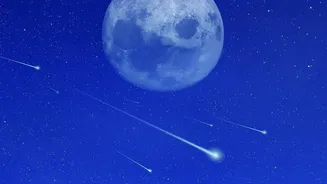
The Orionid meteor shower is an annual event that occurs when our planet intersects the orbital path of Comet 1P/Halley. While the comet itself only visits the inner solar system every 76 years, its trail of dusty debris remains. When these tiny particles,
many no larger than a grain of sand, enter Earth's atmosphere at tremendous speed, they burn up, creating the spectacular streaks of light we call meteors or 'shooting stars'. In fact, Earth passes through Halley's debris cloud twice a year, giving us the Eta Aquariids in May and the Orionids in October. Watching the Orionids is like witnessing tiny, fiery ghosts of a comet that will not return until 2061.
Peak Dates and What to Expect in 2026
For 2026, the Orionid meteor shower will be active from early October to early November. The peak, when the most meteors are expected, will occur on the night of October 21-22. Under ideal, dark-sky conditions, viewers can typically expect to see about 10 to 20 meteors per hour. However, this year presents a unique challenge for sky-gazers. A bright waxing gibbous Moon will be present for much of the night, its light potentially washing out the fainter meteors. This makes finding a truly dark location more important than ever.
Speed, Fireballs, and a Moonlit Challenge
What makes the Orionids thrilling, even with moonlight, is their sheer speed and brightness. The meteors slam into our atmosphere at roughly 66 kilometres per second. This incredible velocity means they can produce intensely bright streaks, and some may even become 'fireballs'—prolonged explosions of light that can easily outshine the surrounding stars. These fast meteors often leave behind glowing trails, or 'trains', of incandescent debris that can linger for a few seconds after the meteor itself has vanished. While the Moon will obscure the less brilliant meteors, the Orionids are famous for these bright, dramatic events that can still put on a show.
Your Viewing Guide for India
To maximise your chances of seeing the Orionids from India, timing and location are everything. The radiant of the shower—the point from which the meteors appear to originate—is in the constellation Orion. Orion begins to rise in the eastern sky after 10 PM local time. The best viewing window will be in the pre-dawn hours, specifically after the Moon sets (around 3 AM IST) and before the sky starts to lighten with the approaching sunrise. Look for Orion by finding its famous three-star belt. The radiant is located just north of the bright reddish star, Betelgeuse. While the meteors will seem to come from this direction, they can appear anywhere in the sky, so a wide, open view is best.
Tips for the Best Experience
You don't need a telescope or binoculars to enjoy a meteor shower; in fact, your naked eyes are the best tool for the job as they provide the widest field of view. First, find a location as far away from city lights as possible to escape light pollution. Pack a comfortable chair or blanket, and dress warmly as October nights can be cool. Allow your eyes about 20 to 30 minutes to fully adapt to the darkness, and avoid looking at your bright phone screen during this time. Patience is key; meteors often come in sporadic bursts. Settle in, look up, and enjoy the cosmic display.