






What is a Solar Storm?
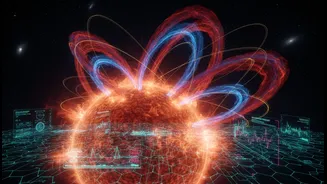
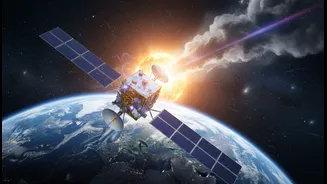
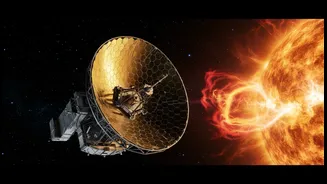
A solar storm is a major disturbance on the Sun, such as a solar flare or a Coronal Mass Ejection (CME), that releases massive amounts of energy and charged particles into space. These particles travel across the solar system, and when they are directed
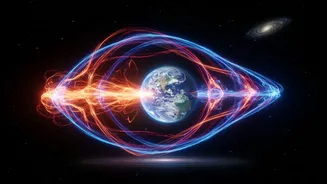
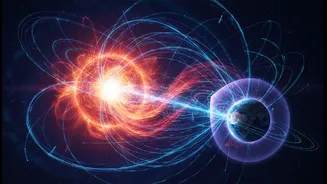
towards Earth, they can cause what is known as 'space weather'. Our planet's magnetic field protects us from most of this radiation, but powerful storms can still have significant effects. These events are more frequent during the Sun's 11-year cycle of high activity, known as the solar maximum.
Why Forecasting Is Critical
Our modern society is highly dependent on technology that is vulnerable to space weather. Solar storms can damage satellite electronics, disrupt GPS signals, and interfere with radio communications. This impacts everything from airline navigation and financial transactions to military communications. Furthermore, severe storms can induce electrical currents in power grids on Earth, potentially causing widespread blackouts. By predicting these events, scientists can provide early warnings, allowing industries and space agencies to take protective measures, such as moving satellites or temporarily taking parts of the power grid offline.
The Rise of Solar Forecasting in India
India's space ambitions have created a significant demand for space weather experts. The Indian Space Research Organisation's (ISRO) Aditya-L1 mission is a prime example. Positioned 1.5 million km from Earth, Aditya-L1 has the crucial job of continuously observing the Sun to study solar activity and provide early warnings of Earth-directed storms. This mission, along with other national projects, underscores the growing need for specialists who can interpret this data. Recent studies by ISRO scientists using Aditya-L1 data have already provided breakthroughs in understanding how solar storms affect Earth's magnetic field, highlighting the mission's importance.
The Role of a Solar Storm Forecaster
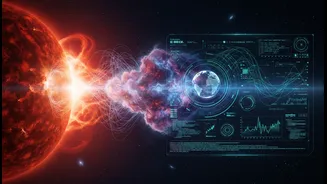
A solar storm forecaster, or space weather scientist, is like a meteorologist for space. Their job involves monitoring the Sun in real-time, analyzing data from satellites like Aditya-L1 and ground-based telescopes, and using computer models to predict solar events. They develop forecasts to determine the onset, duration, and intensity of space weather. A key part of the role is communicating complex information clearly to various stakeholders, including government agencies, satellite operators, and the public, to help mitigate the potential damage from these cosmic events.
Essential Skills and Education
A strong foundation in science and maths is essential. Aspiring forecasters should focus on subjects like physics, chemistry, and computer science in high school. A bachelor's degree in physics, atmospheric science, astronomy, or a related field is the minimum requirement, but most research and specialised roles require a Master's or PhD in fields like space physics or heliophysics. Key technical skills include data analysis and programming (especially in languages like Python or MATLAB), familiarity with remote sensing technologies, and experience with space weather modeling software. Strong analytical and communication skills are also crucial.
Where to Study and Work in India
India has several premier institutions for students interested in this field. The Indian Institute of Space Science and Technology (IIST) in Thiruvananthapuram, which works closely with ISRO, is a top choice. Other leading centres include the Indian Institute of Astrophysics (IIA) in Bangalore, the Inter-University Centre for Astronomy and Astrophysics (IUCAA) in Pune, and the Physical Research Laboratory (PRL) in Ahmedabad. Career opportunities are primarily with ISRO, which runs the country's space weather program. Additionally, research positions are available at institutes like the Aryabhatta Research Institute of Observational Sciences (ARIES) and the Indian Centre for Space Physics (ICSP).