



A New Way to Reach the Moon
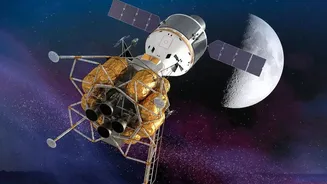
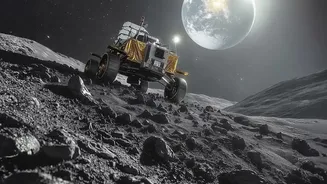
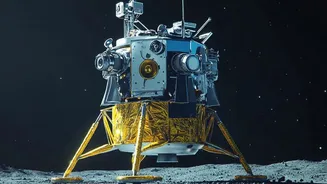
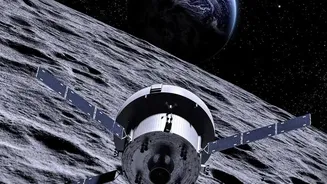
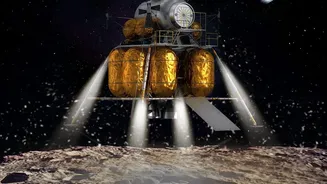
Instead of building all its own lunar landers, NASA is now partnering with American companies to deliver its scientific payloads to the Moon's surface. This initiative, known as Commercial Lunar Payload Services (CLPS), allows the agency to send instruments
to the Moon more rapidly and frequently. This approach fosters a commercial space economy while NASA focuses on the science and exploration goals of its Artemis program, which aims to establish a sustainable human presence on the Moon. The CLPS initiative effectively creates a reliable delivery service for the tools needed to build a lunar outpost, with companies like Intuitive Machines and Firefly Aerospace already making deliveries.
Searching for Shelter in Lava Tubes
One of the most exciting new investigations will hunt for natural shelters that could protect future astronauts. The Geophysical Instruments for Marius Lunar pit Investigation (GIMLI) payload will explore a feature known as the Marius Hills Pit. Scientists believe this pit could be a 'skylight' or opening into a vast, underground lava tube. These subterranean caves, formed by ancient volcanic activity, could offer ready-made protection from the Moon's extreme temperature swings, harmful radiation, and micrometeoroid impacts. By scanning beneath the surface, GIMLI will help determine if these lava tubes are viable locations for long-term habitats, potentially changing the entire strategy for living on the Moon.
Finding Water Ice, a Critical Resource
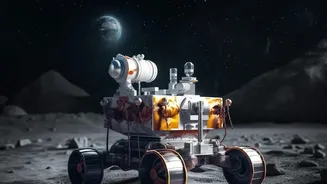
For a moon base to be self-sufficient, finding and using local resources is critical. The Depth Imager with Spectral and Color Optics (DISCO) payload is designed to do just that. It will provide the first direct, on-the-ground measurements of water ice that may be hidden in 'micro-cold traps'—small, permanently shadowed areas on the lunar surface. Locating this ice is a top priority because it can be converted into drinking water, breathable air, and even rocket propellant. DISCO will also study how the lunar surface soil behaves, which is essential information for designing safe landing pads and operating rovers without kicking up hazardous dust.
The Moon's Hazardous Environment
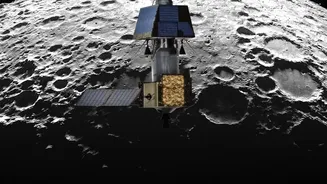
Another key piece of hardware, the Lunar Environment Monitoring Station – South Pole (LEMS-SP), will act as a long-term weather station for the Moon. This autonomous suite of instruments will monitor several environmental hazards near the lunar South Pole, which is a primary target for future Artemis missions. It includes a seismometer to detect 'moonquakes' and micrometeoroid impacts, providing crucial data on the seismic stability of the region. LEMS-SP will also track volatiles—materials that easily turn to gas—that drift into the Moon's incredibly thin atmosphere. Together, these measurements will create a safety guide for astronauts and help engineers design hardware that can survive the harsh lunar environment.
Building the Ultimate Survival Guide
These scientific investigations, selected through NASA's Payloads and Research Investigations on the Surface of the Moon (PRISM) program, are more than just experiments. As NASA officials have stated, they are essential parts of building an 'interplanetary survival guide'. The data gathered by GIMLI, DISCO, and LEMS-SP will directly inform how and where NASA establishes its first lunar outpost. They will help minimize risks to astronauts, identify the most valuable resources, and lay the scientific foundation for a sustained human presence on the Moon. This robotic groundwork is a necessary precursor to sending astronauts back to the lunar surface and, eventually, onward to Mars.