






Understanding the AI Hallucination Trap
Before diving into traditional methods, it's crucial to understand the risk you're avoiding. AI hallucinations occur when a large language model generates false, misleading, or entirely fabricated information but presents it as factual. This can include
inventing citations, misstating data, or creating non-existent sources that look legitimate. In academic work, this isn't just a minor error; it's a serious breach of integrity that can lead to accusations of misconduct, failed assignments, or even disciplinary action. The core issue is that AI predicts text based on patterns, it does not understand or verify facts, leaving the human author fully accountable for any errors.
Start with Deconstruction, Not AI
The first step in mapping any paper is to thoroughly deconstruct the prompt. Before you can build an argument, you must understand what is being asked of you. Print out the assignment guidelines and highlight keywords, verbs, and constraints. Ask yourself: What is the central question? What specific topics must be included? What is the required format and citation style? This active engagement is a form of pre-planning that AI cannot replicate. It forces you to think critically about the task, forming a foundation for your thesis statement before you write a single paragraph.
Embrace Visual Brainstorming
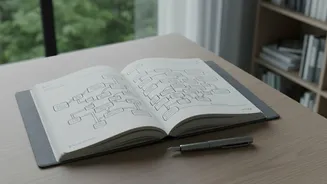
Once you understand the prompt, it's time to generate ideas. Mind mapping is a powerful technique that mirrors how our brains make associations. Start with your central topic in the middle of a blank page. From there, draw branches for main themes or arguments, then add smaller sub-branches for supporting points, evidence, or questions. Using different colors and keywords instead of full sentences can help you see connections and organize your thoughts visually. This creative process fosters deeper thinking and helps you see the potential structure of your paper emerge organically, moving beyond a linear, list-based approach.
Build a Classic, Logical Outline
With a brainstorm complete, you can now build a formal outline. The traditional alphanumeric or decimal outline is a blueprint for your paper, ensuring your argument flows logically. Start by writing your thesis statement at the top. Then, create main sections (using Roman numerals) for each major leg of your argument—such as the introduction, background, key supporting points, and conclusion. Under each main section, use letters and numbers to list your topic sentences, supporting evidence, and analysis. This hierarchical structure forces you to organize your points logically and ensures each paragraph serves a clear purpose in supporting your overall thesis.
Refine with a Reverse Outline
Outlining isn't just for the pre-writing stage. The reverse outline is a powerful revision tool used after you've written a first draft. To do this, read through your completed draft and, for each paragraph, write down its main idea in a single sentence on a separate document. This new list of sentences is your reverse outline. It gives you a bird's-eye view of your paper's actual structure, not the one you planned. By reviewing it, you can easily spot paragraphs that are out of order, identify where your argument is weak, or find sections that are redundant, allowing you to reorganize and strengthen the final paper.