


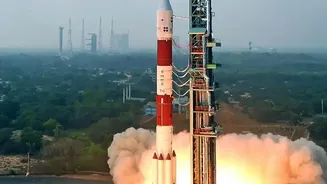

A Strategic Shift in Policy
The primary catalyst for this acceleration is the Indian Space Policy 2023. This landmark policy framework was designed to move the country from a government-led space program to a more inclusive ecosystem where private companies play a leading role.
The policy formally allows non-governmental entities (NGEs) to undertake end-to-end space activities, from building satellites and launch vehicles to operating ground stations and even engaging in the commercial recovery of space resources. The goal is to unlock the sector's economic potential, attract investment, and significantly increase India's share of the global space economy, which is projected to reach $1.8 trillion by 2035. Current estimates value India's space economy at around $8.4 billion, with ambitious targets to grow this to over $44 billion by 2033.
The New Facilitators: IN-SPACe and NSIL
To manage this new landscape, the government established two key bodies with distinct roles. The Indian National Space Promotion and Authorisation Centre (IN-SPACe) acts as a single-window agency to promote, authorise, and supervise all space activities, for both private and government entities. It ensures a level playing field, allowing private firms to use ISRO's world-class facilities and expertise. Complementing IN-SPACe is NewSpace India Limited (NSIL), ISRO's commercial arm. NSIL is responsible for commercialising ISRO's technologies, managing satellite manufacturing contracts, and procuring launch services on a demand-driven basis. Together, these organisations form the bridge between ISRO's legacy of research and the private sector's commercial ambitions.
ISRO’s Evolving Mission
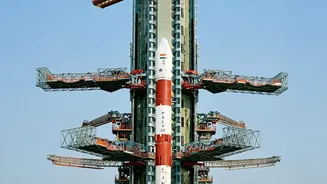
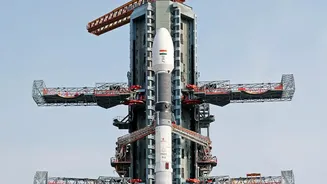
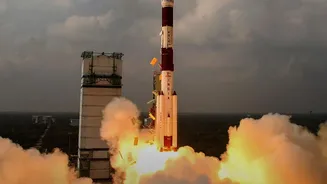
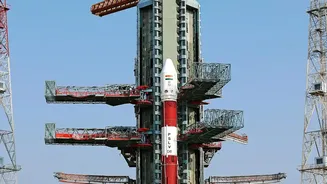
With private players stepping into operational roles, ISRO is strategically transitioning its focus. Instead of handling routine manufacturing and commercial launches, the agency is doubling down on what it does best: advanced research and development. This includes pioneering new technologies, developing next-generation launch vehicles, and leading ambitious scientific missions like human spaceflight (Gaganyaan) and deep-space exploration. By handing over mature technologies to industry, ISRO is evolving from the primary operator to a mentor and R&D powerhouse, nurturing the very ecosystem it helped create. This shift allows the agency to push the frontiers of science while enabling commercial growth.
The Rise of Private Pioneers
The policy reforms have unleashed a wave of innovation, with over 400 space-tech startups now operating in India. Companies like Skyroot Aerospace and Agnikul Cosmos are making headlines. Skyroot became the first Indian private company to launch a rocket, with its Vikram-1 achieving orbit in July 2026, a landmark moment for the sector. Agnikul has developed India's first 3D-printed semi-cryogenic rocket engine and has established its own private launchpad at ISRO's facility. Other startups like Pixxel are focusing on building constellations of earth-observation satellites, while Dhruva Space is developing satellite platforms and deployment systems. This vibrant startup scene is attracting significant venture capital and positioning India as a competitive hub for cost-effective launch services and satellite technologies.