
In the vast expanse of space, planets are supposed to be constants. They form, they orbit, they endure for billions of years. So when one seemingly winks out of existence, it presents a cosmic mystery that astronomers are compelled to solve.
The Ghost Planet
The story
begins with a star named Fomalhaut, a relatively youthful and bright star located about 25 light-years from Earth. In 2008, astronomers announced a groundbreaking discovery using the Hubble Space Telescope: they had captured a direct image of a planet orbiting it. This was a huge deal. Most exoplanets are detected indirectly, by the dip in a star's light as the planet passes in front of it. Directly seeing one was rare, and Fomalhaut b, as it was named, became a celestial celebrity. But from the beginning, Fomalhaut b was strange. It was incredibly bright in visible light, yet it gave off almost no infrared heat, which is not what you’d expect from a massive young gas giant. Its orbit also appeared highly unusual, a stretched-out ellipse that seemed to cross the system's vast ring of icy debris.
The Case of the Missing World
For years, scientists studied the perplexing object, trying to make sense of its odd characteristics. Some theorised a huge ring of dust might be encircling the planet, making it appear brighter than it was. But the real shock came when astronomers looked at Hubble images from 2014. Fomalhaut b was gone. A planet three times the mass of Jupiter doesn't just vanish. The discovery sent researchers scrambling back to the archives, re-examining every piece of data collected since the first images in 2004. The new analysis revealed that the object hadn't just disappeared; it had been slowly fading and growing more diffuse over the entire observation period. As astronomer András Gáspár of the University of Arizona put it, 'Clearly, Fomalhaut b was doing things a bona fide planet should not be doing'.
A Cosmic Collision
The solution to the mystery, proposed by Gáspár and his colleague George Rieke, was even more spectacular than the original discovery. Fomalhaut b was never a planet at all. What the Hubble telescope had captured in 2004 was the immediate aftermath of a titanic collision between two massive, icy bodies, each estimated to be about 200 kilometres wide. The immense impact created a brilliant, expanding cloud of incredibly fine dust particles. It was this short-lived cloud that astronomers mistook for a planet. The model of a catastrophic collision neatly explained all the weird observations. The dust cloud was bright in visible light as it reflected the light from Fomalhaut, but it was cold and therefore emitted no detectable infrared heat. Its strange trajectory was also explained: the force of the collision, combined with radiation pressure from the star, was pushing the debris cloud out of the system on an escape path.
Seeing a Ghost Disperse
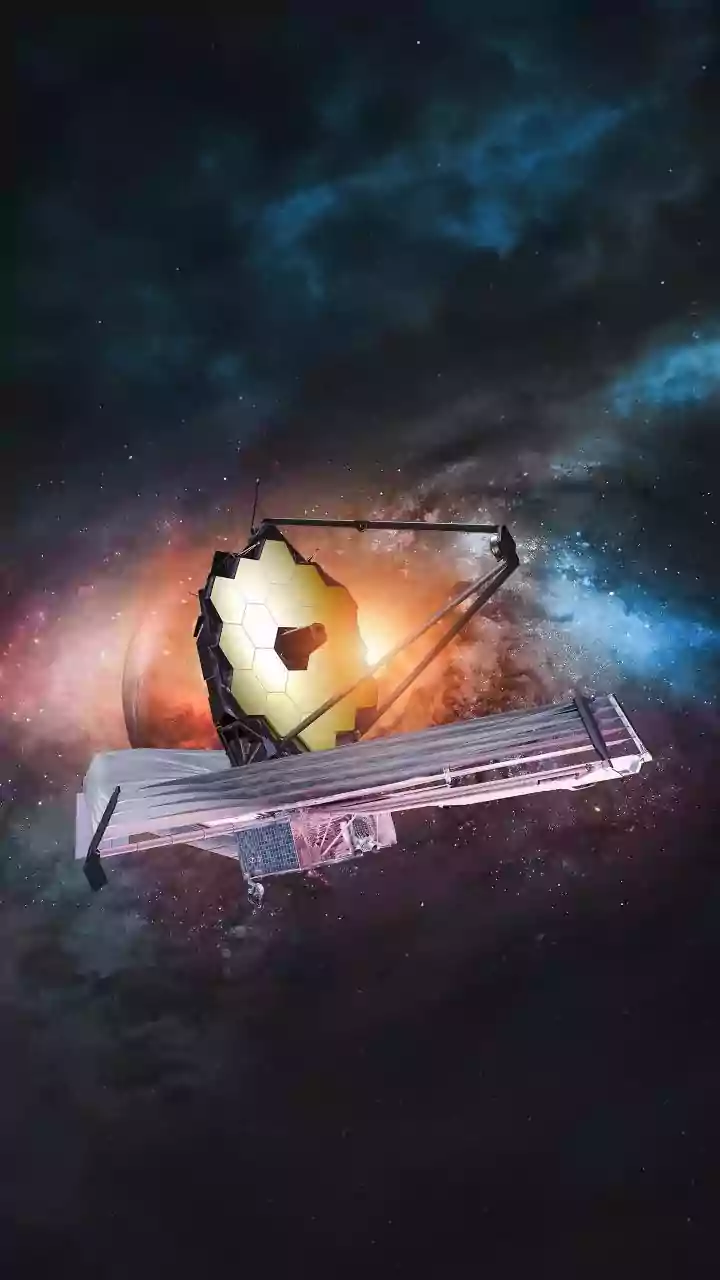
Over the decade of observations, astronomers were essentially watching a ghost disperse. The initial impact created a relatively compact, bright cloud of debris. But as the dust particles spread out, the cloud grew larger and dimmer. By 2014, the cloud had expanded to a size larger than the orbit of Earth around our sun and had become so diffuse that it fell below Hubble's ability to see it. Astronomers had been, as Gáspár noted, 'at the right place at the right time to have witnessed such an unlikely event'. These kinds of collisions are thought to be exceedingly rare, happening in a system like Fomalhaut perhaps only once every 200,000 years. Later observations with the powerful James Webb Space Telescope in 2023 confirmed the theory, finding no trace of a massive planet but mapping the complex dust belts in the system where such a collision likely originated.