



The Menace in the Vineyard
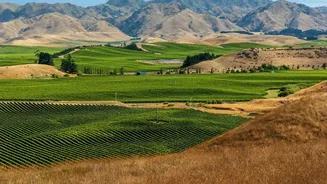
For grape growers in Maharashtra's Nashik district, the threat of downy mildew is a constant source of anxiety. Caused by a fungus-like organism, Plasmopara viticola, the disease thrives in the humid, warm conditions that often accompany the monsoon season.
It attacks all green parts of the grapevine—leaves, shoots, and fruit clusters. The first signs are often yellowish, oily spots on leaves, which can quickly lead to a fuzzy white growth on the underside. If left unchecked, downy mildew can cause severe defoliation, preventing the vine from performing photosynthesis, which in turn reduces fruit quality and weakens the plant, making it vulnerable to winter injury. This can lead to catastrophic crop losses, impacting both the season's yield and the long-term health of the vineyard.
Traditional Hurdles in Detection
For generations, the primary method for spotting downy mildew has been manual scouting. Farmers and labourers walk through acres of vineyards, visually inspecting plants for the tell-tale signs of infection. This process is not only labour-intensive and time-consuming but also highly subjective. A significant challenge is that visible symptoms often appear 7 to 12 days after the infection has already taken hold. By the time a farmer spots the disease, it may have already spread significantly, forcing widespread and costly application of fungicides. This reactive approach often means a greater use of chemicals, higher labour costs, and the persistent risk of missing an outbreak until it's too late to control effectively. In a region where erratic weather can already cause production to dip by as much as 50%, a more reliable method is crucial.
An Eye in the Sky: How Drones Work
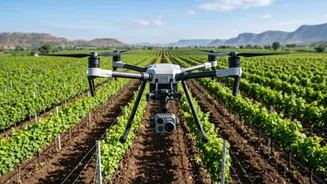
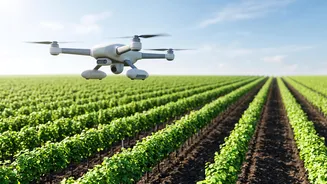
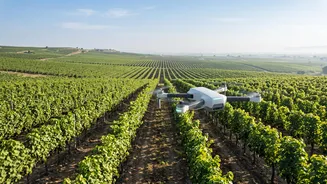
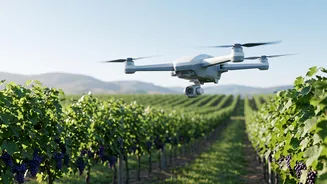
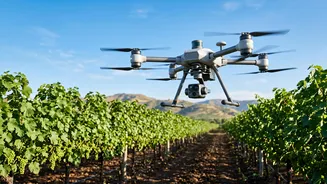
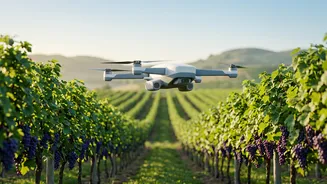
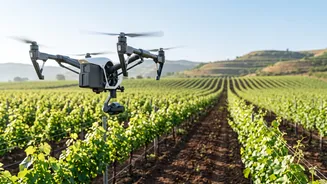
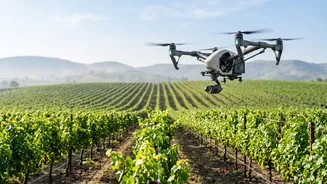
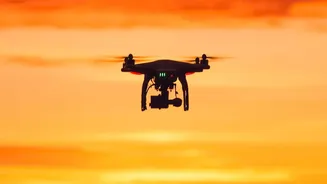
Agricultural drones are changing the equation entirely. These unmanned aerial vehicles (UAVs) are equipped with advanced multispectral sensors that can see what the human eye cannot. Healthy plants and stressed or diseased plants reflect light differently. Drones capture high-resolution images across various light spectrums, including near-infrared (NIR) and red-edge bands. Sophisticated software then processes this data to create detailed health maps of the vineyard. Diseased plants, even in their earliest stages, show changes in their spectral signature. For instance, a downy mildew infection can cause a decline in NIR reflectance before any visible 'oil spots' appear. This allows the technology to flag potential problem areas with incredible precision, sometimes weeks before a human scout could identify them.
The Rewards: Precision, Speed, and Savings
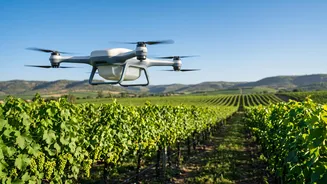
The popularity of drones stems from their clear return on investment. The primary advantage is early detection. By identifying disease hotspots before they spread, farmers can move from broad, preventative spraying to targeted interventions. This precision agriculture approach significantly reduces the amount of fungicides needed, sometimes by up to 50%, which lowers input costs and is better for the environment. Drones are also incredibly efficient. A task that takes a team of workers hours to complete can be done by a drone in minutes; a single drone can spray an acre in just 7 to 10 minutes. This speed allows for rapid response when conditions are ripe for a disease outbreak. The combination of reduced chemical use, lower labour costs, and improved crop yields by preventing losses makes the technology economically compelling for farmers.
Cost, Skill, and the Road Ahead
Despite the benefits, the adoption of drone technology is not without its challenges. The initial investment can be substantial, with agricultural drones costing anywhere from ₹4.5 lakh to over ₹15 lakh depending on their capabilities. Operating the drones and interpreting the complex data they generate also requires new skills. However, these barriers are steadily lowering. To offset the cost, many farmers are opting for drone-as-a-service models, hiring certified operators for spraying or surveying at a per-acre rate, which can range from ₹300 to ₹500. Furthermore, government initiatives like the 'Namo Drone Didi' scheme and subsidies under the Sub-Mission on Agricultural Mechanization (SMAM) are making drone ownership more accessible for individual farmers and farming collectives by covering up to 80% of the cost.