

The Cosmic Rulebook
At its heart, orbital mechanics is the set of rules governing how objects move in space. Think of it as the ultimate cosmic playbook. For centuries, astronomers believed planets moved in perfect circles. Then, in the early 17th century, Johannes Kepler
changed everything. Using a mountain of observational data, he discovered three fundamental laws of planetary motion. First, planets travel in elliptical (oval) orbits, not perfect circles, with the Sun at one focus. Second, a planet moves fastest when it's closest to the Sun and slowest when it's farthest away. His third law created a mathematical link between how long an orbit takes and how large it is. These laws provided the 'what' of celestial motion, but not the 'why'.
Gravity: The Universal Architect
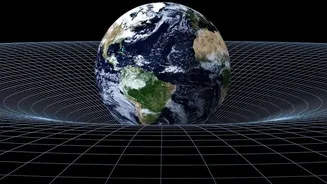
The 'why' came later in the 17th century with Sir Isaac Newton and his universal law of gravitation. Newton realized that the same force that makes an apple fall to Earth is what keeps the Moon in orbit. He established that every object in the universe attracts every other object. The strength of this attraction depends on two things: how massive the objects are and how far apart they are. This force of gravity follows an 'inverse-square law'—if you double the distance between two objects, the gravitational force between them drops to one-quarter of its original strength. Newton's breakthrough unified the physics of the heavens and the Earth, showing that Kepler's elliptical orbits were a direct consequence of this universal gravity. This became the master key for astronomers.
Decoding the Wobble
Scientists don't just study objects they can see; they also hunt for things they can't. One of the most powerful techniques is looking for gravitational 'perturbations'—tiny wobbles or deviations in an object's expected path. Kepler’s laws are a great approximation, but they assume a simple two-body system, like a single planet around a star. In reality, every object in the solar system gravitationally tugs on every other object. When astronomers noticed that the orbit of Uranus didn't perfectly match predictions, they suspected something else was out there. By calculating the nature of these perturbations, they were able to predict the location of an unseen planet, leading directly to the discovery of Neptune. This very same principle is used today to hunt for exoplanets orbiting distant stars, by detecting the subtle wobble a planet induces on its star, and even for the theoretical Planet Nine in our own solar system.
Tracking the Unknown
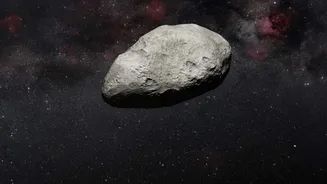
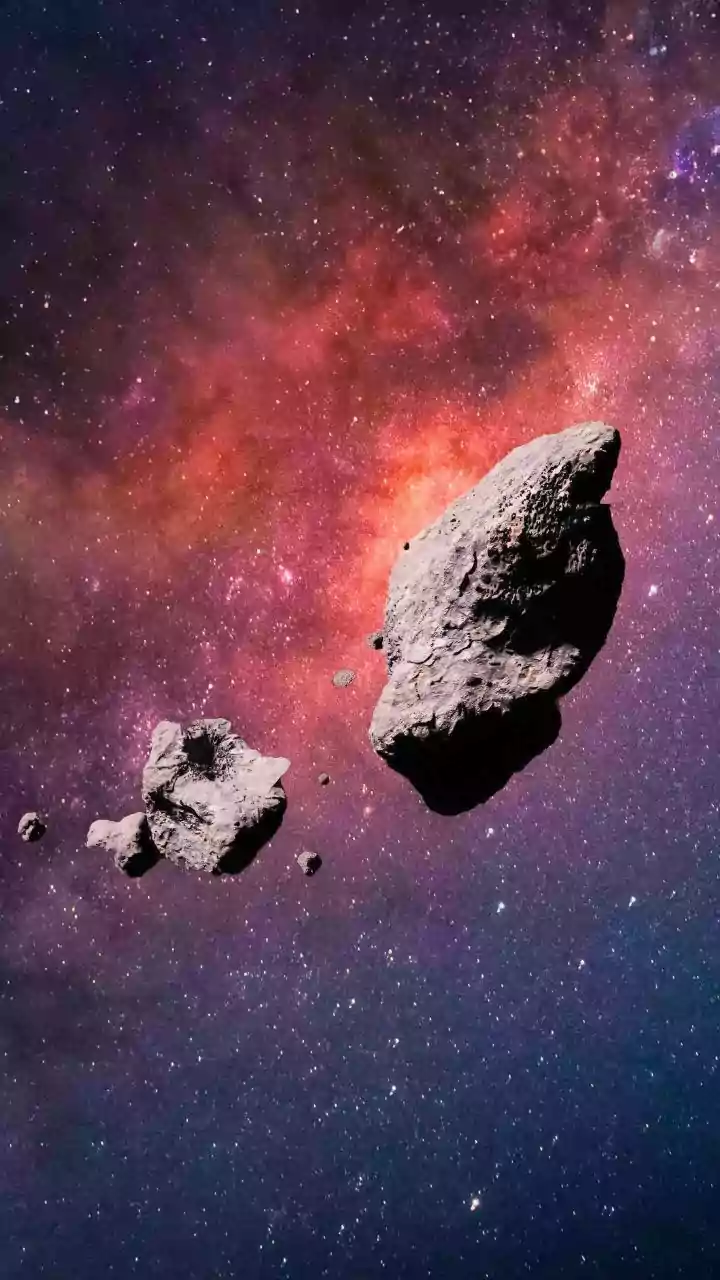
When a new or mysterious object is spotted, the first step is to track its movement against the background of fixed stars. Astronomers use powerful telescopes, often as part of large sky surveys, to take multiple images of the same patch of sky minutes apart. Any object that has moved between frames is flagged. By collecting several of these position points over time, scientists can plot its trajectory. This path, or orbit, reveals a wealth of information. Is it a closed ellipse, meaning it's a member of our solar system like an asteroid? Or is its path a 'hyperbola'—an open-ended trajectory indicating it has come from interstellar space and is just passing through? This was how scientists determined the interstellar origin of the strange object known as 'Oumuamua, which had an eccentricity so high it could not have originated from within our solar system.
More Than Just a Path
An object's orbit can tell scientists far more than just its origin. By observing the speed and shape of the orbit, they can apply Newton's laws to calculate the object's mass. Furthermore, they can sometimes deduce its nature. For instance, when 'Oumuamua was observed to accelerate slightly on its way out of the solar system—a push that gravity alone couldn't explain—it sparked intense debate. One leading theory was that the Sun's heat was causing gas to escape from its surface, a process called outgassing, which is typical of comets. Although no outgassing was directly seen, this non-gravitational acceleration was a key clue to its potential composition. By precisely measuring an object’s path and seeing how it deviates from a purely gravitational orbit, scientists can piece together a picture of its physical properties, turning a simple dot of light into a complex story.