




Why Step-Ups Are a Winter Fitness Winner
The step-up is a powerful yet simple compound exercise that mimics a fundamental human movement: climbing. It primarily targets the major muscles of your lower body, including the glutes, quadriceps, and hamstrings, while also engaging your core for stability.
One of its biggest advantages is that it's a unilateral movement, meaning it works one leg at a time. This is incredibly effective for identifying and correcting strength imbalances between your right and left sides, which can help improve overall balance and reduce injury risk. Because it requires minimal equipment—just a sturdy bench, box, or even a staircase—it's a perfect addition to any at-home winter fitness plan.
The Building Blocks of a Powerful Step-Up
To perform a step-up correctly, several muscle groups must work in harmony. The quadriceps on the front of your thigh are responsible for extending the knee, while the gluteus maximus (your largest glute muscle) extends the hip to lift your body. The hamstrings assist with hip extension and, crucially, control the lowering phase of the movement. Smaller stabilizing muscles, like the gluteus medius on the side of your hip, play a vital role in keeping your pelvis level and preventing your knee from collapsing inward, a common and risky mistake. Your core muscles also fire to keep your torso upright and stable throughout the exercise.
Are You Ready? A Quick Self-Assessment
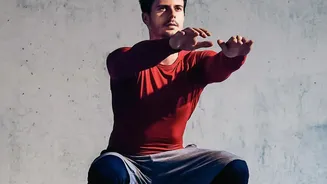
Before you start stepping up, it’s wise to check if you have the prerequisite strength and stability. Can you perform 10-12 bodyweight squats with good form, keeping your chest up and heels on the ground? Can you perform a set of alternating lunges without losing your balance? Another good test is to stand on one leg. Can you hold your balance for 20-30 seconds without wobbling excessively? If you find these movements challenging, it's a sign that you should focus on building foundational strength before progressing to a full step-up.
Foundation First: Exercises to Build Strength
If your self_assessment revealed some weaknesses, don't worry. A few key exercises can help you build the necessary strength for perfect step_ups. Bodyweight squats are excellent for developing general leg and glute strength. Glute bridges, where you lie on your back and lift your hips, are fantastic for activating and strengthening your glutes. Finally, stationary lunges are a great way to introduce unilateral training, improving the balance and stability you'll need. Focus on mastering these movements before tackling step_ups.
Mastering the Move: Proper Step-'Up'' Form
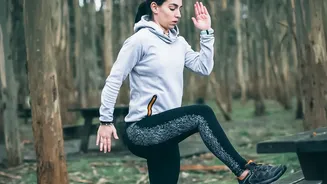
When you're ready, start with a low, sturdy platform around knee height or lower. Place one entire foot firmly on the surface. Keeping your torso as upright as possible, drive through the heel of your top foot to lift your body up until you are standing tall on the platform. The key is to make the top leg do all the work; avoid pushing off with your back foot. The downward phase is just as important. Lower yourself back down slowly and with control, resisting gravity rather than just dropping. Perform all your reps on one side before switching to the other.
Common Mistakes and How to Avoid Them
The most common mistake is pushing off the back leg for momentum. This takes the load off the working leg, defeating the purpose of the exercise. To fix this, focus on driving through the heel of the front foot. Another frequent error is using a step that's too high, which can cause you to lean too far forward or compromise your form. If you can't get up without significant leaning or momentum, lower the step. Also, watch for your knee caving inward. This often indicates glute weakness and can put stress on the knee joint. Concentrate on keeping your knee aligned with the middle of your foot.