



Darrell Hair: The Serial Controversialist
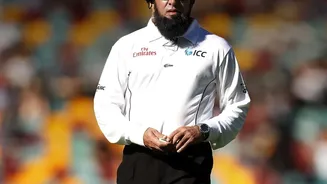
Australian umpire Darrell Hair was a magnet for controversy. His career is defined by two monumental confrontations. First, in 1995, he no-balled Sri Lankan superstar Muttiah Muralitharan seven times for 'throwing' during the Boxing Day Test in Melbourne.
This was the first time Muralitharan had been called for his unique action, sparking a years-long debate and accusations of preconceived bias from Hair. Later, Hair described Murali's action as "diabolical" in his autobiography, leading to him being charged by the ICC for bringing the game into disrepute. Then, in 2006, during a Test between England and Pakistan, Hair and his colleague awarded England five penalty runs, accusing the Pakistani team of ball-tampering. The infuriated Pakistan team, led by Inzamam-ul-Haq, refused to take the field after the tea break. The umpires ultimately awarded the match to England by forfeit, the first such instance in Test history. Hair later offered to resign in exchange for $500,000, a move that only added to the controversy surrounding his career.
Steve Bucknor: The 'Slow Death'
For Indian cricket fans of a certain generation, Steve Bucknor’s name evokes a unique sense of frustration. The West Indian umpire, known for his incredibly slow and deliberate manner of raising his finger — earning him the nickname 'Slow Death' — was involved in numerous high-profile errors. His decisions against Sachin Tendulkar are legendary. Bucknor himself has admitted to at least two major mistakes against the Little Master, including a wrongly given LBW during the 2003-04 Gabba Test when the ball was clearly going over the stumps. Perhaps his most infamous performance came during the fractious 2008 Sydney Test between India and Australia. Bucknor and fellow umpire Mark Benson made a series of glaring errors, almost all of which went against India, contributing to a toxic atmosphere and an eventual Australian victory. The backlash was so severe that Bucknor was removed from officiating the next Test of the series, a rare move by the ICC.
Shakoor Rana: The Finger-Wagging Showdown
The 1987 Test match in Faisalabad is remembered for one of the most explosive player-umpire confrontations ever seen. On one side was England’s fiery captain, Mike Gatting; on the other, the equally combustible Pakistani umpire, Shakoor Rana. The dispute began when Rana accused Gatting of cheating by adjusting his field while the bowler was running in. Gatting stormed over to argue, leading to a finger-pointing, expletive-laden argument broadcast worldwide. Rana refused to continue the match until he received a written, unconditional apology from Gatting. The standoff was so serious that an entire day's play was lost as diplomats from both countries got involved to resolve the issue. Gatting eventually had to write the apology to save the tour, but the image of the two men locked in a furious face-off remains an indelible symbol of umpiring controversy.
Ross Emerson: The Murali No-Baller
While Darrell Hair was the first to call Muttiah Muralitharan, Ross Emerson was perhaps the most persistent. In an ODI in 1996, Emerson no-balled Muralitharan repeatedly, even when the spinner switched to bowling leg-breaks, which are considered almost impossible to throw. The most dramatic incident occurred in Adelaide in 1999, when Emerson, standing at square leg, called Murali for throwing again. This prompted Sri Lankan captain Arjuna Ranatunga to lead his team off the field in protest, holding up play. Emerson's umpiring career ended shortly after. It was later revealed he was on stress-related sick leave from his regular job during the period, raising questions about his fitness to officiate. Emerson himself later claimed he had been instructed by a Cricket Australia official to uphold certain 'standards' before the match.