






Why Hair Is So Fragile After Monsoon
The high humidity during the monsoon season wreaks havoc on hair. The hair shaft absorbs excess moisture from the air, causing the protective outer layer, the cuticle, to swell and lift. This leaves the hair porous, weak, and prone to frizz. As the weather
transitions and the air becomes drier, this swollen, compromised hair loses moisture rapidly, becoming brittle and extremely susceptible to breakage from simple actions like brushing and drying. Wet hair is naturally more fragile, and post-monsoon hair is already in a weakened state, making it snap easily under stress.
Rethink Your Brushing Strategy
Aggressive brushing is a primary cause of breakage, especially on fragile post-monsoon hair. The first rule is to never brush or comb your hair when it is soaking wet, as this is when it's most elastic and delicate. If you must detangle, wait until it's damp and prepped with a serum or leave-in conditioner. Always start from the ends of your hair, gently working out knots before moving upwards towards the roots. This prevents you from pulling a knot from the top all the way down, creating a larger tangle and causing the strand to snap.
Choose the Right Tools for the Job
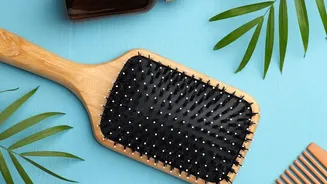
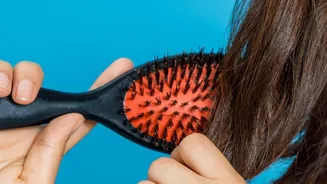
Your hairbrush itself can be a source of damage. For detangling, especially on damp hair, a wide-tooth comb is your best friend. The wide gaps glide through hair with minimal friction and pulling, reducing the risk of breakage. For daily brushing on dry hair, consider a brush with soft, natural bristles or a paddle brush. These tools help to distribute your scalp's natural oils down the hair shaft, which is crucial for nourishing and protecting brittle ends. Brushing just twice a day is often enough to keep hair smooth without causing unnecessary stress.
Master the Art of Gentle Drying
How you remove excess water after washing is critical. Vigorously rubbing your hair with a standard coarse bath towel is one of the most damaging things you can do. This rough friction lifts the already-vulnerable cuticle, causing frizz and snapping weak strands. Instead, switch to a soft microfiber towel or an old cotton t-shirt. Rather than rubbing, gently squeeze or blot the excess water from your hair. This method absorbs moisture without creating damaging friction, leaving your hair's cuticle smoother and more intact.
Air-Drying vs. Blow-Drying: The Smart Approach
While air-drying avoids heat damage, leaving hair wet for several hours can also be problematic, as the hair shaft remains swollen and weak during this time. If you choose to air-dry, gently blot out as much water as possible first. For those who prefer a blow-dryer, the key is to minimise heat damage. Always apply a heat protectant spray to create a barrier. Use your dryer on the lowest heat and speed setting possible, and keep it at a safe distance of about 15-20 cm from your hair. A hybrid approach often works best: let your hair air-dry about 80% of the way, then use the cool setting on your blow-dryer to finish and smooth the cuticle.